










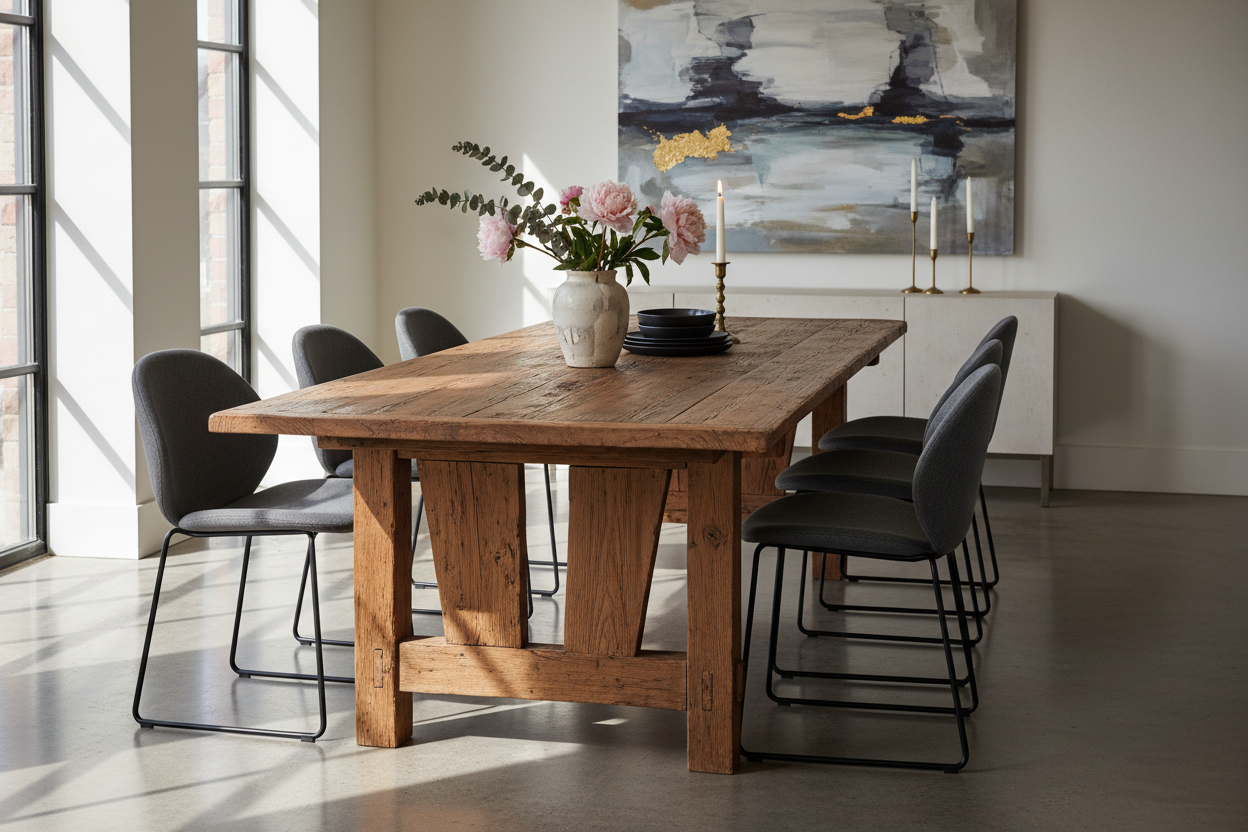
Matching dining sets are officially a thing of the past. If you walk into a high-end furniture showroom today, you rarely see a table sold with identical chairs unless it is a specific period reproduction. The most dynamic interiors rely on tension—the push and pull between different eras, textures, and materials. Pairing a wood table with modern chairs creates an immediate focal point, stripping away the stuffiness of a formal dining room and replacing it with curated personality. It tells guests that you collected your home over time rather than ordering it from a catalog page.
The secret to pulling this off isn't just throwing random furniture together. It requires an understanding of visual weight, silhouette, and material contrast. When you successfully pair modern chairs with traditional dining table structures, you breathe new life into heirloom pieces that might otherwise feel heavy or dated. This approach allows you to keep that sturdy oak table you inherited while making the room feel current and airy.
My Own Experiment with Contrast
I learned this lesson the hard way a few years ago. I found a massive, dark walnut farmhouse table at an estate sale. It was beautiful, heavy, and incredibly imposing. My initial instinct was to find wooden chairs that matched the stain. After weeks of hunting, I finally assembled a set of dark wood spindle chairs. The result? The room felt like a library in a haunted house. It was too much wood, too much darkness, and completely devoid of energy.
I eventually sold those chairs and took a risk on a set of white, molded plastic bucket chairs with metal legs. The transformation was instant. The sleek, industrial white plastic popped against the dark grain of the walnut. The modern shape cut through the visual heaviness of the table, making the whole room feel lighter and more inviting. That experience taught me that contrast isn't just an aesthetic choice; it’s a tool to balance the energy of a room.
Bridging the Gap Between Rustic and Sleek
The primary reason a wood table with modern chairs works so well is the interplay of textures. Wood is organic, warm, and often imperfect. Modern design, particularly from the mid-century era onward, often utilizes materials like polycarbonate, fiberglass, steel, and matte-finished wood. When you place a smooth, manufactured surface next to a natural, grained surface, both materials look better. The wood looks richer, and the chair looks sleeker.
If you have a rustic trestle table, look for chairs that have a minimal footprint. Ghost chairs (clear acrylic) are a fantastic option here. Because they are transparent, they allow the architecture of the table legs to remain visible. This is particularly useful in smaller dining nooks where you don't want the space to feel crowded. The table provides the anchor, and the chairs provide the function without the visual clutter.
Reviving the Heirloom Table
Many homeowners struggle with what to do with antique furniture. You might love the craftsmanship of a Victorian or Edwardian pedestal table, but you hate how formal it feels. This is the perfect candidate for pairing modern chairs with traditional dining table designs. The juxtaposition is what makes it work. A heavy, carved mahogany table looks surprisingly chic when surrounded by cantilever chairs or metal industrial seating.
This strategy also solves the "leg war" issue. Traditional tables often have elaborate legs or pedestal bases. Traditional chairs also have detailed legs. When you put them together, the space under the table becomes a chaotic forest of wood. Modern chairs often feature streamlined legs, wire bases, or pedestal bottoms that simplify the visual noise, allowing the antique table's craftsmanship to shine.
The Silhouette Rule
Shape matters just as much as material. If your wood table is rectangular and blocky, consider chairs with curves. Rounded backrests, circular seats, or wishbone styles soften the hard angles of the table. Conversely, if you have a round or oval pedestal table, chairs with a squarer, more structured profile can provide necessary definition.
Low-profile modern chairs are excellent for keeping sightlines open. Traditional high-back chairs can wall off a dining area, making it feel separate from the rest of the home. Modern profiles tend to sit lower, which makes the room feel larger and facilitates conversation across an open-plan living space.
Specific Pairings That Always Work
If you are hesitant about mixing styles, sticking to proven combinations can give you the confidence to start. Here are a few "cheat codes" for mixing eras:
- The Wishbone Chair & The Farm Table: The woven seat of a wishbone chair bridges the gap between natural wood and modern sculpture. This is a safe, timeless choice that works with almost any wood tone.
- The Eames Style & The Dark Oak: The classic molded shell chair with dowel legs brings a playful, casual vibe to serious, dark wood tables. It instantly makes a formal dining room family-friendly.
- Velvet Upholstery & Raw Wood: If your table is unfinished or very rustic, juxtapose it with the luxury of modern velvet scoop chairs. The soft sheen of the fabric against the rough grain creates a high-end, designer look.
- Industrial Metal & Polished Cherry: For a more masculine or loft-style aesthetic, metal Tolix-style chairs pair well with polished, red-toned woods. The metal cools down the warmth of the wood.
Navigating Color and Finish
You do not need to match the wood of the chair legs to the table. In fact, trying to get a "close enough" match often looks like a mistake. Instead, go for a deliberate contrast. If you have a honey-oak table, opt for black or walnut chair legs. If your table is dark espresso, light beechwood or metal legs work best.
When incorporating color through the chair body, consider the undertone of the wood table. Warm woods (cherry, mahogany, oak) look stunning with cool-toned chairs like navy, sage green, or slate grey. Cool woods (ash, weathered gray, walnut) can handle warmer chair colors like mustard, terracotta, or blush. Black is the universal neutral; a set of matte black modern chairs will ground any wood table, regardless of its era or finish.
Common Pitfalls to Avoid
While mixing styles allows for freedom, scale is the one rule you cannot break. Ensure the seat height of your modern chairs is compatible with your vintage table. Antique tables can sometimes be lower than modern standards (around 28 inches rather than 30). If you buy modern chairs with a high seat, your guests might scrape their knees. Always measure the "drop" (the distance from the tabletop to the seat) before purchasing. You generally want 10 to 12 inches of clearance.
Avoid using too many different styles of modern chairs unless you are very confident in your curatorial skills. While the "mismatched" look can be fun, pairing a heavy traditional table with four completely different modern chairs often looks messy rather than eclectic. Sticking to one style of modern chair—or two styles (heads of table vs. sides)—provides enough cohesion to make the design intentional.
Frequently Asked Questions
Can I mix different wood tones between the table and chairs?
Absolutely. In fact, contrasting wood tones is preferred over trying to match them perfectly. A good rule of thumb is to ensure there is enough difference between the shades so that the mismatch looks intentional rather than accidental, such as pairing a dark walnut table with light beechwood chairs.
Are modern plastic or acrylic chairs comfortable enough for long dinners?
High-quality modern molded chairs are designed ergonomically to support the back, often offering more comfort than stiff, upright traditional wooden chairs. If you are concerned about hardness or temperature, adding a sheepskin throw or a thin seat pad can add comfort without ruining the modern aesthetic.
How do I know if the scale of modern chairs will fit a bulky antique table?
Focus on visual weight rather than just physical measurements. If your table has massive, heavy legs, avoid chairs that look too spindly or fragile, as they will look out of place. Opt for modern chairs with a solid base or substantial upholstery to balance the visual mass of a heavy traditional table.


Leave a comment
This site is protected by hCaptcha and the hCaptcha Privacy Policy and Terms of Service apply.