










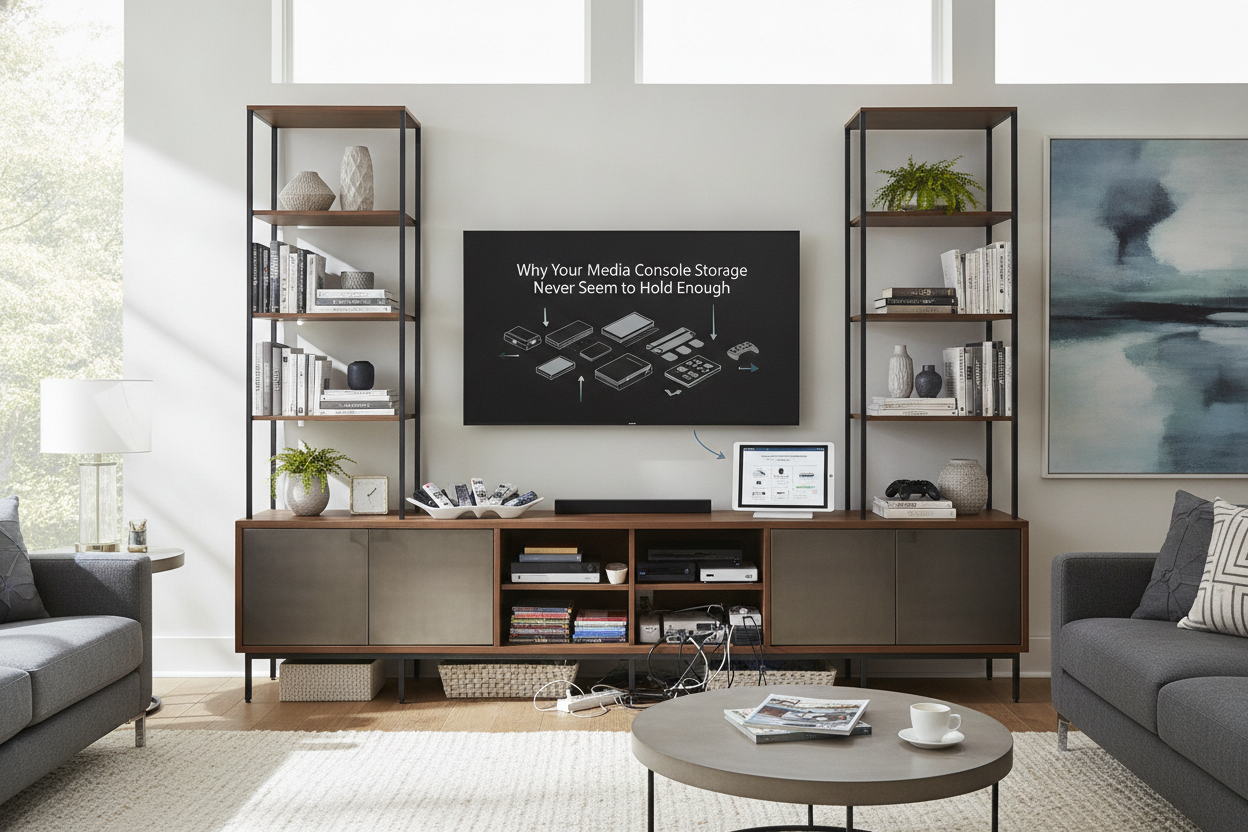
I spent three hours last Saturday untangling a bird's nest of HDMI cables and dust bunnies behind my 'minimalist' media stand. It looked great in the catalog, but in reality, it was just a glorified pedestal for clutter. Finding the right media console storage feels like a losing battle because most furniture designers assume you only own a single, paper-thin remote and zero hobbies.
Quick Takeaways
- Standard TV stands are often too shallow for bulky receivers and board game boxes.
- A dining sideboard offers 18-20 inches of depth, hiding everything behind solid doors.
- Viewing height is easy to fix with the right sofa-to-screen ratio.
- A simple hole saw attachment turns any wooden cabinet into a tech hub.
The Open Shelving Trap (and Why We Keep Falling for It)
We have all been seduced by those airy, mid-century modern units with the spindly legs and completely open backs. They look fantastic in a staged photo with exactly one ceramic vase and a stack of Kinfolk magazines. But the second you add a router, a PlayStation, three controllers, and a mess of power bricks, the aesthetic dies a quick, painful death.
Open shelving is the enemy of real-life media console storage. Unless you are a monk with zero physical media or hobbies, you need a place to shove the stuff you don't want to look at. Open units don't hide the mess; they frame it. You end up buying 'aesthetic' baskets to hide the junk, which just takes up more space and makes the whole setup look bulky anyway.
Why a Sideboard TV Console Is the Ultimate Fix
The smartest move I ever made was ditching the 'media' section of the furniture store entirely. I started looking at dining room buffets and sideboard media console options instead. Why? Because dining furniture is built for depth. A standard sideboard is usually 18 to 22 inches deep, whereas a purpose-built TV stand might only give you 14 inches.
That extra depth is a lifesaver for hiding a sideboard tv console mess. I remember when I swapped my flimsy narrow storage cabinet for a proper solid oak buffet; suddenly, my living room felt like an adult lived there. I could actually fit my oversized board games and a heavy-duty receiver without the doors hanging half-open because of the cables in the back.
Wait, Isn't a Media Sideboard Too Tall?
This is the first thing people worry about when they consider a sideboard media cabinet. 'Won't I be looking up at the ceiling?' Not necessarily. Most sideboards sit between 30 and 34 inches high. If you have a modern, deep-seated sofa, your eye level is likely right in line with the center of a 55-inch or 65-inch screen sitting on top of that unit.
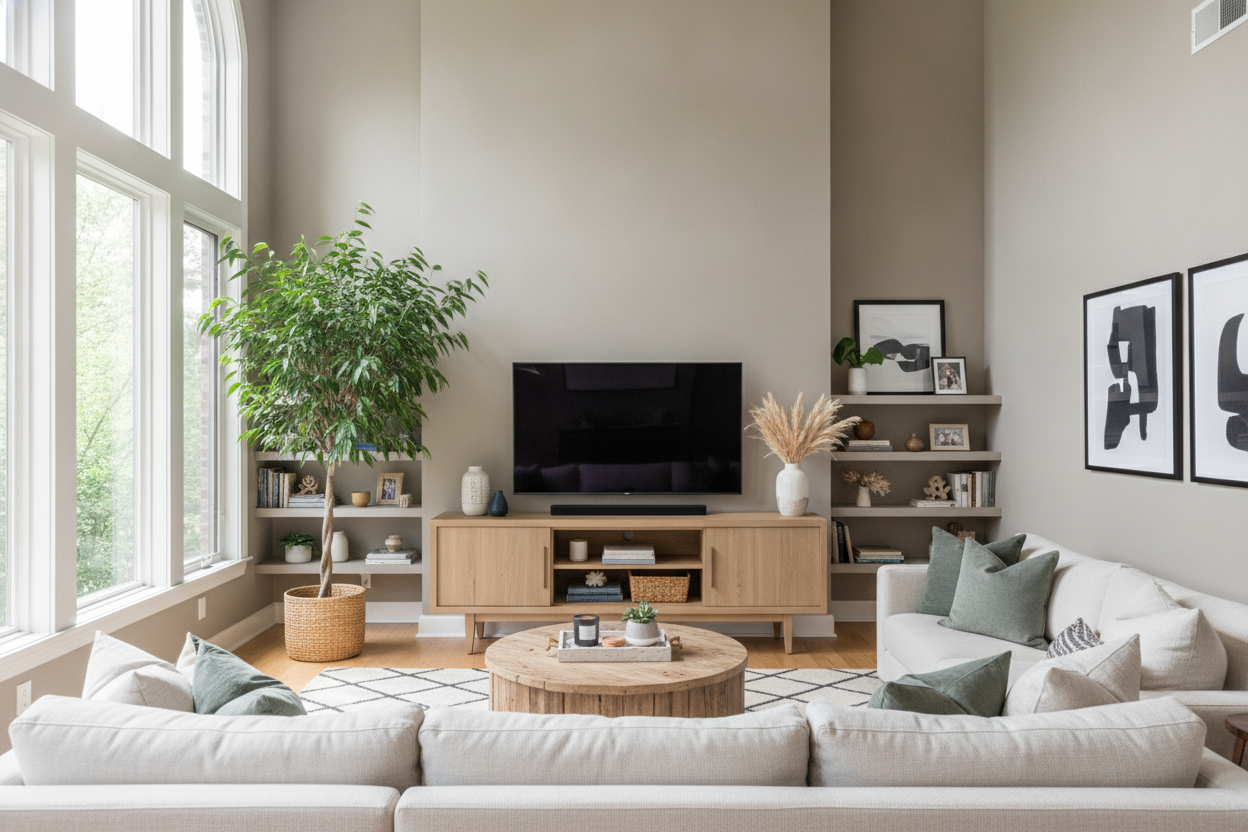
To avoid neck strain, sit on your couch and have someone mark your eye level on the wall. If the middle of your TV hits that mark, you are golden. Also, opting for a TV cabinet on legs is a pro move—it keeps the piece from looking like a heavy block of wood sitting on your carpet and makes it much easier for your robot vacuum to do its job.
The Two-Minute Modification for Cords and Cables
The only reason people avoid using a media console sideboard is the lack of cord holes. This is the easiest DIY fix in the world. Go to the hardware store and buy a 2-inch hole saw bit for your drill. It costs about ten bucks and will change your life.
Mark a spot behind where your main tech will sit and drill right through the back panel. Most sideboard backs are made of thin plywood or MDF, so it takes about thirty seconds. Now you have a custom media sideboard that looks like a high-end heirloom but functions like a modern tech hub. No more wires snaking around the sides of the cabinet like plastic vines.
Rounding Out the Room: Don't Forget the Edges
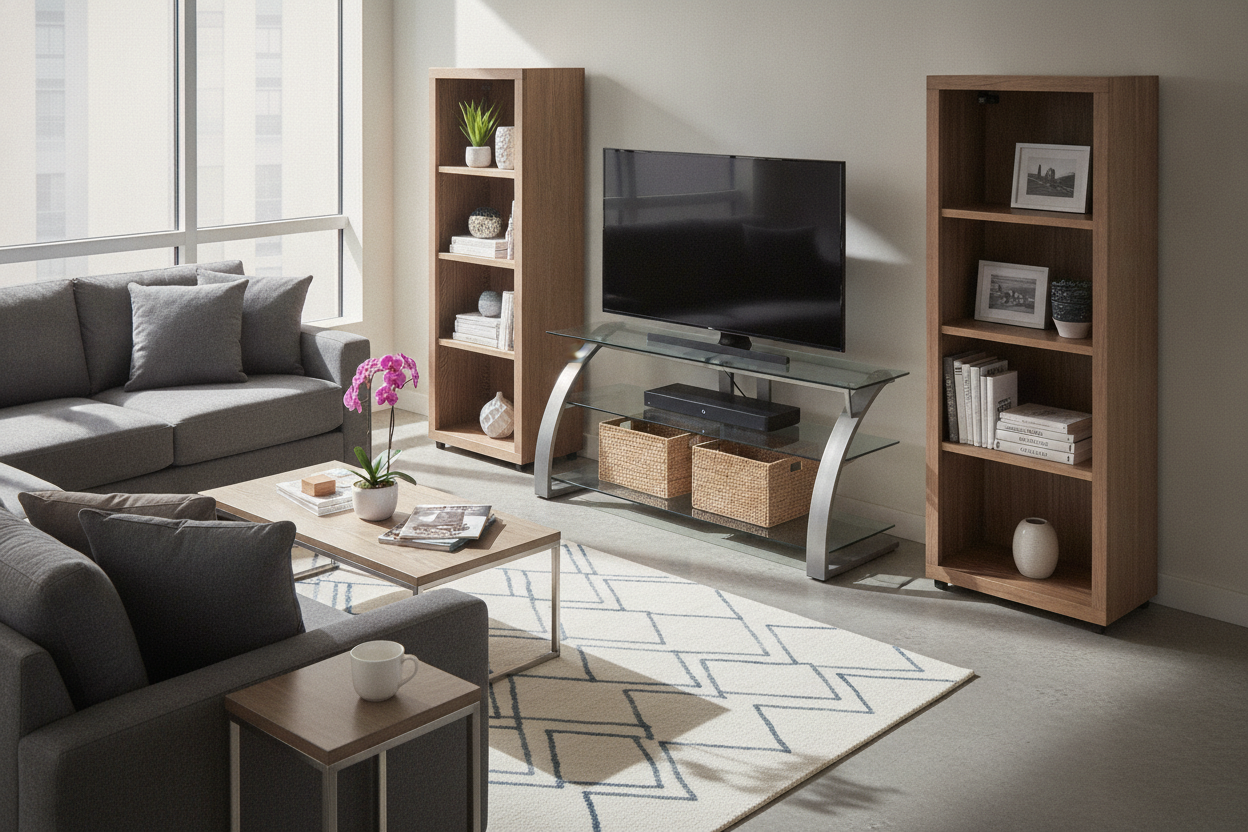
Once you have the big stuff tucked away, you might still have small items that don't need a massive cabinet. I like to pair a large sideboard with a smaller multimedia side table next to the main seating area. This is where the 'active' stuff lives—your phone charger, the remote you actually use, and maybe a coaster for your coffee.
By splitting your storage this way, the main unit stays clean and organized, while the side table handles the daily churn of living room life. It keeps the visual weight of the room balanced without sacrificing the utility you actually need.
My Honest Experience
I once bought a vintage 72-inch credenza that I thought was the 'forever' piece. It was beautiful, but I didn't account for the heat. I shoved a high-powered receiver into a cabinet with no ventilation, and it nearly cooked the wood. If you're using a solid wood cabinet, please leave the back off one section or install a small USB fan. High-end tech needs to breathe, and solid wood is a surprisingly good insulator.
FAQ
Will my remote work if the doors are closed?
Only if your devices use Bluetooth or RF. If they use Infrared (IR), you will need to leave the door cracked or buy a cheap IR repeater kit that sits on top of the cabinet and relays the signal inside.
How do I know if a sideboard is too heavy for my floor?
Most modern homes can handle a solid wood sideboard without issue. However, if you are in an old apartment with bouncy floors, look for a unit with a plinth base rather than four thin legs to distribute the weight more evenly.
Can I put a 75-inch TV on a sideboard?
Check the weight rating first. Most dining sideboards are built to hold heavy stacks of ceramic plates and le Creuset pots, so they are usually much sturdier than the cheap particle board TV stands you find at big-box retailers.

Leave a comment
This site is protected by hCaptcha and the hCaptcha Privacy Policy and Terms of Service apply.