










I spent three hours last Sunday trying to fish a lost HDMI cable out from behind my old media console. It was one of those heavy, solid-to-the-floor blocks that weighed about 150 pounds and had zero clearance. When I finally managed to shove it aside, I didn't just find the cable—I found a thriving ecosystem of dust bunnies and a petrified french fry from 2021. It was gross, and it was the final straw.
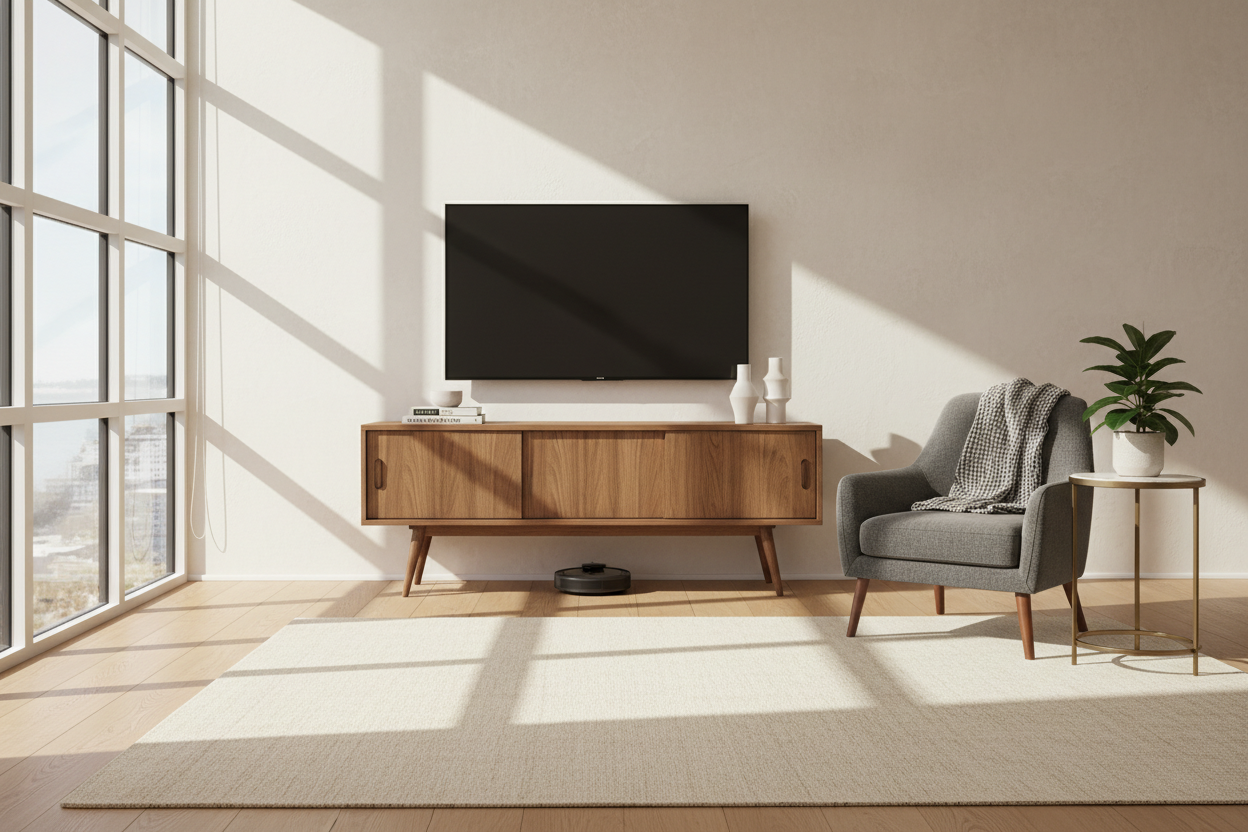
That was the day I decided a tv cabinet on legs was the only way forward. It is not just about the aesthetics of a 'lighter' room; it is about not living in a house where your furniture hides secrets. If you are tired of the visual bulk and the literal filth that accumulates under flat-base furniture, it is time to lift things up.
Quick Takeaways
- Visual space: Seeing the floor continue under the furniture makes small rooms feel 20% larger.
- Cleaning: 5+ inches of clearance allows robot vacuums to do their job without getting stuck.
- Cable Management: It requires a bit more effort but looks significantly cleaner with simple velcro ties.
- Versatility: Legged units are easier to move and don't feel like permanent architectural features.
The Dust Bunny Underworld (Why Flush Consoles Failed Me)
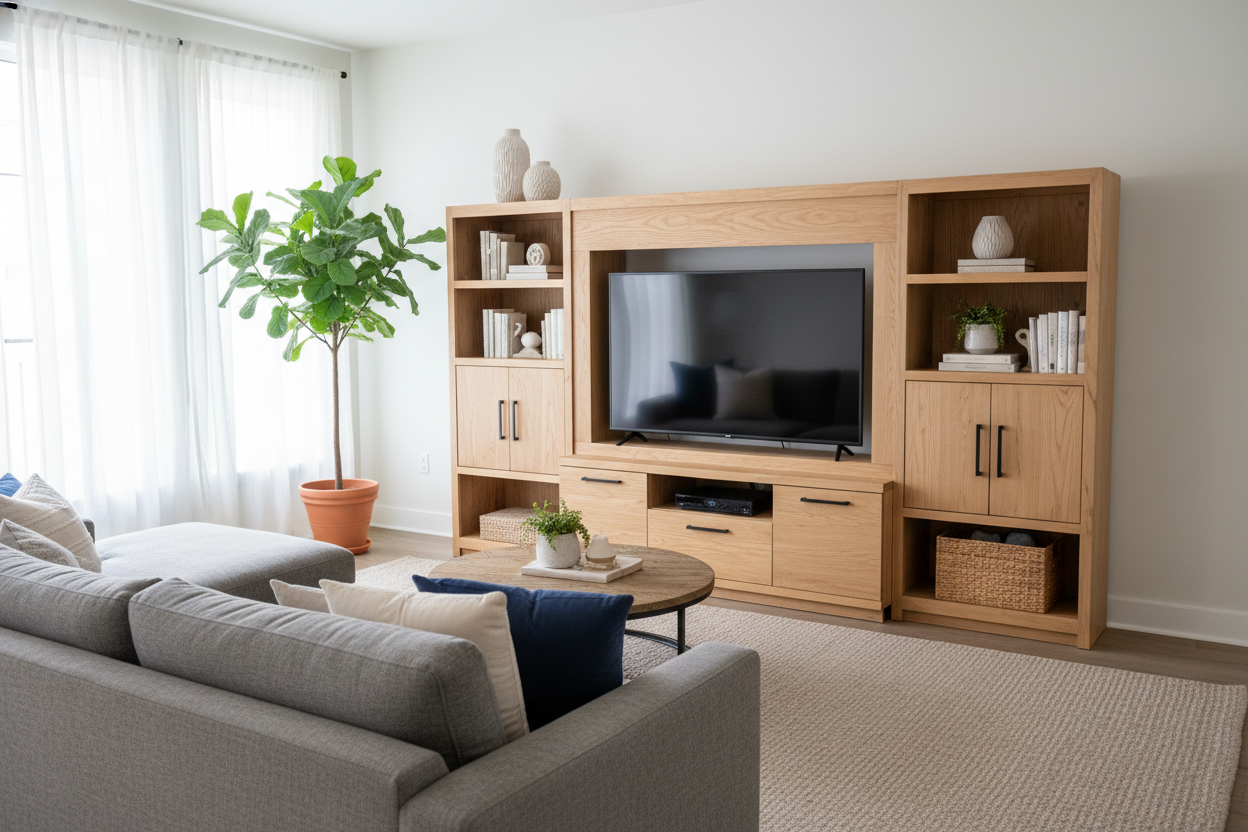
We have been conditioned to think that big, solid furniture equals 'high-end.' But in reality, a console that sits flush to the floor acts like a giant paperweight. It anchors the room in the worst way possible. Even a stunning black cabinet with glass doors can start to feel like a visual anchor dragging the room down if it doesn't have some daylight underneath it.
When your furniture meets the floor directly, it creates a hard visual stop. Your eyes think the room ends right there. By switching to a tv unit on legs, you allow the sightline to extend all the way to the baseboard. It is a classic interior design trick that actually works. Plus, you stop losing remotes to the 'void' underneath the heavy plinth bases.
Why a TV Unit on Legs is the Ultimate Middle Ground
I love the look of a floating console, but I am a renter with zero interest in patching six-inch holes in drywall when I move out. A cabinet for TV on wall looks incredible, but the commitment is real. A legged unit gives you that same airy, modern vibe without the structural engineering project.
You get the best of both worlds: the storage capacity of a traditional cabinet and the 'floating' aesthetic that keeps your living room from feeling like a storage locker. It is the middle ground for people who want a curated look but might want to rearrange their furniture next Tuesday.
The Robot Vacuum Test
If you own a Roomba or an Eufy, you know the pain of hearing it bang repeatedly against a solid wood base. It is a mechanical cry for help. For a robot vacuum to actually be useful, you need at least 4 to 5 inches of clearance. Most modern legs offer exactly that. Since I switched, the 'under-the-TV' area is the cleanest part of my house. No more moving a heavy oak beast just to sweep once a year.
How High Should the Legs Actually Be?
Not all legs are created equal. I have learned the hard way that 2-inch 'bun' feet are basically useless—they are too low for a vacuum and too high to hide the dust. You want at least 5 to 8 inches of height. This also helps with your viewing angle. If your sofa is low-profile, a tall leg might put the screen too high, leading to 'TV-Too-High' syndrome. Measure your eye level before you buy.
If you have a massive setup or a weirdly shaped room, an adjustable modern TV console cabinet is a lifesaver. It lets you tweak the footprint while keeping that elevated look. I personally prefer tapered mid-century legs for a vintage feel or thin matte black metal frames for something more industrial. Just make sure the legs are reinforced; cheap MDF units with thin legs tend to wobble if you have a 75-inch screen on top.
Styling the Space Underneath (Without Making It Weird)
Once you have those extra inches of floor space, the temptation is to fill them back up with junk. Don't do it. The point is the negative space. If you absolutely need the storage, a modern TV cabinet table with storage provides enough internal room that you shouldn't have to cram baskets underneath.
If it looks too empty for your taste, one—and only one—low-profile tray or a very slim woven basket can work. But honestly? Leave it empty. Let the floor breathe. Your room will feel bigger, your vacuum will be happier, and you will never have to hunt for a petrified french fry again.
Personal Experience: The Wobbly Leg Incident
I once bought a super cheap unit with 'stiletto' legs. It looked great in the photos, but as soon as I put my receiver and TV on it, the whole thing leaned forward like it was about to take a dive. Lesson learned: if the cabinet is over 60 inches long, look for a unit with a fifth 'center support' leg. It prevents the dreaded middle-sag that ruins the lines of your furniture over time.
FAQ
Is it harder to hide cables with legs?
A little bit. Since you can see under the unit, you can't just shove a mess of wires back there. Use adhesive cable clips or velcro ties to run the wires down the back of one specific leg. It takes ten minutes and makes a huge difference.
Do legs make the TV less stable?
Only if the legs are poorly attached or the floor is uneven. Most quality units come with adjustable levelers on the bottom of the feet. If yours doesn't, a small felt pad can fix a wobble instantly.
What height is best for a robot vacuum?
Most robot vacuums need 4 inches to clear the body. I recommend 5 or 6 inches just to be safe so the laser sensor doesn't get confused by the 'ceiling' of the furniture.


Leave a comment
This site is protected by hCaptcha and the hCaptcha Privacy Policy and Terms of Service apply.