










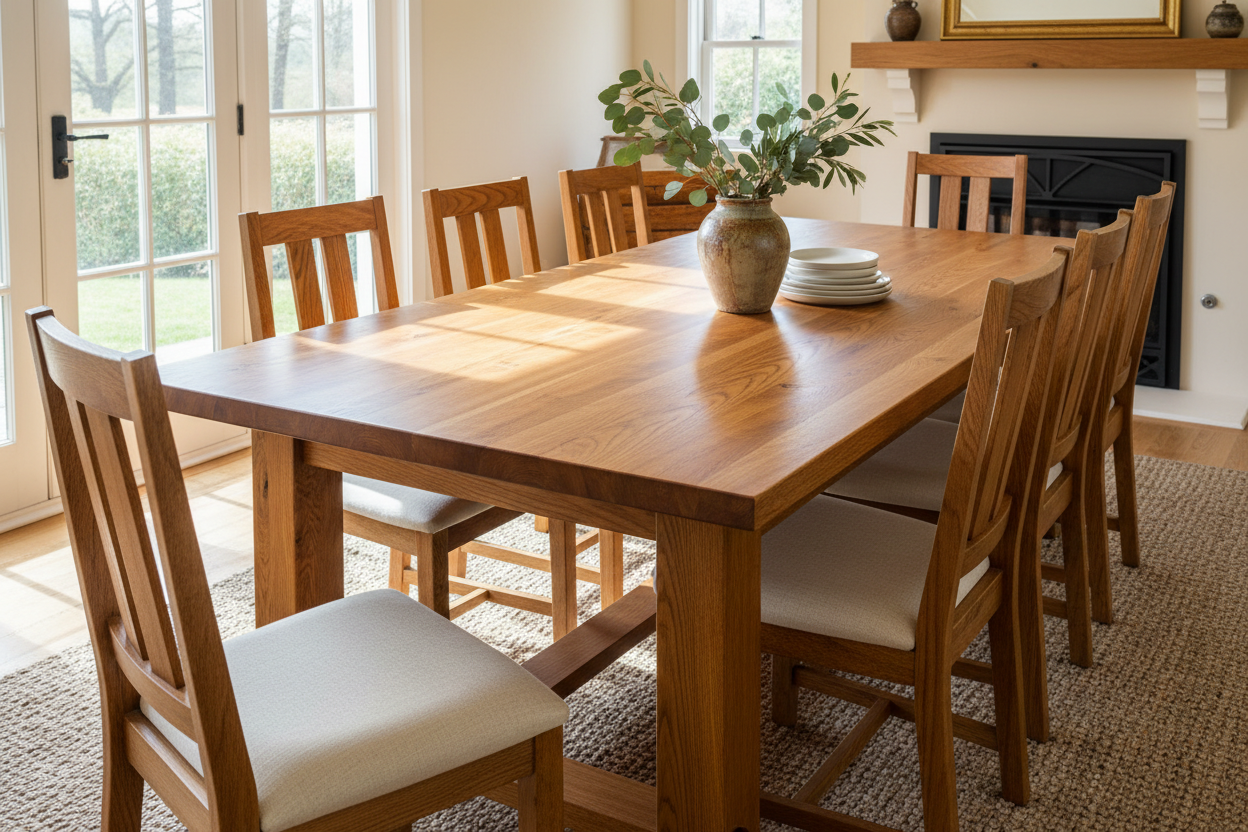
The dining table is the anchor of the home. It is where homework gets finished, holiday meals are served, and late-night conversations happen over half-empty wine glasses. If you are tired of replacing wobbly furniture every few years, the answer is straightforward: invest in a solid hardwood dining table set. Unlike particle board or veneer composites that chip and swell with moisture, solid timber offers longevity that can span generations. It is not just about aesthetics; it is about buying a piece of furniture that can physically withstand the chaos of daily life and look better for it.
The Real Value of Solid Timber
Furniture showrooms are often filled with pieces that look substantial but are actually hollow or constructed from engineered wood. While these might save money upfront, they rarely survive a decade of use. A solid wood dining room table set is an investment in permanence. The primary advantage here is refinishing capability. When a laminate table gets scratched, the damage is permanent. When a solid oak or maple table gets scratched, it adds character, or it can be sanded down and refinished to look brand new. This cycle of renewal is why you still see Victorian-era wooden tables in antique shops, while budget furniture from five years ago is sitting in a landfill.
I learned this lesson the hard way in my mid-20s. I bought a trendy, dark-stained table that looked like heavy walnut but was actually MDF with a paper-thin veneer. About six months in, a condensation ring from a water pitcher bubbled the surface. There was no fixing it; the "wood" had essentially dissolved. Years later, I replaced it with a beat-up, second-hand maple farmhouse table. I spent a weekend stripping the old varnish and oiling the wood. That table has survived two moves, three dogs, and countless craft projects. It feels rock-solid, and the grain pattern seems to glow deeper with every year that passes. That is the difference between buying a disposable product and owning a piece of nature.
Understanding Wood Species and Hardness
Not all lumber performs the same way under the pressure of forks, knives, and heavy crockery. When shopping for a hard wood dining table set, you need to look at the Janka hardness scale, which measures the resistance of wood to denting and wear. Softwoods like pine are beautiful and offer a rustic, knotted look, but they will dent easily if you write on a piece of paper directly on the tabletop without a pad.
For a table that acts as a daily workhorse, hardwoods are the superior choice. Maple, oak, cherry, and walnut are the industry standards for a reason. North American White Oak, for instance, is incredibly dense and resistant to fungal attack. Walnut is slightly softer but prized for its rich, chocolate tones that warm up a room instantly. Selecting the right species ensures that your solid wood dining room set fits your lifestyle. If you have toddlers who like to bang spoons on surfaces, Hickory or Hard Maple will be much more forgiving than softer woods.
Kitchen vs. Formal Dining: Finding the Right Fit
Context matters when selecting size and style. Wood kitchen sets often serve a different purpose than formal dining room furniture. In a kitchen or breakfast nook, you might prefer a round pedestal table or a trestle base that allows for easy movement in a high-traffic zone. These sets often lean toward lighter woods or painted bases with natural tops to keep the space feeling airy. Durability is paramount here because kitchen tables see three meals a day plus homework and prep work.
Conversely, a formal space might demand a long rectangular harvest table. Many all wood dining room sets come with self-storing leaves, allowing the table to expand from seating six to twelve people. When looking at extendable tables, check the mechanism. Wooden glides are traditional and reliable, but high-quality metal gear slides can offer smoother operation. The key is to ensure the grain on the extension leaves matches the main tabletop, a detail often overlooked in mass production but standard in quality craftsmanship.
Construction Indicators of Quality
Identifying a genuine piece requires looking underneath the tabletop. You want to see how the wood moves. Real wood expands and contracts with humidity changes. If a tabletop is screwed directly into the frame without any room for movement, it will eventually crack. Quality craftsmen use "buttons" or Z-clips that hold the top down while allowing it to float slightly.
Check the joinery on the chairs and table legs as well. Mortise and tenon joints, reinforced with corner blocks, are the hallmark of a sturdy solid wood dining room set. Avoid furniture held together primarily by staples or glue alone. If you shake a chair and it wobbles in the showroom, it will not survive Thanksgiving dinner. Furthermore, look for "all wood" construction in the descriptions. Some retailers use tricky language like "solid wood finish," which usually implies a veneer. You want assurance that the legs, skirt, and top are structural timber.
Maintenance and Care for Long-Term Beauty
Owning natural furniture does require a shift in how you clean. Harsh chemical cleaners can strip oil finishes or cloud lacquer. A damp cloth followed by a dry one is usually sufficient for daily wiping. For an oil-finished solid hardwood dining table set, you might need to re-apply oil once a year to keep the fibers saturated and repel water. This maintenance is a small price to pay for a surface that feels warm to the touch and lacks the plasticky feel of synthetic materials.
Humidity control is also a factor. Wood breathes. Keeping your home's humidity levels relatively stable prevents gaps from forming in the planks or the wood from warping. Avoid placing the table directly over a heating vent or in direct, scorching sunlight, which can bleach the color over time—though some people love the silver-gray patina that sun-bleached wood acquires.
Making the Decision
The upfront cost of solid wood is higher than the alternatives, but the cost-per-use over a lifetime is significantly lower. You stop paying for replacements and start building a history with a piece of furniture. Whether you prefer the rustic charm of wood kitchen sets or the elegance of a polished mahogany suite, the material remains the most critical factor. Wood brings an organic, grounding element to a home that metal and glass simply cannot replicate. It connects the indoors to the outdoors and provides a sturdy foundation for family life.
Frequently Asked Questions
How do I fix white heat marks on my solid wood table?
White rings usually indicate moisture trapped in the finish, not damage to the wood itself. You can often remove them by gently ironing over a towel placed on the spot (no steam) or by rubbing the area with a paste of baking soda and toothpaste, though you should always test a small hidden area first.
Can I mix different wood tones in my dining room?
Absolutely, mixing woods adds depth and prevents the "catalog look" where everything matches perfectly. A good rule of thumb is to keep the undertones (warm vs. cool) consistent, or mix a stained wood table with painted chairs to create visual contrast.
Is solid wood better than veneer for dining tables?
Solid wood is generally better for longevity because it can be sanded and refinished multiple times, whereas veneer cannot be repaired if deep scratches occur. However, high-quality veneer over a stable core can be more resistant to warping in climates with extreme humidity fluctuations.


Leave a comment
This site is protected by hCaptcha and the hCaptcha Privacy Policy and Terms of Service apply.