










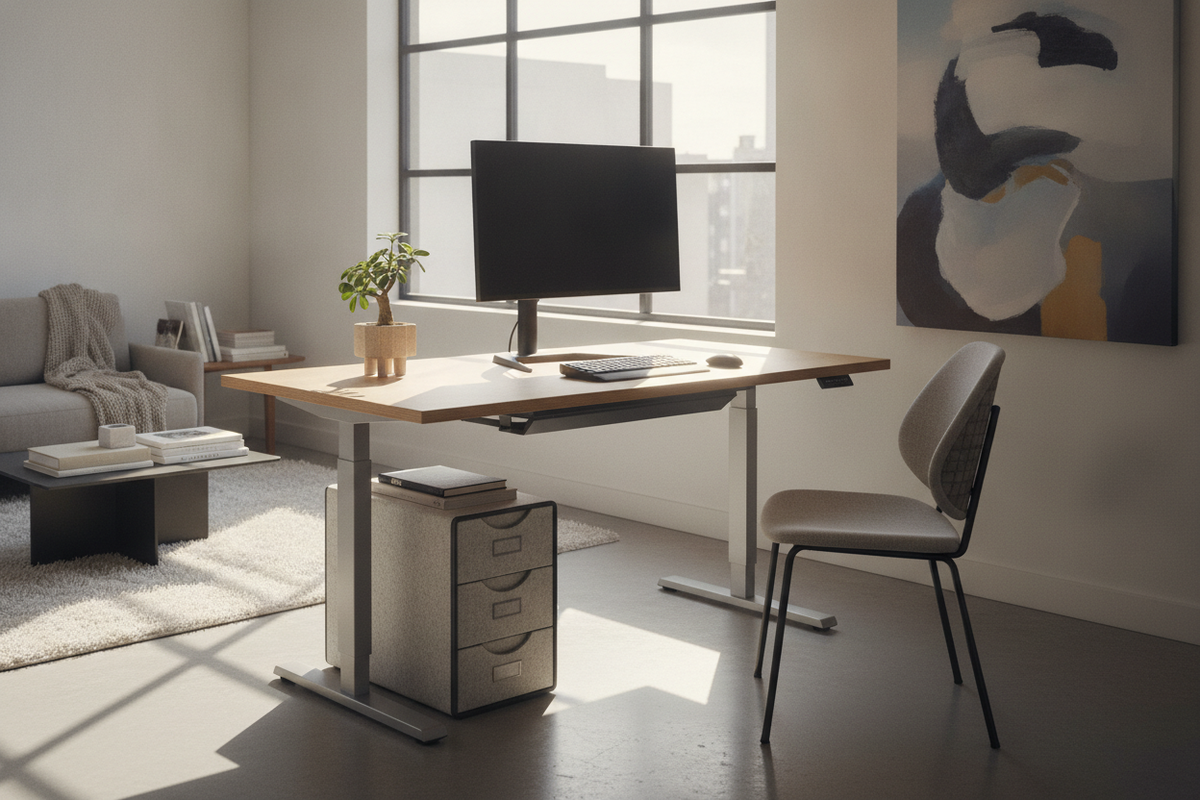
Height-adjustable workstations have long been defined by dual-column cantilevered metal frames. While functional, standard two-leg motor bases often carry an unmistakably utilitarian look that feels somewhat disconnected from residential interior design. The emergence of the branch four leg standing desk concept represents an intentional shift toward furniture-grade architectural design. By distributing dynamic elevation mechanisms across four perimeter posts, this structural approach redefines how an executive workspace looks, moves, and integrates with surrounding furniture.
Quad-Column Architectural Dynamics: Why Four-Leg Standing Desks Stand Apart
Traditional motorized desks rely on an inverted T-frame or C-frame architecture, where two central steel columns support the desktop through cantilevered top supports. Under shifting typing pressures or monitor arm torque, two-legged frames can experience micro-deflections and harmonic resonance, particularly at full standing height. A quad-post frame, however, treats the workstation like an architectural table, securing the tabletop at all four structural corners.
By moving the lifting columns to the outer perimeter, four-leg standing desks distribute downward vertical forces and lateral dynamic loads across a wide, balanced footprint. This geometry significantly mitigates front-to-back tilt and lateral sway, creating a calm, rock-solid surface for typing, drawing, and multi-display configurations. For professionals exploring an adjustable height standing desk with electric lift system, transitioning to a four-corner column design brings both visual symmetry and structural composure.
Dimensional Tiers and Room Placement Strategy
Integrating a quad-post desk into a room layout requires evaluating how the frame occupies visual and physical space. Because four legs define a full rectangular volume rather than an open cantilevered center, spatial placement dictates the overall room flow.
- Dedicated Executive Offices: Positioning the workstation in a "floating" orientation—centered in the room facing the door—takes advantage of the 360-degree finished aesthetic of quad-leg geometry.
- Perimeter Wall Placement: Aligning the desk along a feature wall allows ample clearance for nearby storage credenzas, shelving units, and access to wall power outlets.
- Multi-Purpose Rooms and Alcoves: In shared living or study spaces, keeping adequate dynamic clearance around windows, baseboards, and heating registers ensures smooth vertical travel without scuffing perimeter walls.
Reviewing curated designer ideas for standing desk layouts can help you tailor clearances to your room dimensions while preserving natural walkways and conversation zones.
Surface Depth and Ergonomic Equipment Zoning
A balanced desktop arrangement relies on structured surface zoning. When planning your layout on a broad executive desk, such as a 71 w height adjustable standing desk, consider dividing the tabletop into functional zones:
- Primary Active Zone: The central foreground area dedicated to keyboard, mouse, and immediate input devices, positioned to support neutral wrist alignment.
- Focal Horizon Zone: The rear central area reserved for primary and secondary monitor displays mounted at comfortable eye level.
- Perimeter Utility Tier: The left and right perimeter zones for task lighting, desktop organizers, reference documents, and charging docks.
Material Architecture, Surface Finishes, and Aesthetic Cohesion
The visual warmth of a four-leg desk depends largely on material pairings. A high-grade laminate, beveled edge profile, or natural wood veneer provides tactile comfort while resisting daily wear. When paired with durable powder-coated steel legs in neutral tones like charcoal, off-white, or warm slate, the desk transforms from a technical appliance into a centerpiece of residential design.
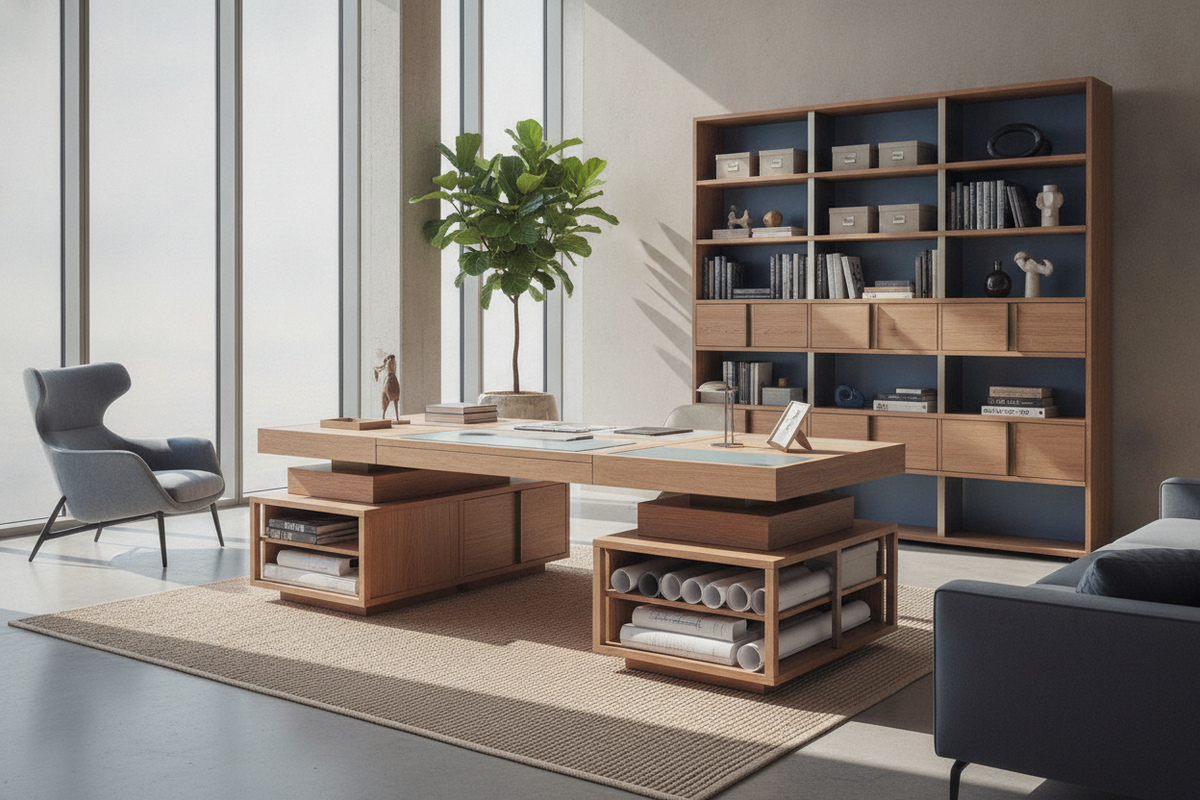
Achieving visual harmony requires coordinating workstation timber tones and frame finishes with surrounding cabinetry, bookcases, and interior architecture. When designing a standing desk setup that actually looks good, mirroring tabletop grain patterns in adjacent credenzas or accent shelves creates an intentional, elevated environment.
Cable Architecture and Kinetic Wire Management
Because a quad-leg frame features an open undercarriage with four exposed posts, visible dangling cables can quickly disrupt the refined aesthetic. Managing cable routing requires a structured kinetic management strategy:
- Articulated Cable Spines: Enclosed kinetic cable chains carry power and display cables from the floor or wall box up to the desk frame without snagging or binding during vertical travel.
- Under-Desk Power Distribution: Mounting power strips and high-capacity cable trays directly beneath the tabletop allows all peripheral plugs to move upward together with the frame.
- Leg-Channel Magnetic Covers: Utilizing magnetic wire channels aligned along the inner facets of the steel posts keeps single power feeds concealed and aligned with desk geometry.
Storage Architecture: Pairing Credenzas, Pedestals, and Sideboards
Unlike standard dual-leg desks that have large open cantilevered floor plates, a quad-leg frame introduces perimeter corner legs that define the exact under-desk clearance width. Careful planning ensures secondary storage works alongside the desk without restricting legroom or collision safety.
For spacious setups, such as a super sized standing desk with electric lift, low-profile mobile pedestals can easily dock beneath the work surface while leaving ample space for chair movement. When desk depth is narrower, shifting archival storage, filing, and oversized peripherals to adjacent credenzas, sideboards, or wall-mounted shelving ensures your workstation maintains an open, uncluttered posture.
Assembly Planning, Leveling, and Long-Term Maintenance
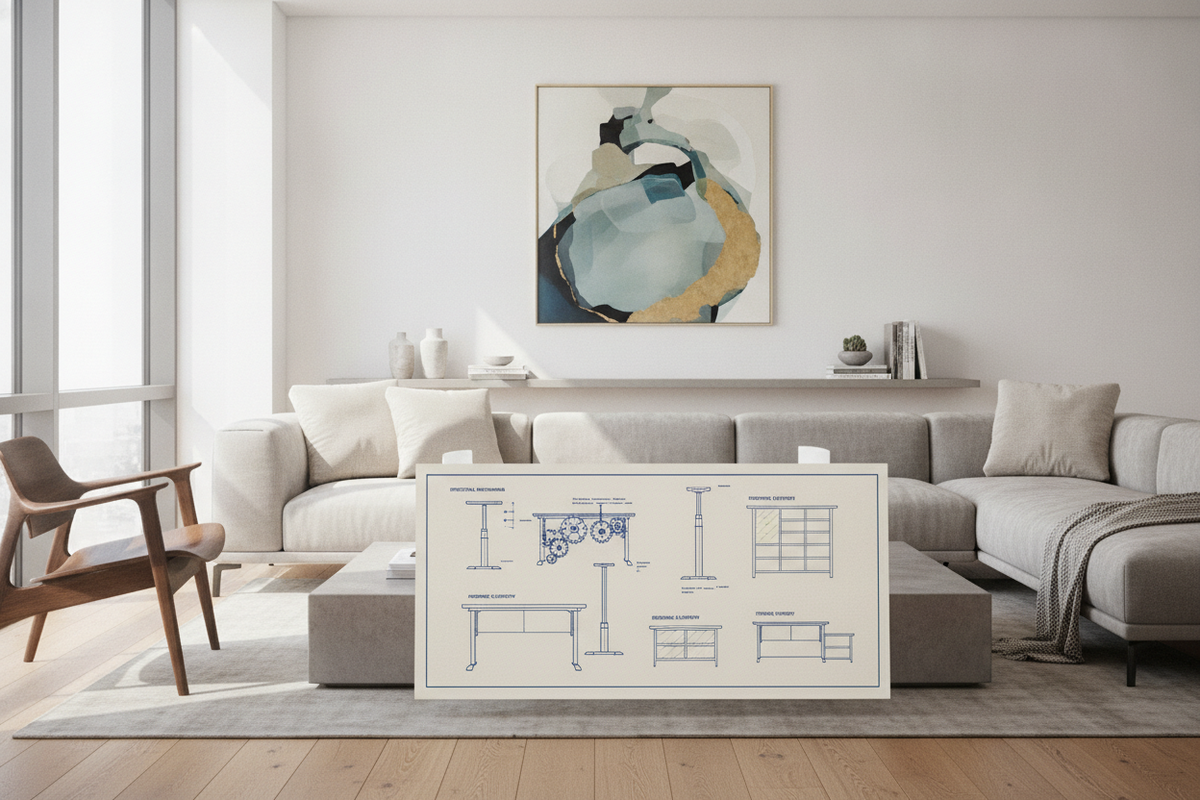
Ensuring smooth long-term operation from a four-column motorized system starts with precise assembly and foundation leveling. Quad-leg systems rely on synchronized lifting mechanisms, making a level installation essential for balanced motor load distribution across all four posts.
During initial setup, utilize the adjustable leveling glides beneath each foot to compensate for subtle floor variations between hardwood, area rugs, or tile grout lines. Periodically checking the tightness of frame bolts and clearing dust from telescoping leg tracks ensures quiet, reliable elevation transitions over years of daily use.

Dejar un comentario
Este sitio está protegido por hCaptcha y se aplican la Política de privacidad de hCaptcha y los Términos del servicio.