










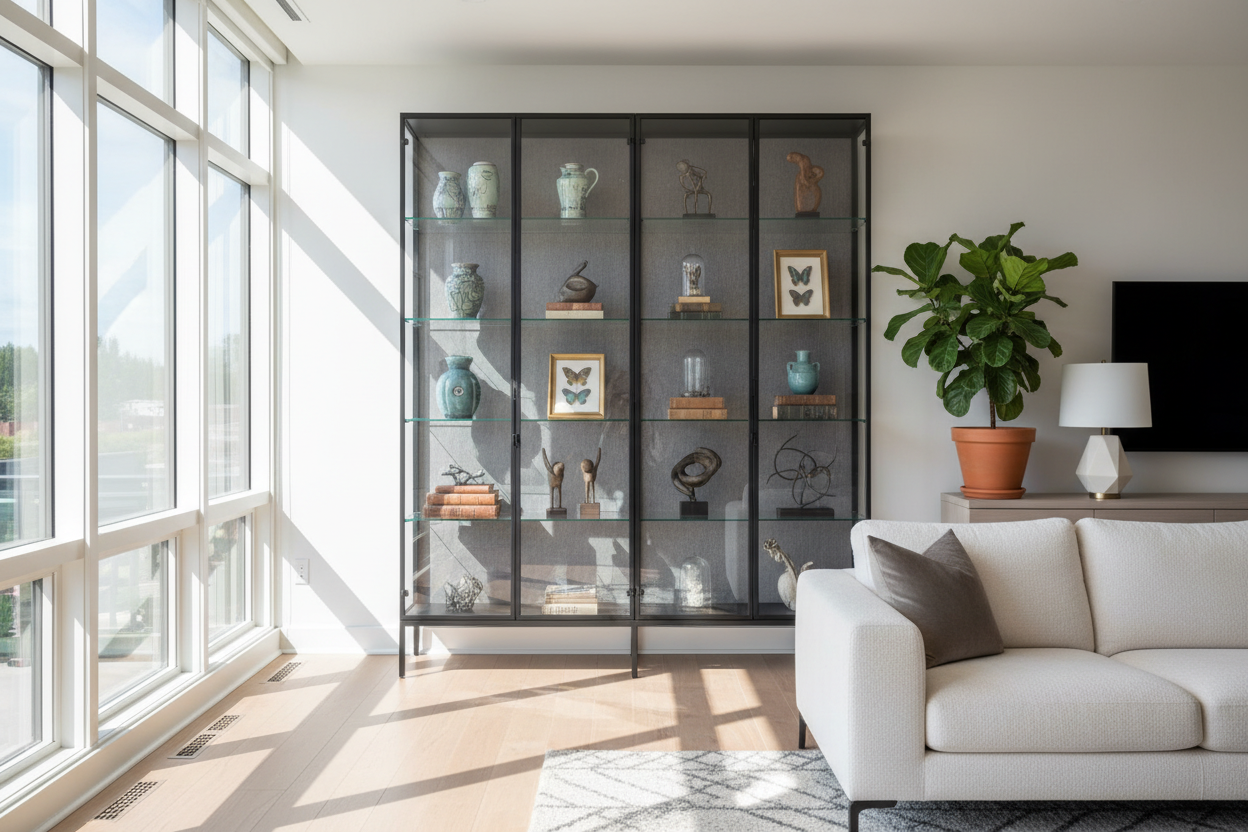
We all have pieces that mean something to us—vintage cameras, inherited porcelain, or a curated selection of art books. But there is a fine line between a thoughtful collection and a living room that feels like a crowded antique shop. Often, the culprit isn't the items themselves, but how they are housed. A well-chosen collectible display cabinet provides structure and negative space, turning scattered objects into a cohesive, intentional focal point.
Over my 15 years designing residential interiors, I have seen countless homeowners struggle with displaying their treasures. They buy a piece that looks great in a catalog, only to find it overwhelms their suburban family room or feels too sterile and commercial. Here is what you actually need to know to choose and style a cabinet that honors your collection without compromising your room's aesthetic.
Quick Decision Guide
- Prioritize tempered glass: Standard glass is a safety hazard in busy homes; tempered glass shatters safely and handles temperature shifts better.
- Check the weight limits: Solid wood or steel frames are essential if you are displaying heavy ceramics or thick books.
- Look for dust seals: Overlapping doors or subtle weather-stripping will save you hours of meticulous cleaning.
- Demand adjustable shelving: Fixed shelves rarely accommodate the varying heights of a growing collection.
- Opt for warm LED lighting: Integrated lights should be between 2700K and 3000K to provide a residential, inviting glow rather than a harsh retail glare.
Material and Build Quality: Beyond the Surface
When sourcing a display cabinet for collectibles, the frame material dictates the entire visual weight of the room. Solid woods like walnut or white oak bring warmth and ground a space, making them ideal for transitional or mid-century layouts. Metal frames, particularly in matte black or unlacquered brass, offer a thinner silhouette that works beautifully in smaller apartments where you need the piece to feel visually light.
The Importance of Glass Quality
A glass display cabinet for collectibles is only as good as its transparency. Look for low-iron glass if possible; standard glass has a slight green tint that can subtly distort the colors of the items inside. Additionally, if the cabinet has glass sides rather than solid wood, it will allow ambient light to pass through, keeping the furniture from feeling like a dark, heavy box in the corner of your room.
Space Planning: Proportion and Placement
One of the biggest mistakes I see in open-concept living rooms is floating a massive collector display cabinet on a small sliver of wall. Treat cabinets for collectibles like architectural features. They need breathing room. Leave at least 12 to 18 inches of negative space between the top of the cabinet and the ceiling, and avoid wedging it right up against your sofa.
Balancing Visual Weight
If you have a heavy, upholstered sectional, a delicate glass cabinet for collectibles provides excellent contrast. Conversely, if your seating is leggy and minimal, a more substantial wood-framed cabinet can anchor the room. Always anchor these tall pieces to the wall—not just for earthquake safety, but because the uneven weight distribution of heavy collectibles can cause tipping on plush carpets.
Designer's Honest Take: The Dust and Light Dilemma
Early in my career, I specified a stunning, minimalist collectible cabinet with raw steel framing for a client's vintage pottery collection. It looked incredible on installation day. But I learned a hard lesson: the sleek, handle-free doors had a quarter-inch gap all the way around. Within a month, the glass display shelves for collectibles were coated in a visible layer of household dust, and the client was spending their weekends cleaning instead of enjoying their pieces.
I also realized the hard way that aftermarket lighting rarely looks high-end. Stick-on puck lights eventually lose their adhesive and cast harsh, uneven shadows. If lighting is important to you, invest in a piece with factory-integrated, channeled LED strips hidden within the frame. It costs more upfront, but the hassle it saves is entirely worth the premium.
Frequently Asked Questions
How deep should a display cabinet be?
For most residential spaces, a depth of 14 to 16 inches is ideal. This is shallow enough to prevent items from getting lost in the shadows at the back, but deep enough to accommodate larger bowls or angled picture frames.
How do I protect my items from fading?
Direct sunlight is the enemy of any collection. Place your cabinet away from direct, south-facing windows. If you must place it in a sunny room, apply a clear, UV-blocking window film to the glass doors of the cabinet to prevent fabrics, artwork, and painted figures from deteriorating.
Should the cabinet match my other furniture?
Not necessarily. A display piece is an excellent opportunity to introduce a new texture or finish. If your dining table and chairs are light oak, a charcoal or deep olive cabinet can act as a striking, contrasting focal point rather than blending into a sea of matching wood tones.

Dejar un comentario
Este sitio está protegido por hCaptcha y se aplican la Política de privacidad de hCaptcha y los Términos del servicio.