










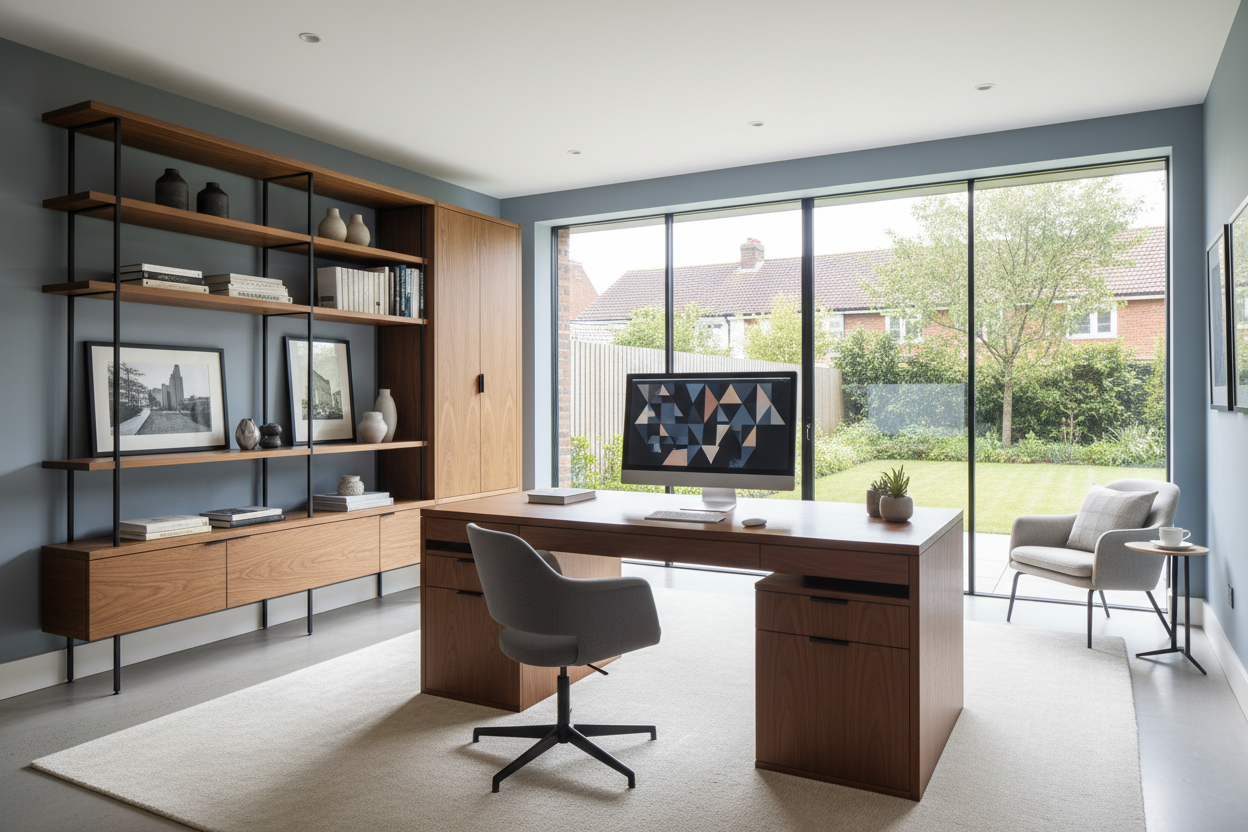
When clients come to me looking to overhaul their study, they often feel overwhelmed by the sheer volume of online retailers. It is a common frustration: typing a search for a uk home office official website often leads to government portals rather than high-end furniture sources. However, applying the rigor of "official" British standards—specifically regarding ergonomics and build quality—is exactly how we achieve a luxury workspace. This article steers you away from flat-pack fatigue and toward curating a space that balances professional function with high-end British aesthetics.
Quick Decision Guide: The Essentials
Before investing in a new setup, run your potential furniture choices through this checklist to ensure they meet professional design standards:
- BS EN 527 Compliance: Look for this British Standard certification which ensures desks meet durability and safety requirements.
- Material Provenance: Prioritize FSC-certified solid oak or walnut over particle board for longevity and visual weight.
- Ergonomic Adjustability: Chairs must offer lumbar support and seat slide functionality, not just height adjustment.
- Cable Management: Professional desks should have integrated cable trays to maintain visual minimalism.
- Surface Finish: Matte or satin finishes reduce glare from monitors compared to high-gloss lacquers.
Sourcing from the Right Channels
Finding a legitimate uk home office website dedicated to furniture requires discerning taste. In the United Kingdom, the market is flooded with dropshippers masquerading as heritage brands. When I curate for a client, I look for specific indicators of quality that separate a generic retailer from a specialist.
Authenticity vs. Aesthetics
A trustworthy united kingdom home office website for furniture will always list the detailed specifications of their joinery. We are looking for dovetail joints in drawers and high-grade steel in the frame construction. If the site only offers vague descriptions like "wood effect," it is best to navigate away. True luxury lies in the tactile experience—the cold touch of real brass hardware or the grain texture of solid timber.
Mastering the Layout and Flow
Once you have sourced the pieces, placement is paramount. In interior design, we refer to the "Command Position." You should never face a wall if you can avoid it. Instead, position your desk so you have a view of the door, but are not directly in line with it. This reduces subconscious tension and improves focus.
Lighting and Ambience
Lighting is often the failure point in DIY designs. A single overhead pendant casts unflattering shadows during video calls. Layer your lighting: use an architectural task lamp for the desk surface and soft, ambient floor lighting to soften the room's edges. This creates a workspace that feels less like a cubicle and more like a library.
Lessons from My Own Projects
I want to share a specific realization from a project I completed in a Kensington townhouse last year. We sourced a beautiful, mid-century modern desk from what looked like a reputable vendor. On screen, the finish looked impeccable. However, within three weeks of the client using it, I noticed micro-scratches appearing simply from a ceramic coffee mug moving across the surface.
The issue wasn't the look; it was the lacquer density. Since then, my personal take on any uk home office official website or furniture supplier is to request a finish sample first. I now perform a "fingernail test" on every sample. If I can leave a mark with moderate pressure, it won't survive a 40-hour work week. Furthermore, I learned that cable management isn't just aesthetic—it's safety. On that same project, we had to retrofit a cable spine because the "minimalist" desk had zero wire provisions, leaving a trip hazard. Always check the underside of the desk before you buy; that is where the engineering truth lives.
Conclusion
Designing a home office is about more than just filling a room with a desk and chair; it is about creating an environment that respects your workflow and your well-being. By sourcing from reputable British suppliers and paying attention to materiality and light, you elevate your daily grind into a refined ritual.
Frequently Asked Questions
What is the ideal desk depth for a home office?
For professional use, aim for a depth of at least 80cm. This allows enough distance between your eyes and the monitor to reduce strain, while providing ample space for documents and keyboards.
How do I identify a quality veneer?
Check the edges. A high-quality wood veneer should be at least 0.6mm thick and applied to a stable substrate like MDF or ply. If the edge banding peels or looks like a sticker, it is a low-grade melamine.
Should I choose a carpet or hard floor for my office?
Hard flooring (wood or LVT) is preferable for chair movement. If you prefer the acoustic dampening of carpet, ensure you use a low-pile commercial grade or a high-quality polycarbonate chair mat to prevent castor drag.

Dejar un comentario
Este sitio está protegido por hCaptcha y se aplican la Política de privacidad de hCaptcha y los Términos del servicio.