










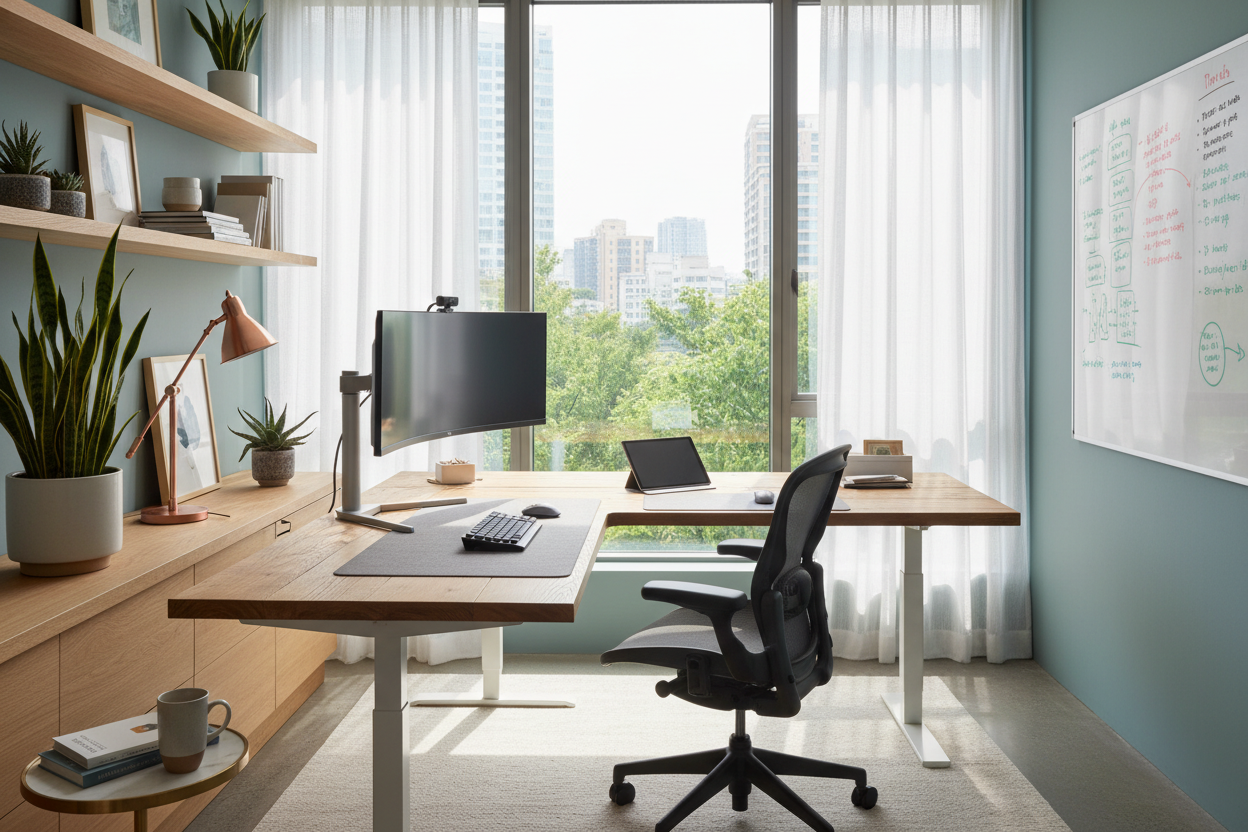
We often blame our lack of focus on poor time management or digital distractions, but as an interior designer, I see a different culprit: the physical environment. You cannot expect high output from a space designed for leisure or, worse, a chaotic corner that lacks structure. To truly enhance the productivity of your workday, you must treat your workspace as a functional tool, much like the computer you type on.
Key Design Elements for Focus
If you are wondering how to increase productivity through interior design, prioritize these foundational elements before buying a single accessory:
- Ergonomics: The relationship between your body and your furniture dictates your endurance.
- Lighting Layers: Balancing task lighting with ambient glow to reduce eye strain.
- Color Psychology: Using hues that stimulate the brain rather than induce sleep.
- Acoustics: Managing sound reflection to minimize cognitive load.
- Spatial Zoning: Creating distinct boundaries between work and rest areas.
The Ergonomic Foundation: Seating and Surfaces
The most effective way to improve productivity is to eliminate physical discomfort. When your body is fighting gravity or straining to see a screen, your mental energy depletes rapidly. Investing in a high-quality task chair is not just about luxury; it is a necessity that increases productivity by allowing you to sit for longer periods without fatigue.
Look for a chair with adjustable lumbar support and seat depth. When selecting a desk, consider a sit-stand model. The ability to alternate between sitting and standing is a proven productivity booster, as it keeps blood circulating and energy levels stable. If you ask how can you improve productivity without a new desk, ensure your monitor is at eye level to maintain a neutral neck spine position.
Lighting: The Invisible Productivity Tool
Lighting is often the most overlooked aspect when people ask how to enhance productivity. Relying solely on overhead recessed cans creates harsh shadows that strain the eyes. To raise productivity, you need to mimic natural light cycles.
Temperature Matters
Cooler light (3000K-4000K) promotes alertness and focus, making it ideal for task lamps. Warmer light is for relaxation. One of the best tips for improving productivity is to position your desk perpendicular to a window. This maximizes natural light without the glare that washes out screens and causes headaches.
Spatial Planning and Visual Balance
Clutter is visual noise. Improving productivity at work requires a layout that minimizes distraction. In my design practice, I advocate for 'negative space'—areas on your desk and shelves that are intentionally left empty. This gives the eye a place to rest.
If you are looking for strategies for productivity in small spaces, utilize vertical storage. Floating shelves draw the eye upward and keep essential tools within reach but off the work surface. This organization is essential if you want to maximise productivity; searching for lost documents effectively breaks your flow state.
Color Psychology and Texture
How do you increase productivity using paint? Move away from sterile white. Soft blues and greens are known to improve efficiency and focus, while pops of yellow can stimulate creativity. However, improving productivity requires balance. Too much bold color can be overstimulating. I often recommend a matte finish to reduce light reflection and create a sophisticated, grounded atmosphere.
Lessons from My Own Projects
I recall a specific project for a client who was a financial analyst. He had the most expensive gear—top-tier monitors, a $2,000 chair—but he was constantly fatigued. He kept asking, "How can I increase my productivity when I have the best equipment?"
I visited his home office and noticed the issue immediately: acoustic reverb. The room had hardwood floors, glass windows, and sleek, hard furniture. Every keystroke and phone call echoed, creating a subtle but constant layer of stress. It wasn't about the furniture; it was about the texture.
We introduced a high-pile wool rug, heavy velvet drapery, and acoustic felt panels behind his monitor. The change was instant. The room became "quiet" visually and aurally. The lesson here is that productive changes often involve softening the space, not just buying tech. The tactile experience of a room—how it sounds and feels—is a massive, hidden factor in how to promote productivity.
Conclusion
Ultimately, ways to boost productivity go beyond apps and schedules. By curating your environment with intention—focusing on ergonomics, lighting, and acoustics—you build a space that supports your ambition. Implement these ideas to increase productivity, and you will find that your home office becomes a catalyst for your best work.
Frequently Asked Questions
What is the best desk placement to help with productivity?
The "command position" is the best way to increase productivity regarding layout. Position your desk so you can see the door but are not directly in line with it. This reduces subconscious anxiety about someone approaching from behind.
How can I improve my productivity in a windowless room?
If you lack natural light, use daylight-simulating LED bulbs (around 4000K) in your task lighting. Adding a large mirror can also reflect ambient light and reduce the feeling of confinement, which helps boost your productivity.
Is a standing desk worth the investment to increase your productivity?
Yes. The ability to shift posture is a major method to improve productivity. It prevents physical stagnation and the afternoon energy slump, keeping your mind alert.

Dejar un comentario
Este sitio está protegido por hCaptcha y se aplican la Política de privacidad de hCaptcha y los Términos del servicio.