










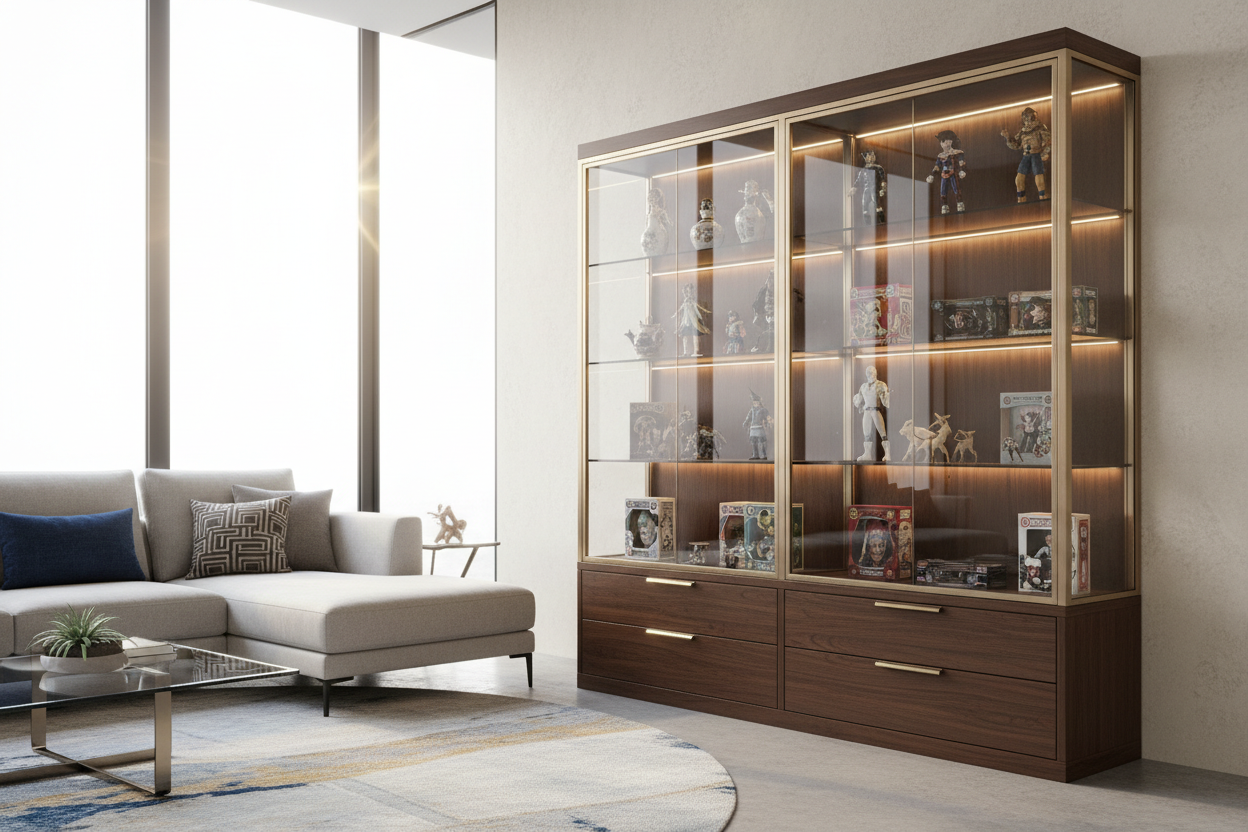
Anyone who collects knows the struggle. You spend years hunting down rare pieces, only to line them up on a dusty bookshelf where they look more like clutter than a curated collection. Finding the right display cabinet for figures is the crucial step that shifts your room from a chaotic storage space to a sophisticated, gallery-like environment. In this guide, I will walk you through exactly what to look for—from structural integrity to lighting—so your collection gets the showcase it deserves without overwhelming your home.
Quick Decision Guide
- Prioritize tempered glass: Standard annealed glass is a safety hazard and cannot support the weight of heavy resin or polystone pieces.
- Look for dust-proofing: A true figurine display cabinet should have minimal gaps around the doors or include discreet weather-stripping to cut down on maintenance.
- Check shelf adjustability: Fixed shelves rarely accommodate dynamic poses, varying scale sizes, or future additions to your collection.
- Plan for power: Always map out your room's outlets before buying; built-in lighting requires hidden cable management to maintain a clean aesthetic.
Material & Build Quality
Glass vs. Acrylic Enclosures
When shopping for a cabinet for figurines, the clear panels are just as important as the frame. Acrylic is lightweight and shatter-resistant, but it scratches easily and can yellow over time if exposed to ambient UV light. Tempered glass is the industry standard for high-end displays. It maintains optical clarity, resists scratching from dusting, and handles the shifting humidity of typical North American homes much better than cheap plastics.
The Frame: Wood vs. Metal
A solid wood frame adds warmth and anchors a room, making it ideal for transitional or traditional spaces. However, thick wooden stiles can block the view of your collection from certain angles. Metal frames with slim profiles offer a modern, minimalist silhouette that maximizes the viewing window. Just ensure the metal is powder-coated rather than painted to prevent chipping around the door hinges over time.
Space Planning & Layout
Managing Visual Weight
A tall, fully enclosed glass case carries surprisingly little visual weight, making it a great choice for small apartments or tight corners. If you are placing multiple figurine cabinets side-by-side to create a massive display wall, leave at least 4 to 6 inches of negative space between them, or build them out as a seamless custom unit. Pushing freestanding cabinets flush against each other often creates awkward shadow lines and makes the room feel cramped.
Clearance and Walkways
Always account for the door swing. If you opt for a hinged display case, you need a minimum of 36 inches of clearance in front of it to comfortably open the doors and clean the interior. For tighter hallways or narrow media rooms, sliding bypass doors are a much more practical solution.
Designer's Honest Take
A few years ago, I designed a basement media room for a client with an extensive, highly valuable collection of 1/4 scale statues. We ordered a sleek, matte-black display case that looked incredible in the catalog. I learned the hard way that aesthetics mean nothing if the engineering fails. Within a month, the standard 3/16-inch glass shelves began bowing under the weight of the heavier pieces. We had to scramble to have custom 3/8-inch tempered glass cut locally to replace them.
Furthermore, the doors had a quarter-inch gap down the center. Dust practically magnetized to the dark bases of the figures. I now refuse to specify any display case for clients unless it features a dust-sealed door mechanism and clearly published weight capacities per shelf. Do not cheap out on the structural components.
Frequently Asked Questions
What is the best lighting for my collection?
LED strip lighting installed vertically along the front inside corners provides the most even illumination. Avoid overhead puck lights, which cast harsh downward shadows over the faces of your pieces and leave the bottom shelves completely dark.
How do I keep dust out of my display case?
Look for cases with overlapping sliding doors or brush-gasket seals. If you already own a piece that lets dust in, you can buy clear silicone weather-stripping online and apply it to the interior edges of the doors to create a much tighter seal.
How much negative space should I leave on the shelves?
Treat your shelves like a museum, not a storage unit. Aim to leave at least 30 to 40 percent of the shelf space completely empty. This allows the eye to rest and highlights the individual details of your pieces rather than creating a chaotic wall of plastic and resin.

Dejar un comentario
Este sitio está protegido por hCaptcha y se aplican la Política de privacidad de hCaptcha y los Términos del servicio.