










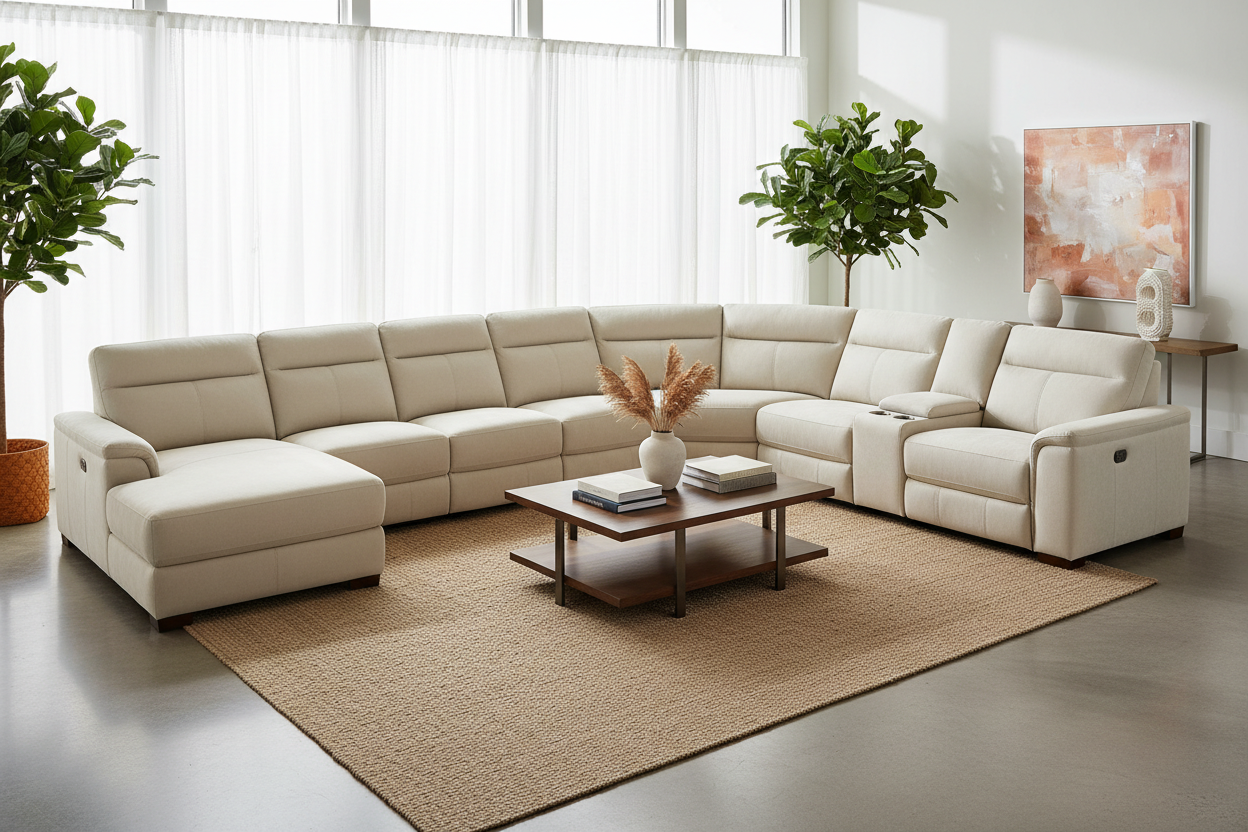
Finding a seating solution that bridges the gap between high-end aesthetics and Sunday-afternoon comfort is notoriously difficult. Clients often come to me torn between the sleek lines of a stationary sofa and the ergonomic relief of a recliner. The 6-piece reclining sectional with chaise is frequently the proposed compromise, offering ample seating and lounge options. However, due to its substantial visual weight and mechanical footprint, this piece requires careful spatial planning to avoid overwhelming a room.
Quick Decision Guide: Key Features to Look For
If you are rushing to make a purchase, ensure your selection meets these critical criteria to ensure longevity and fit:
- Wall-Hugger Mechanism: Essential for tighter spaces; ensures the seat moves forward rather than leaning back into the wall.
- Kiln-Dried Hardwood Frames: Avoids warping over time, which is crucial for the heavy mechanical components of a recliner.
- High-Density Foam (2.0+): Prevents the “sinking” effect where the recliner seat becomes lower than the chaise over time.
- Modular Configurability: Verify if the console and armless chairs can be rearranged to fit different room flows.
- Upholstery Rub Count: Look for 50,000+ double rubs for heavy-use family rooms.
Mastering the Layout and Flow
The most common error homeowners make with a 6-piece sectional is underestimating the “motion footprint.” While the static dimensions might fit your floor plan, you must account for the fully extended footrest and the headrest clearance.
Circulation Paths
In interior design, we prioritize traffic flow. With a reclining sectional, you need a minimum of 36 inches of clearance around the perimeter. However, in front of the reclining seats, this must be calculated while the unit is open. If you place a coffee table too close, the functionality of the recliner becomes obsolete. I often recommend nesting tables or round ottomans on casters that can be easily pushed aside when it is time to relax.
Visual Weight and Balance
A 6-piece unit is a massive object. To prevent it from looking like a “beached whale” in your living room, you must balance its bulk. Avoid pushing it flush against a wall if possible; floating it even a few inches creates a sense of airiness. Counterbalance the heavy upholstery with lighter elements, such as a glass-top coffee table or a rug with a high pile to soften the mechanical edges.
Choosing the Right Material
Because this furniture piece has moving parts, the friction between cushions is a real concern that affects fabric wear.
Leather vs. Performance Fabric
Top-grain leather is the gold standard for motion furniture because it moves fluidly against itself without pilling. If you opt for fabric, avoid loose weaves like linen or boucle, which can snag in the mechanism. Instead, specify a tight-weave performance velvet or a high-grade microfiber. These materials handle the friction of reclining well and conceal the inevitable creasing that occurs where the footrest meets the seat.
My Personal Take on 6-Piece Reclining Sectionals
I learned a hard lesson early in my career regarding the “Chaise vs. Recliner” dynamic. I installed a high-end custom sectional for a client who loved movie nights. After about eight months, I visited for a follow-up.
The issue wasn't the mechanism—it was the cushion density. The reclining seats, which were used daily, had softened significantly, while the chaise (used less frequently and constructed differently) remained firm and lofty. This created an uneven, sloppy sightline across the back and seat deck. Since then, I always advise clients to rotate their seating habits or choose a manufacturer that uses inner-spring coil cushions rather than just foam. It keeps the seat height consistent across the entire 6-piece span, ensuring the piece looks tailored even after years of use. Also, watch out for the “gap”—many recliners leave an unsightly gap between the lower back and the seat when fully reclined, which becomes a black hole for remotes and phones.
Conclusion
A 6-piece reclining sectional with a chaise is a significant investment in your home's comfort. By prioritizing frame integrity, calculating your motion footprint, and selecting friction-resistant upholstery, you can secure a piece that offers luxury without compromising on the practicalities of daily life.
Frequently Asked Questions
How much space do I need behind the sectional for it to recline?
This depends on the mechanism. Standard recliners need 8 to 12 inches of wall clearance. However, “zero-clearance” or “wall-hugger” models require as little as 2 to 4 inches, making them the superior choice for most residential layouts.
Should I get a Left-Arm or Right-Arm Facing Chaise?
Stand facing the spot where the sofa will go. If you want the chaise on your right, you need a Right-Arm Facing (RAF) chaise. The decision should be based on traffic flow; never place the chaise side where it blocks the main entryway to the seating area.
Can I mix power recliners with a manual chaise?
Yes, this is a standard configuration in 6-piece sets. However, keep in mind that power recliners require access to floor outlets or a battery pack. If your sectional is floating in the center of the room, a battery pack is essential to avoid dangerous and unsightly cords snaking across the rug.

Dejar un comentario
Este sitio está protegido por hCaptcha y se aplican la Política de privacidad de hCaptcha y los Términos del servicio.