











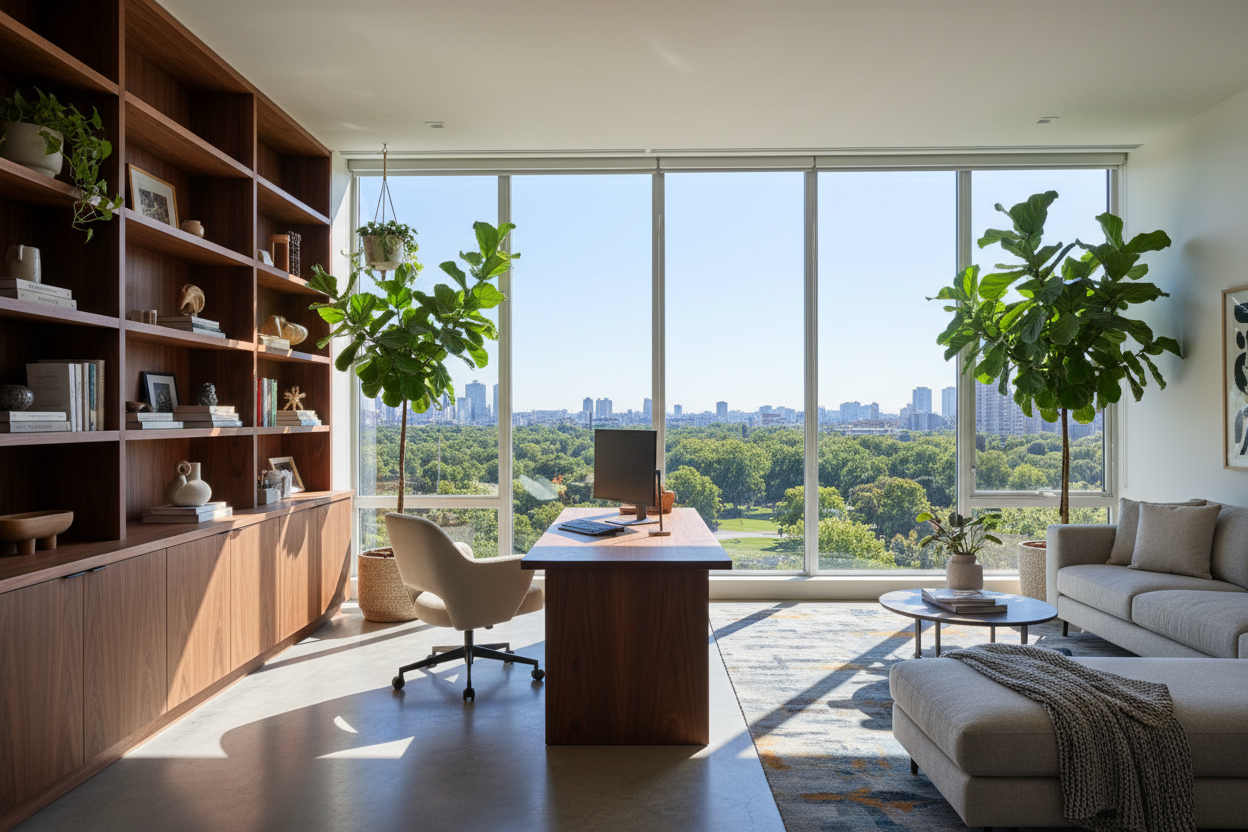
It happens all the time. You set up your workspace to stare out at the neighborhood, only to spend eight hours squinting through severe screen glare. If you are struggling to balance a beautiful view with actual productivity, you are not alone. Exploring practical home office ideas with window placements is the first step to creating a room that feels both inspiring and functional.
In this guide, we will break down exactly how to orient your furniture, control natural light, and handle the tricky ergonomics of working near glass.
Quick Decision Guide
- Face perpendicular to the glass: Placing your desk at a 90-degree angle to the window minimizes harsh screen glare while keeping natural light on your face.
- Layer your treatments: Rely on solar shades for daytime light filtering and thick Roman shades for privacy and temperature control.
- Watch your video background: A window directly behind you will turn you into a dark silhouette on camera.
- Mind the sun damage: Keep sensitive electronics and dark-dyed performance fabrics out of the direct afternoon UV path.
Space Planning & Layout Strategies
When you are designing a home office with big windows, your first instinct is usually to shove the desk right up against the glass. While it looks cinematic, it is an ergonomic nightmare. Your eyes constantly adjust between the bright outdoors and your backlit monitor, leading to severe eye strain.
The Perpendicular Placement
The most reliable layout in North American residential design is placing the desk perpendicular to the window wall. This allows the natural light to wash over your work surface from the left or right. It provides excellent task lighting for reading and writing without washing out your computer screen.
Floating the Desk
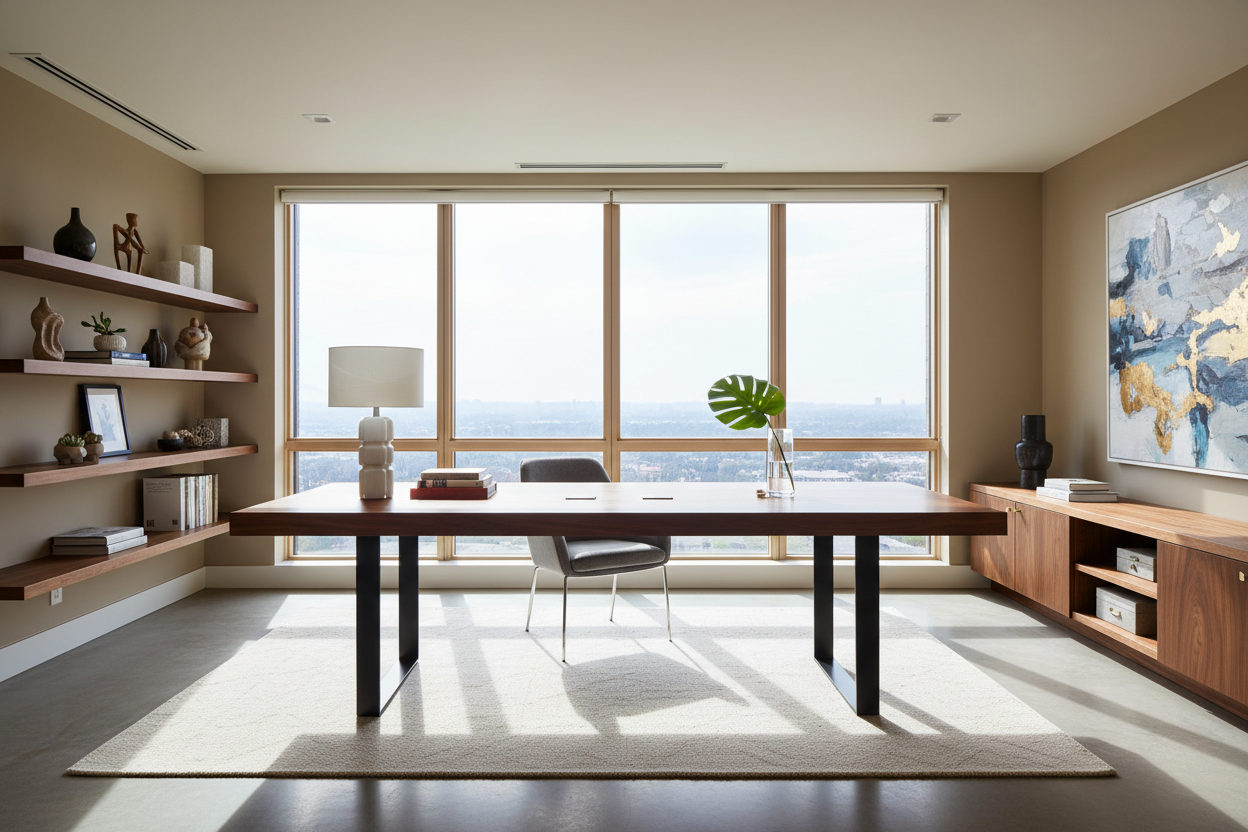
If you have the square footage, try floating the desk in the center of the room, facing the door, with the window to your side. This creates a strong focal point and utilizes negative space beautifully. It also ensures you are facing the room's entrance, which creates a better psychological sense of command over the space.
Controlling Natural Light
A home office with large window expanses brings in incredible energy, but it also brings heat, cold, and unpredictable UV rays. Furniture placement is only half the battle; the rest comes down to styling the glass itself.
Choosing the Right Shades
I always recommend a dual-treatment approach. Start with a 3% or 5% openness solar shade mounted inside the window frame. This cuts the harsh glare and UV rays while preserving your view of the outdoors. Over that, layer a textured Roman shade or drapery panels to add visual weight and absorb acoustic echo—a common issue in rooms with hard surfaces.
Designing for the Camera
In the era of remote work, a home office with lots of windows can actually be a liability on video calls. If the window is directly behind your chair, the camera will expose for the bright daylight, turning your face into a featureless shadow.
Balancing the Exposure
If your room layout forces you to have a window in your background, you need to compensate with strong, diffused lighting in front of you. A pair of LED softboxes or a high-quality ring light can help balance the exposure. Better yet, position your desk so the window is lighting your face, and use a styled bookcase or a clean, painted wall as your background.
Lessons from My Own Projects
A few years ago, I designed a stunning corner office for a client in a mid-century modern home. It had floor-to-ceiling glass on two sides. We placed a gorgeous matte walnut executive desk right in the center. It looked brilliant in the portfolio photos.
I learned the hard way that massive windows turn a room into a greenhouse. By July, the client could barely use the room after 2 PM because the ambient heat was overwhelming, and the UV exposure started bleaching the walnut finish within six months. We had to retrofit the space with motorized UV-blocking shades and reposition the desk to the one solid wall. The downside of a spectacular view is that you have to aggressively manage the climate and light. Never underestimate the destructive power of direct afternoon sun on natural wood veneers.
Frequently Asked Questions
Should my desk face the window or the wall?
Ideally, neither. Facing the window causes eye strain from the brightness contrast, and facing a blank wall feels restrictive. Position your desk perpendicular to the window so the light hits your workspace from the side.
How do I reduce glare on my computer screen?
Install light-filtering solar shades that cut the harshness of direct sunlight while still letting ambient light through. Additionally, tilting your monitor slightly downward or using a matte screen protector can drastically reduce reflections.
Is a window behind the desk bad for video calls?
Yes. A bright window behind you will cause your webcam to auto-expose for the light, leaving you heavily silhouetted. If you must have a window behind you, keep the blinds closed during calls and use a strong key light on your face.

Dejar un comentario
Este sitio está protegido por hCaptcha y se aplican la Política de privacidad de hCaptcha y los Términos del servicio.