








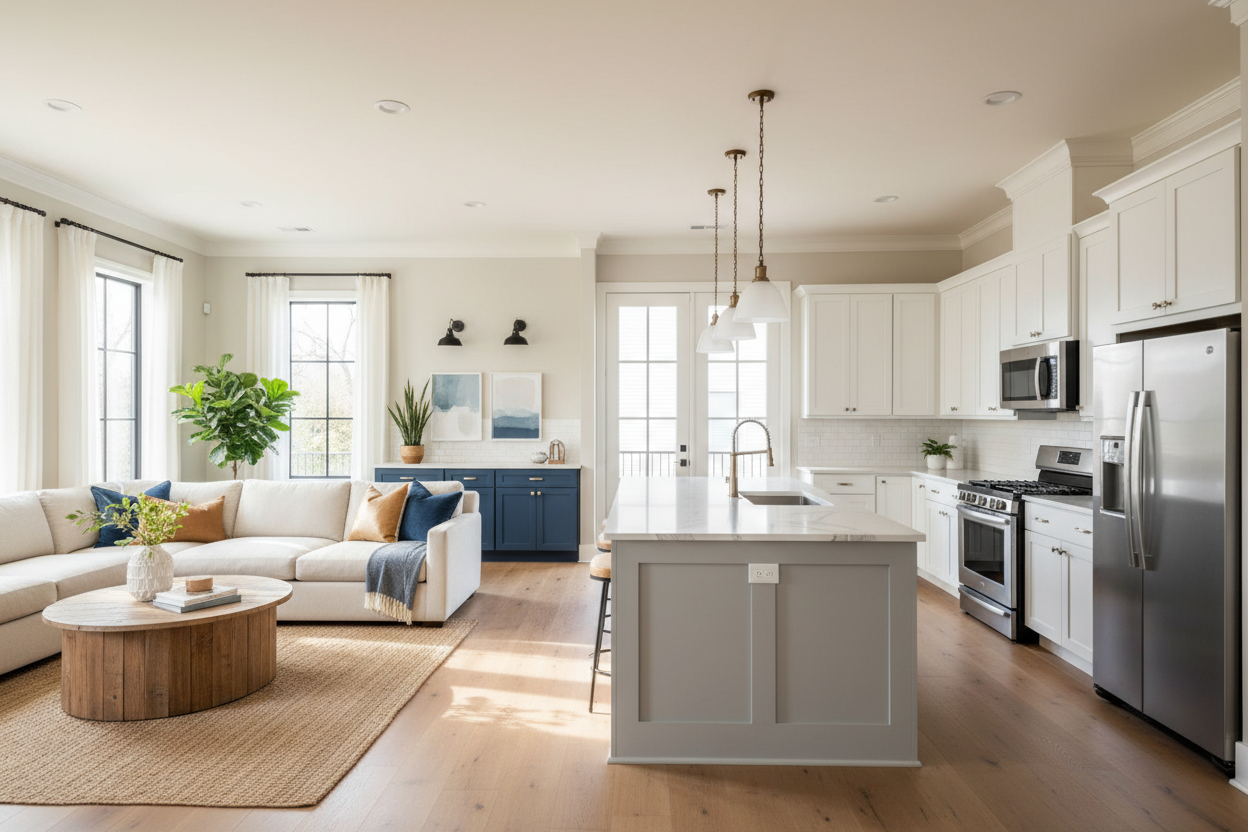
I remember the exact moment I hit a wall with my open-concept floor plan. I was standing at the kitchen island, nursing a lukewarm coffee, staring at a mountain of stuff that had migrated from the front door to the sofa. Mail, dog leashes, a stray Nintendo Switch, and three half-empty packages of Amazon returns. My airy layout had become a visual nightmare where every single item I owned was constantly screaming for attention from across the room.
The problem wasn't a lack of organization; it was a lack of scale. I had spent months trying to solve the problem with cute woven baskets and those tiny, waist-high consoles that look great on Instagram but hold about as much as a shoebox. I finally realized I didn't need more tips—I needed a massive **living spaces cabinet** to act as a dam for the chaos.
Quick Takeaways
- Stop buying small baskets; one large cabinet hides more and looks cleaner.
- Don't fear the height—tall cabinets draw the eye up and make ceilings feel higher.
- Dining room furniture (like china cabinets) works wonders in living areas.
- Glass-front cabinets need a 70/30 mix of 'pretty' items and hidden storage.
- Check for kiln-dried wood frames to avoid warping in high-traffic areas.
The Open-Concept Dilemma (And Why Baskets Just Weren't Cutting It)
Open floor plans are a dream for entertaining but a nightmare for anyone who actually lives in their home. When you don't have walls to hide behind, every cord, toy, and pile of mail becomes part of your decor. I tried the basket method for a year. I had seagrass baskets for the kids' blocks, wire baskets for the magazines, and felt bins for the dog toys. All it did was create a textured graveyard of clutter on my floor.
The issue is visual noise. A dozen small storage solutions make a room feel busy and fragmented. I realized that by upgrading our living room storage to a single, substantial piece, I could consolidate all those little piles into one intentional zone. When you're dealing with a 20-foot stretch of wall, a 36-inch console looks like a postage stamp. You need something with gravity—something that says, 'This is where the room begins.'
I finally measured the space and realized I had room for something 70 inches wide and nearly 6 feet tall. That's a lot of real estate, but in a large open room, anything smaller just gets swallowed by the architecture. I stopped looking for 'living room furniture' and started looking for substantial storage that could actually hold a vacuum, a printer, and the board game collection.
Enter the Living Spaces Storage Cabinet: My Turning Point
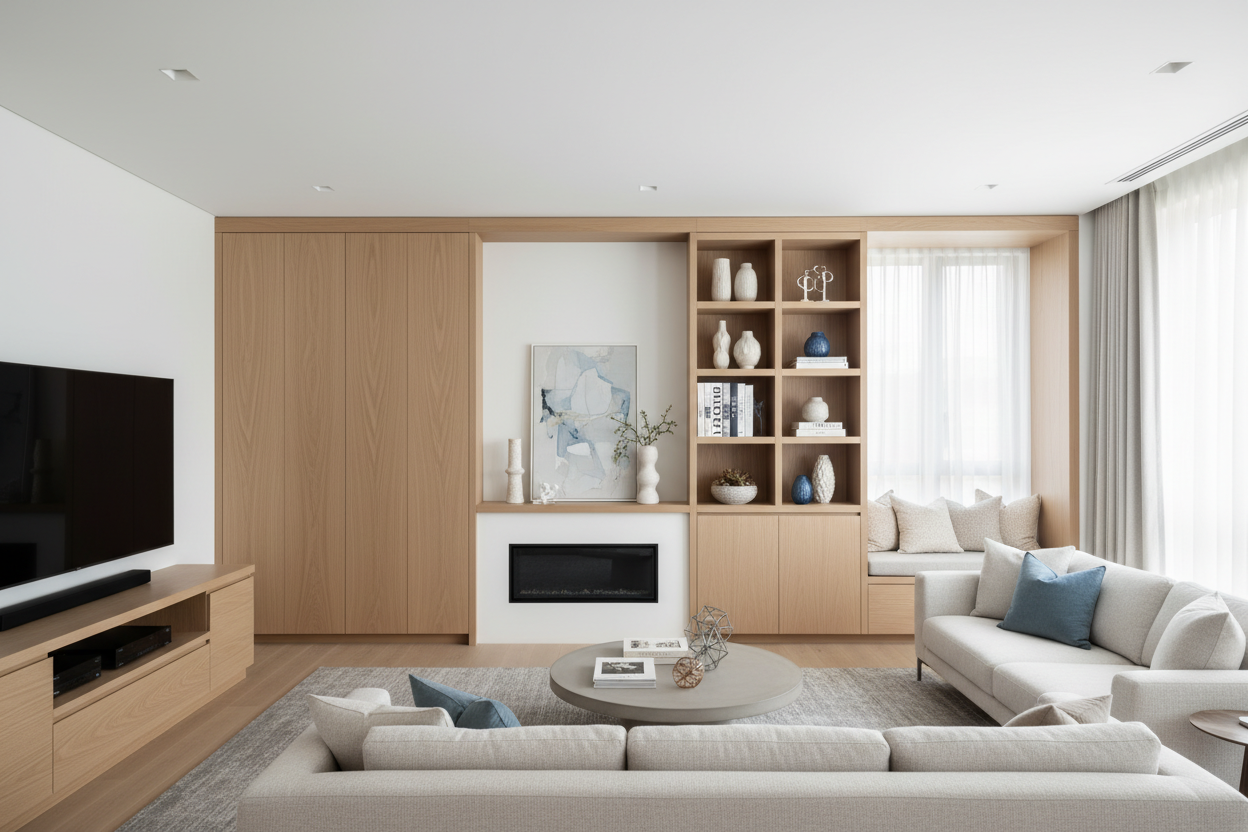
When I finally committed to a full-sized living spaces storage cabinet, the entire energy of the room shifted. Instead of five different focal points, I had one. I opted for a piece with solid wood doors on the bottom and adjustable shelving inside. This is crucial: if you buy a piece with fixed shelves, you're going to regret it the second you try to store something awkwardly tall like a stand mixer or a stack of oversized coffee table books.
I looked at a lot of options, including this versatile console table for living room, and realized that solid wood is the only way to go for pieces this size. Avoid the thin MDF backings that you find at big-box retailers; they bow the second you put a little weight on them. You want something with a 2.0 lb/ft³ density or solid pine/oak construction if you want it to survive a move.
The best part? The bottom half of my cabinet now houses all the 'ugly' stuff. The routers, the charging cables, and the plastic bins of LEGOs are all behind closed doors. Because the cabinet is one cohesive unit, the room looks instantly tidier, even if the inside of the cabinet is a disaster zone. It’s about creating a 'clean' exterior to mask the functional interior.
Wait, Can You Put a Living Spaces China Cabinet in the Lounge?
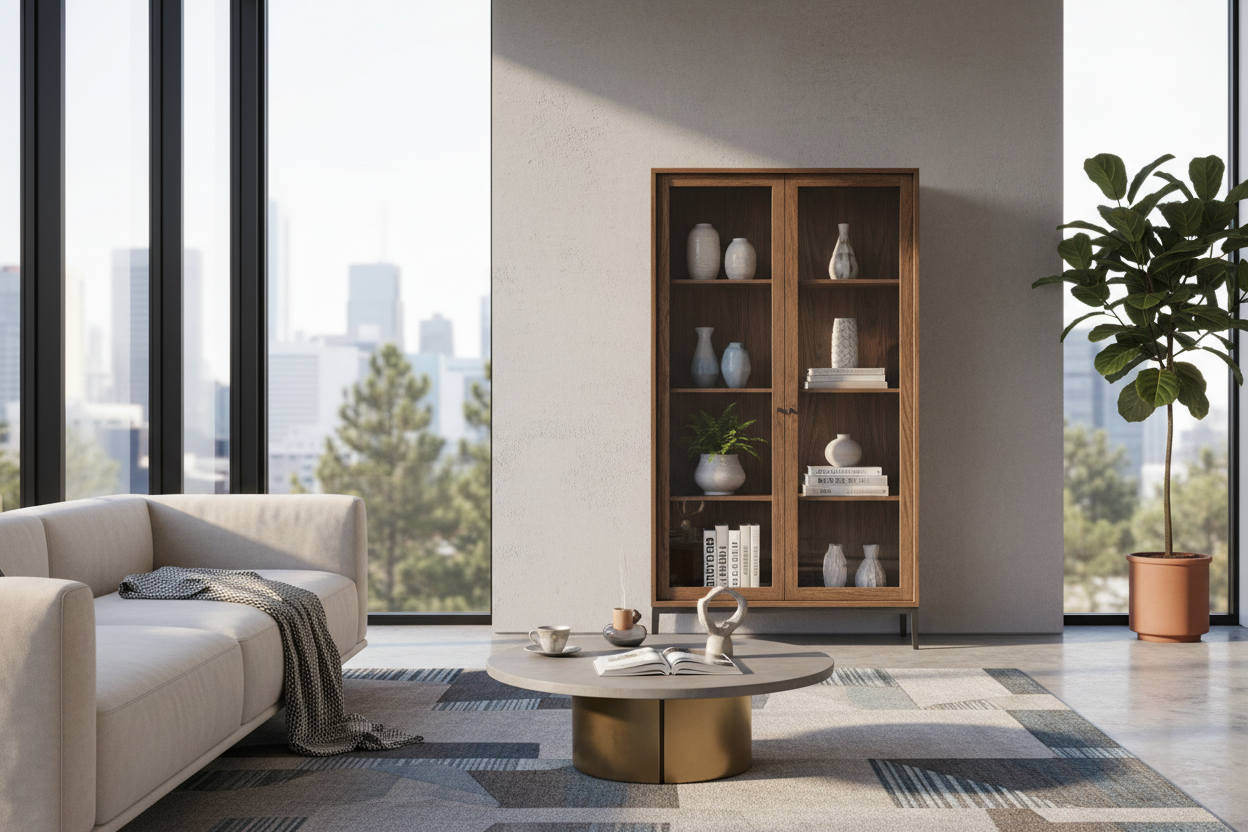
One of the biggest mistakes people make is staying in their lane. We're told that certain pieces only belong in certain rooms. But a living spaces china cabinet is essentially just a high-end display case with better-than-average construction. In my house, the 'china cabinet' holds zero china. Instead, it holds my vintage camera collection and my husband’s whiskey stash.
If you decide to put a china cabinet in the living room, you're adding a level of sophistication that a standard bookshelf just can't match. China cabinets usually have deeper footprints—think 18 to 22 inches—which is perfect for hiding larger items that wouldn't fit on a standard 12-inch deep shelf. Plus, the glass doors keep the dust off your valuables while still letting you show off the good stuff.
Rethinking the Display: Not Your Grandma's Living Spaces Curio Cabinets
We need to talk about the 'C' word: Curio. For years, living spaces curio cabinets were associated with dusty porcelain dolls and thimbles. But the modern versions are sleek, often featuring black metal frames or natural light oak finishes. They’re basically a gallery for your life. I use mine to house my vinyl records and a rotating selection of art books.
The trick to making a glass-front cabinet look modern is negative space. Don't pack every inch of the shelf. Treat each shelf like a mini-museum exhibit. If you're looking for a piece that blends this aesthetic with actual utility, a large sideboard display buffet is a great middle ground. It gives you the glass display on top but keeps the bottom drawers for things like batteries and junk mail.
I personally went with a dark charcoal finish for my cabinet. It creates a 'black hole' effect in the best way possible—it absorbs the light and makes the colorful book spines and brass accents pop. If you go with a light wood, it tends to blend into the walls, which is fine if you want a minimalist look, but I wanted my cabinet to be the anchor of the entire floor plan.
The Golden Rules for Styling Living Spaces Cabinets
If you're going to drop money on a large piece of furniture, you have to style it right or it will just look like a giant box in the corner. First: **Scale the surrounding decor.** If you have a massive cabinet, don't put a tiny 5x7 photo next to it. You need a large floor plant or a substantial floor lamp to balance the visual weight.
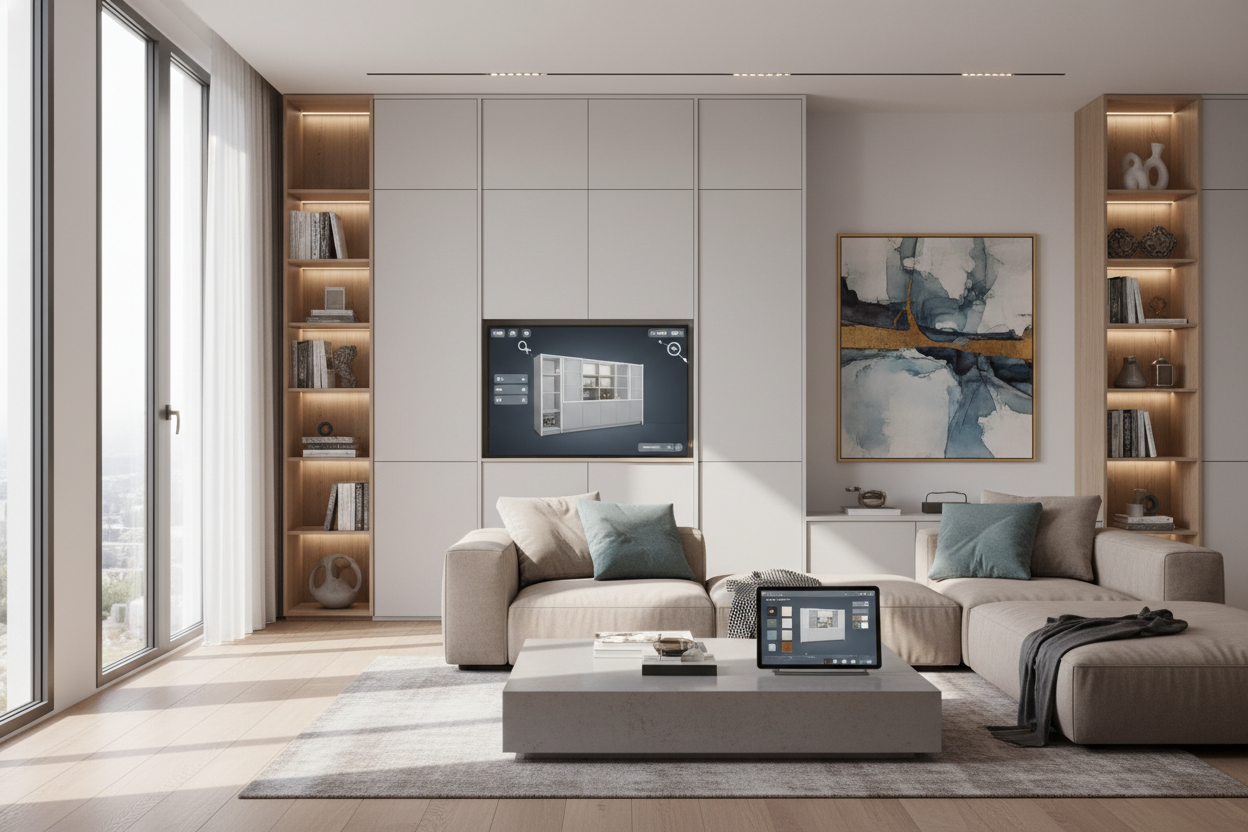
Second: **Mix your textures.** If your cabinet is smooth, painted wood, put something organic inside, like a stack of linen-bound books or a stone bowl. Third: **Lighting is everything.** Most living spaces cabinets don't come with built-in LEDs, but you can buy battery-operated puck lights for ten bucks. Stick them under the top lip of the shelves, and suddenly your storage unit looks like a custom built-in.
FAQ
Do I need to anchor my cabinet to the wall?
Yes, 100%. Especially if it’s over 4 feet tall. Most quality cabinets come with an anti-tip kit. Use it. It takes five minutes and prevents a 200-pound disaster if a kid decides to use the shelves as a ladder.
How do I stop my glass cabinet from looking cluttered?
Use the 70/30 rule. 70% of the items should be functional or 'quiet' (like books with the spines facing in or neutral ceramics), and 30% should be your 'hero' pieces (bright art, unique sculptures). Leave gaps between items.
Can I mix different wood tones?
Absolutely. In fact, you should. If your floors are light oak, a dark walnut or black cabinet provides much-needed contrast. Just try to keep the undertones (warm vs. cool) consistent across the room.

Dejar un comentario
Este sitio está protegido por hCaptcha y se aplican la Política de privacidad de hCaptcha y los Términos del servicio.