










Most home offices suffer from an identity crisis: they are either purely utilitarian, filled with tangled wires and sticky notes, or they are over-styled to the point of uselessness. As a designer, I see the desk not just as a workstation, but as a critical vignette within a room's broader narrative. Creating a cohesive room decor desk arrangement requires balancing visual weight, texture, and ergonomic function. It isn’t about buying more accessories; it is about curating the right ones to create a sense of calm authority.
Quick Decision Guide: The Essentials
Before you purchase a single accessory or lamp, consider these four fundamental elements to ensure your styling holds up over time:
- Visual Balance: If your desk is heavy (e.g., solid walnut), choose airy, light decor. If your desk is glass or acrylic, ground it with substantial, textured items.
- The "Touch" Test: Prioritize materials that feel good against the skin, such as leather desk pads or ceramic organizers, rather than cheap plastics.
- Lighting Temperature: Ensure your task lighting matches the Kelvin (color temperature) of the room's ambient light to prevent visual fatigue.
- Vertical Integration: Don't just style the surface; utilize the wall space above to draw the eye upward and expand the perceived space.
Establishing the Foundation: Materiality and Texture
The surface of your desk dictates the direction of your decor. A common error I see is matching materials too closely. If you have a timber desk, adding wooden organizers often makes the setup look flat and heavy. Instead, look for contrast.
For warm wood grains, introduce cool metals like brushed brass or matte black steel. If you are working with a white lacquer or glass surface, you need to introduce warmth through organic elements—think a cognac leather blotter or a rough-hewn stone paperweight. This interplay of textures prevents the space from feeling sterile.
Curating Accessories: The Rule of Three
When selecting room decor for desk setups, clutter is the enemy of luxury. I always employ the "Rule of Three" or odd-number groupings to create dynamic tension.
Imagine a triangle on your desktop. Your tallest item (usually a task lamp) creates the peak. Your secondary item (perhaps a structured plant like a Snake Plant or ZZ Plant) provides weight on the opposite side. The third element should be low and functional, like a decorative tray for keys or pens. This triangulation keeps the eye moving and leaves the central workspace clear for actual work.
Lighting as a Sculptural Element
Never rely solely on overhead recessed lighting; it casts shadows directly where you are trying to read. Your desk lamp is the jewelry of the room. For a sophisticated look, avoid the generic, plastic gooseneck lamps. Opt for fixtures with architectural silhouettes—articulated arms in antique bronze or lamps with linen shades that diffuse light softly. The goal is to create a pool of warm light that invites focus without causing glare on your monitor.
Lessons from My Own Projects: The "Matte Black" Trap
I want to share a specific realization from a project I designed last year for a tech executive. We were going for a hyper-modern, monochromatic look, and I specified a stunning, soft-touch matte black laminate desk with matching matte black accessories. On installation day, it looked incredible—sleek, moody, and expensive.
Two weeks later, I visited for a follow-up, and the reality had set in. The surface was a nightmare of oil smudges and dust. Every time the client touched the desk or put down a coffee cup, it left a mark. It ruined the aesthetic completely.
The lesson? When choosing room decor and finishes, practical maintenance trumps initial "wow" factor. We swapped the accessories for a textured grey felt and added a high-quality leather desk pad. The texture hid the dust, the leather absorbed the wear, and the desk finally functioned as well as it looked. Always ask yourself: "How will this look at 3 PM on a Tuesday, not just in a photo?"
Conclusion
Styling your desk is an exercise in restraint. By focusing on quality materials, proper lighting layers, and intentional groupings, you turn a workspace into a design statement. Clear the surface, assess your needs, and build a vignette that supports both your workflow and your home's aesthetic.
Frequently Asked Questions
How do I style a small desk without losing workspace?
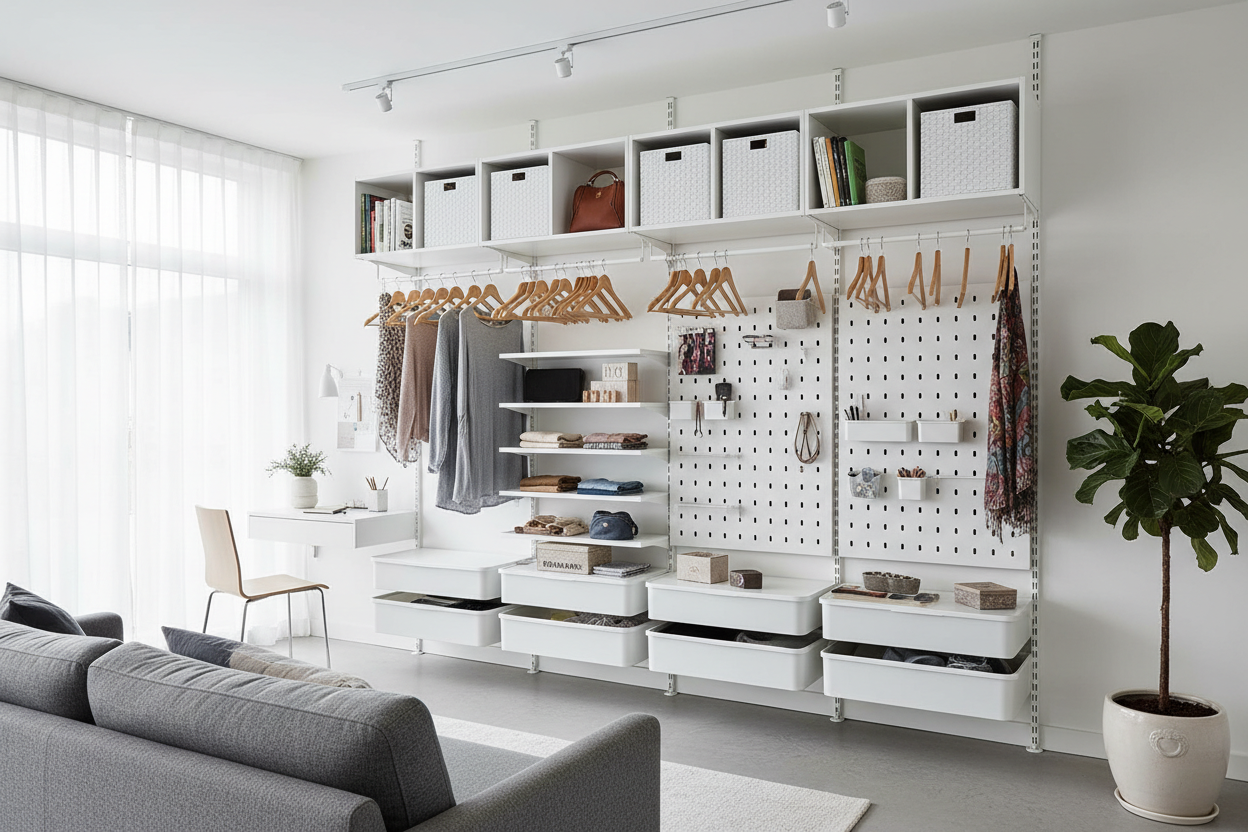
Verticality is key. Use wall-mounted shelves or pegboards to hold room decor for desk items like plants or calendars. Keep the desktop strictly for a lamp, a laptop, and one beverage coaster. Use a monitor riser with storage underneath to hide notebooks.
What is the best way to hide cables on a styled desk?
Cable management is essential for a luxury look. Use velcro ties to bundle cords behind the desk legs. If your desk floats in the room, invest in a "cable spine" that runs from the desktop to the floor, or use a decorative basket under the desk to house the power strip.
Can I mix metal finishes on my desk?
Absolutely. Mixing metals adds depth. However, pick a dominant metal (e.g., black iron) and an accent metal (e.g., brass). Ensure the finishes share a similar "sheen" (e.g., both brushed or both polished) to maintain cohesiveness.


Dejar un comentario
Este sitio está protegido por hCaptcha y se aplican la Política de privacidad de hCaptcha y los Términos del servicio.