










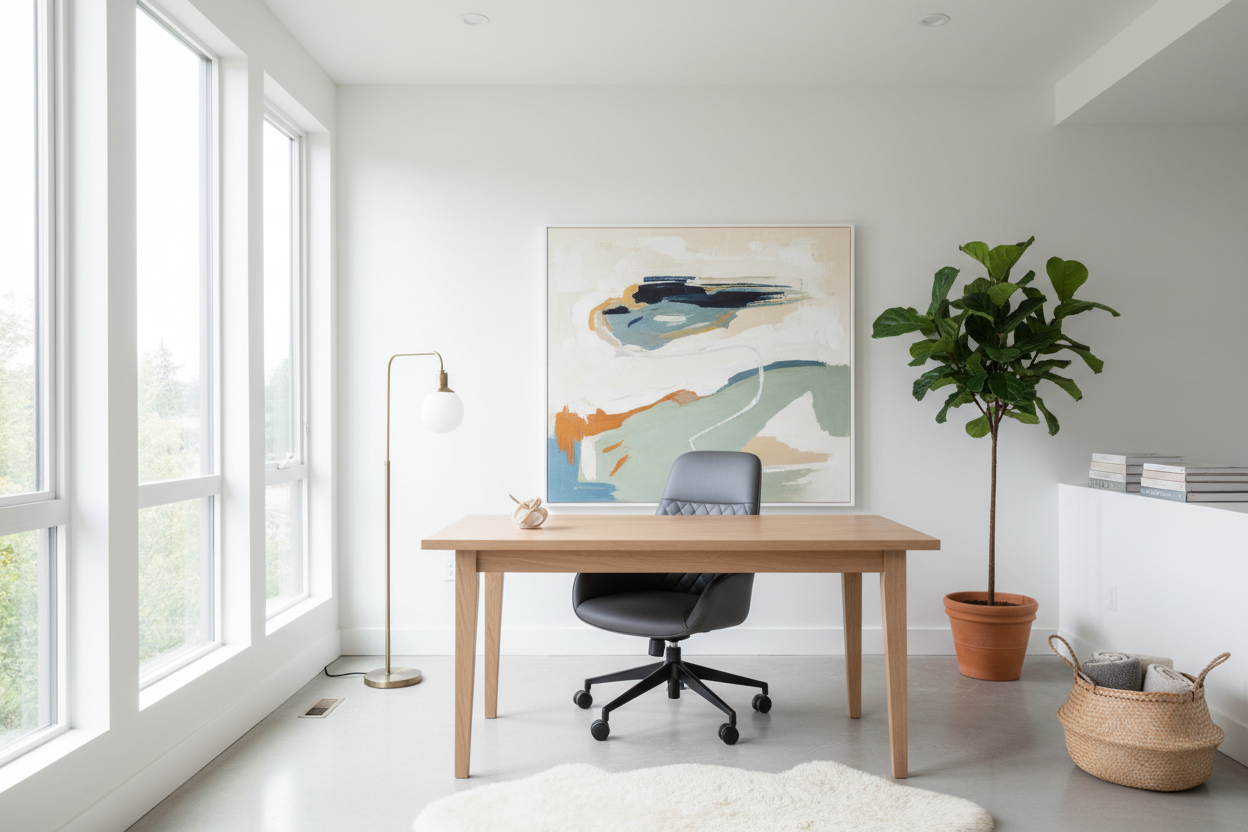
There is a pervasive misconception in interior design that painting a room white automatically makes it modern and clean. However, without the right intervention, a white wall office can quickly veer from "minimalist chic" to "clinical examination room." The challenge isn't the color itself; it is the absence of visual anchors. When I consult with clients, the most common complaint I hear about all-white workspaces is that they feel cold and uninspiring, lacking the coziness required for long hours of focus.
Key Design Elements for White Offices
- Undertone Selection: Choosing warm whites (creamy) vs. cool whites (blue-based) dictates the room's mood.
- Textural Contrast: Relying on wood grain, bouclé, or leather to break up the visual flatness.
- Lighting Temperature: Using 2700K-3000K bulbs to prevent a harsh, fluorescent look.
- Furniture Silhouette: Selecting sculptural or dark-framed furniture to create necessary focal points.
Mastering the "Blank Canvas"
White walls are unforgiving. They reflect everything, including clutter and poor lighting choices. To make this aesthetic work, we must treat the walls not as a background, but as a deliberate design choice that highlights the furniture within the space.
The Importance of Wood Tones
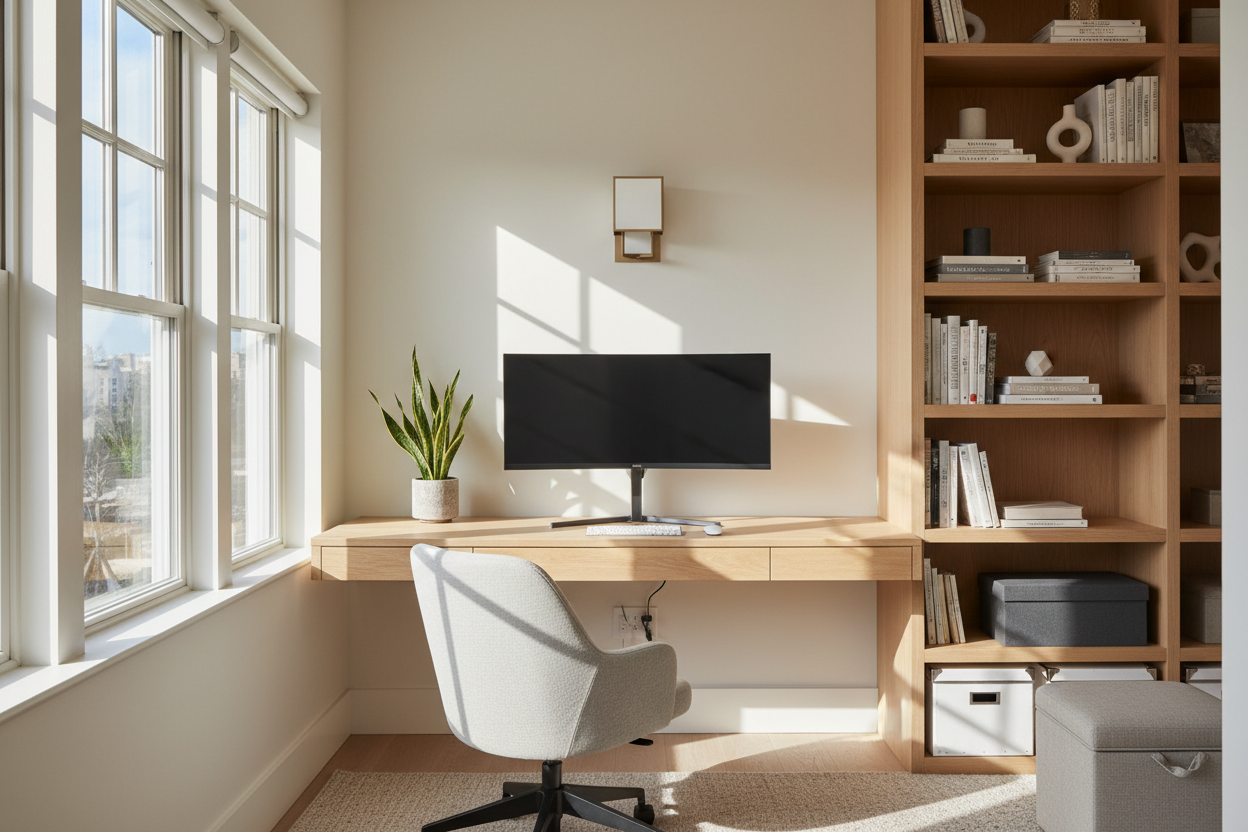
If your walls are white, your desk and shelving become the primary characters in the room. I almost always advise against white laminate furniture in a white room unless you are aiming for a hyper-futuristic monochrome look (which is rarely practical for daily use). Instead, opt for rich walnut or white oak veneers. The natural grain provides a necessary organic counterpoint to the flat matte of the drywall. A solid walnut executive desk against a crisp white wall creates an immediate sense of luxury and grounding.
Lighting: The Invisible Paint
In a room with high light reflectance value (LRV), like a white office, lighting is critical. A common amateur error is installing cool daylight bulbs (5000K+). On white walls, this creates a blue cast that feels institutional.
Layer your lighting. Use a warm ambient light for the ceiling, but ensure your task lamp has a high CRI (Color Rendering Index) to show true colors without straining your eyes. Wall sconces or floor lamps that wash light up the wall can also soften the harsh shadows that often appear in corners of white rooms.
Acoustics and Soft Furnishings
White walls often imply hard surfaces, which leads to echo—the enemy of video calls. You need to introduce "sound sponges." Since we aren't using wallpaper, the softness must come from the floor and windows.
Consider floor-to-ceiling drapery in a neutral linen or a light grey wool. This adds vertical texture without breaking the color palette. Similarly, a high-pile rug or a flat-weave wool rug with a subtle geometric pattern anchors the floating furniture and dampens sound.
My Personal Take on White Wall Office Design
I learned the hard way about the "Snow Blindness" effect early in my career. I designed a home office for a graphic designer who insisted on "Chantilly Lace" white paint everywhere—walls, ceiling, and trim—paired with a white lacquer desk.
Two weeks after installation, he called me complaining of headaches. It wasn't the ergonomics; it was the glare. Sunlight was hitting the south-facing white wall and bouncing off the white desk, essentially creating a softbox effect that was frying his retinas. We didn't repaint. Instead, I swapped the desk for a matte black oak table and installed walnut floating shelves on the wall behind his monitor. That simple introduction of dark, light-absorbing matte surfaces immediately cut the glare and grounded the room. It taught me that white walls require dark anchors to be livable.
Conclusion
Designing a white wall office is an exercise in restraint and texture. It is not about leaving the space empty, but about carefully curating pieces that stand out against the clean backdrop. By mixing warm wood tones, controlling your light temperature, and ensuring enough soft textures, you can create a workspace that feels open and airy, yet sophisticated and grounded.
Frequently Asked Questions
Which white paint is best for a home office?
For North-facing rooms with low light, choose a warm white with yellow or red undertones (like Benjamin Moore's Swiss Coffee) to counteract the blue natural light. For South-facing rooms, a cooler white (like Decorator's White) works well as the sun will naturally warm it up.
How do I add color without painting the walls?
Use your office chair as the color vehicle. A cognac leather chair or a deep navy velvet task chair provides a sophisticated pop of color that looks intentional rather than chaotic against a white backdrop. Large-scale art is also effective.
Are white walls practical for high-traffic offices?
They do require maintenance. Scuff marks from chair backs are common. I recommend using a paint with a "Satin" or "Eggshell" finish rather than "Flat" or "Matte." The slight sheen makes it significantly easier to wipe down magic marker streaks or shoe scuffs without burnishing the paint.

Dejar un comentario
Este sitio está protegido por hCaptcha y se aplican la Política de privacidad de hCaptcha y los Términos del servicio.