










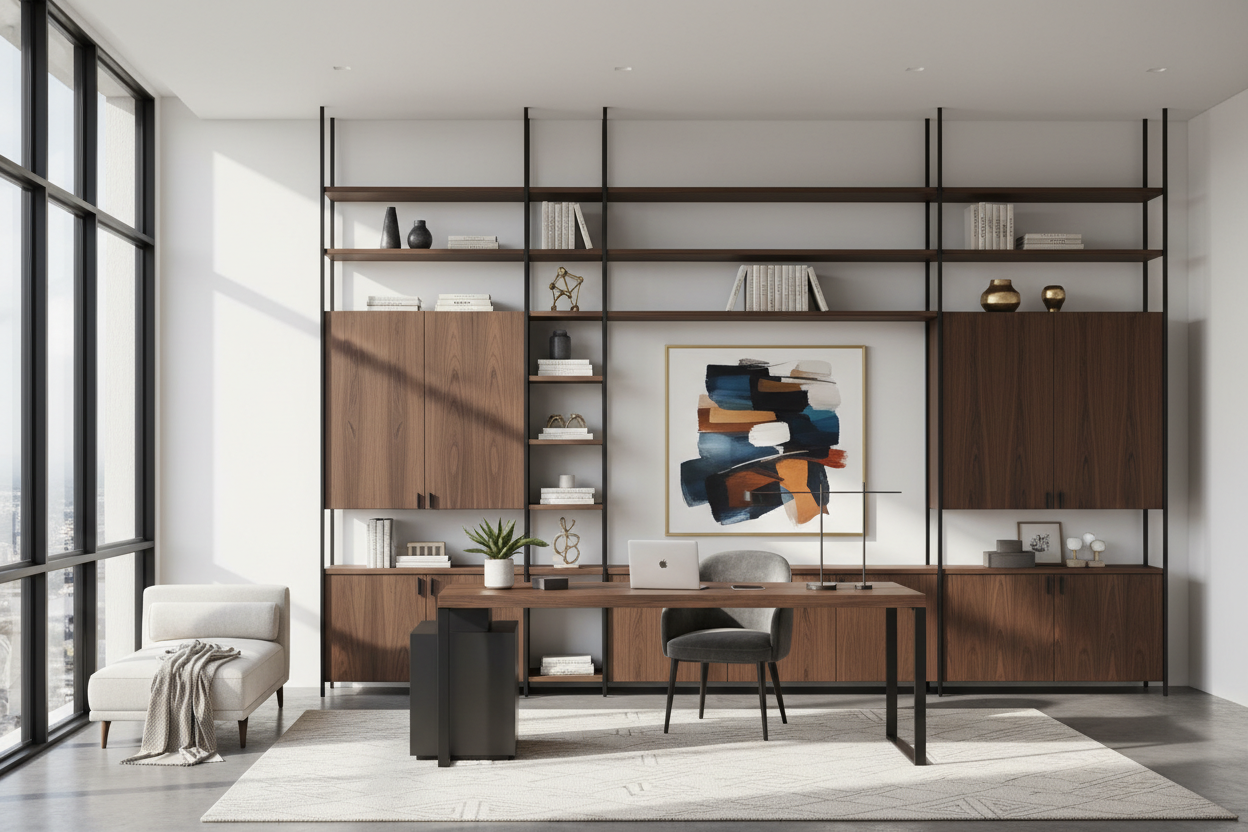
We have all experienced the disconnect between a workspace that looks pristine on Pinterest and the reality of daily operations. You purchase a desk, perhaps a chair, and suddenly you are surrounded by a sea of cables, paperwork, and peripherals that ruin the visual calm. The missing link is almost always thoughtful, architectural modern office storage. It is not merely about hiding clutter; it is about introducing a structural element that grounds the room while maintaining a sophisticated, airy silhouette.
Key Features to Look For
- Material Integrity: Prioritize real wood veneers or high-grade melamine over thin laminates to prevent peeling edges.
- Hardware Quality: Look for soft-close hinges and full-extension drawer slides to ensure longevity.
- Modularity: Select an office storage system that can expand as your filing needs grow.
- Cable Management: Ensure units have pre-drilled grommets or ventilated back panels for electronics.
- Visual Weight: Choose raised legs or floating units to keep small rooms feeling spacious.
Balancing Concealment and Curation
In high-end interior design, we talk often about "negative space." When selecting modern office storage furniture, the goal is to balance closed cabinetry with open shelving. Closed storage handles the ugly necessities—tax files, printer paper, and tangled chargers. This allows your open shelves to serve a decorative purpose, housing books, sculptural objects, or plants.
For a truly seamless look, consider a credenza rather than a traditional tall filing cabinet. A low-profile unit runs along the wall, offering a surface for ambient lighting or artwork, which helps the office feel less like a cubicle and more like an executive lounge.
Materiality: Beyond the Basic White Box
While white lacquer had its moment, the current trend in modern home office storage leans toward tactile richness. We are seeing a resurgence of walnut and white oak, often paired with matte black metal frames. These materials add warmth and absorb sound, which is crucial in a room with hard surfaces like glass desks and hardwood floors.
The Role of Texture
If you prefer a monochromatic look, play with texture rather than color. A fluted wood door front or a shagreen-wrapped drawer face adds depth to the room without creating visual noise. This subtlety is what separates a generic setup from a designer-curated space.
Space Planning and Ergonomics
Placement is just as critical as the piece itself. A common error is placing tall storage units immediately next to the entrance, creating a "tunnel effect" that shrinks the room. Instead, position taller units on the wall furthest from the door to draw the eye through the space. Ensure there is at least 36 to 48 inches of clearance behind your desk chair to access drawers comfortably without disrupting your workflow.
My Personal Take on Modern Office Storage
I learned a hard lesson about finishes during a project for a tech startup in San Francisco. We specified beautiful, high-gloss charcoal cabinets for the entire executive wing. It looked stunning on installation day. However, two weeks later, the client called me in a panic. The high-gloss finish was a magnet for fingerprints and dust.
Every time someone pushed the "touch-latch" doors to open them, they left a smudge. Furthermore, we realized that the push-to-open mechanisms were temperamental; if you didn't press the exact center of the door, the magnet wouldn't release, leading to frustration during fast-paced meetings. Since then, I always advise clients to test the "tactile experience" of their storage. I now lean towards matte finishes with integrated, discreet pulls. It might look slightly less sleek in a rendering, but in day-to-day use, it remains pristine and functional far longer.
Conclusion
Investing in quality storage is an investment in your mental clarity. By selecting pieces that offer both architectural beauty and practical concealment, you create an environment that supports deep work. Look for the right mix of materials, respect the flow of your room, and choose finishes that can withstand the reality of daily use.
Frequently Asked Questions
What is the ideal depth for office storage units?
Standard depth is usually between 18 to 24 inches. However, for a modern home office storage setup in a tighter space, look for "slimline" console units that are 12 to 15 inches deep. Just ensure they are anchored to the wall to prevent tipping.
How do I mix wood tones in my office?
The general rule is to identify the dominant undertone. If your desk is a warm walnut, try to match that warmth in your storage, even if the wood species is different. Alternatively, go for high contrast—such as a light oak desk with matte black metal shelving.
Is open shelving practical for an office?
Open shelving is excellent for items you need to grab quickly or for display, but it requires discipline. If you know you are prone to clutter, opt for an office storage system with doors. Visual clutter on open shelves can subconsciously increase stress levels.

Dejar un comentario
Este sitio está protegido por hCaptcha y se aplican la Política de privacidad de hCaptcha y los Términos del servicio.