










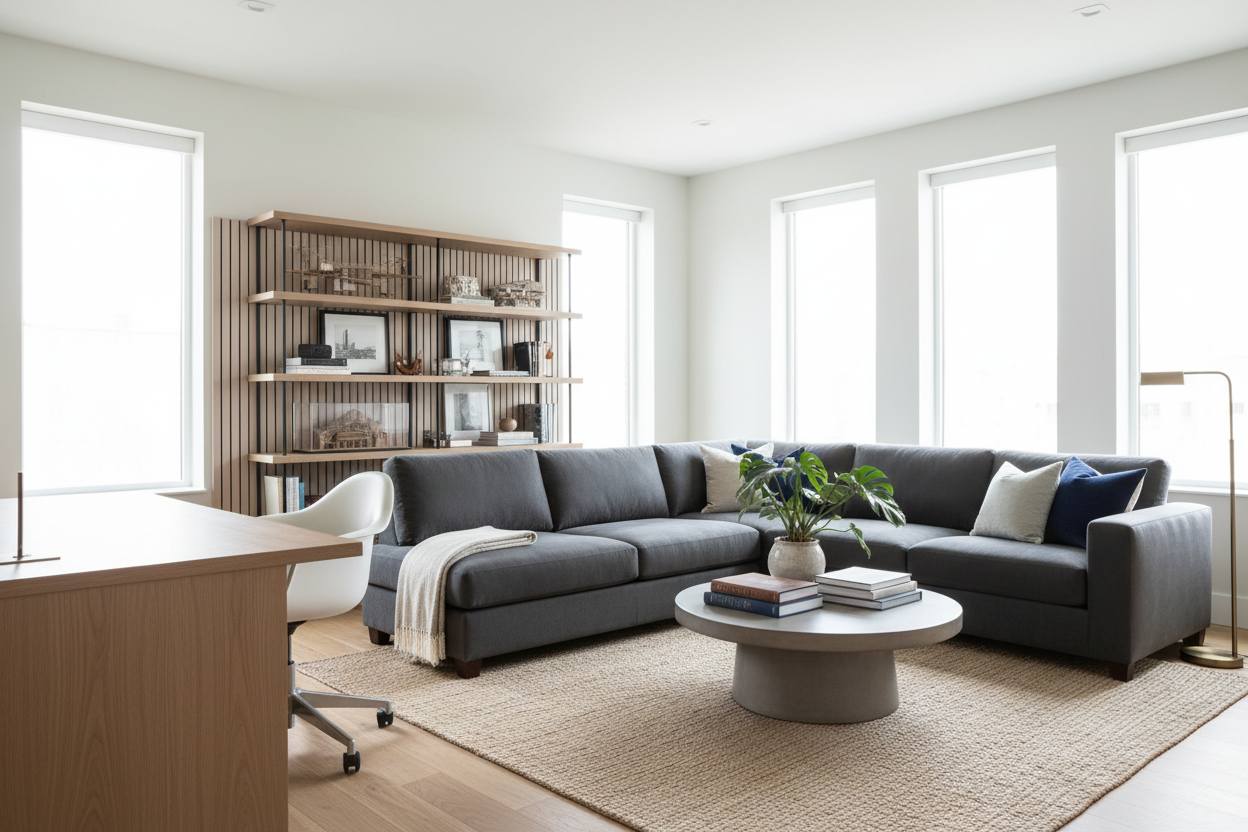
The modern workspace suffers from a common design dilemma: it is often too clinical to be comfortable, yet too cluttered to be productive. We often prioritize the desk and ergonomic chair, leaving the rest of the room feeling cold or purely utilitarian. Introducing a couch in home office setups is the most effective way to soften the acoustics, elevate the aesthetic, and create a secondary zone for reading or creative thinking. However, selecting the wrong piece can quickly turn a functional study into a cramped storage room.
Key Features to Look For
- Scale and Proportion: Ensure the sofa depth does not encroach on your desk chair's rolling zone (allow at least 30-36 inches of clearance).
- Profile Height: Low-profile backs are preferable to maintain sightlines and prevent the room from feeling closed in.
- Upholstery Performance: Look for high-rub count fabrics (Wyzenbeek rating) if you plan to eat or drink coffee while working.
- Structure: Kiln-dried hardwood frames prevent warping in rooms with fluctuating temperatures (like converted attics or garages).
Strategic Layouts for Flow
When designing an office with a couch, spatial equilibrium is paramount. The sofa should never compete with the desk; it should complement it. If you have the square footage, floating the sofa in the center of the room, facing the desk, creates a conversational 'executive' layout often seen in high-end commercial design. This establishes a clear hierarchy in the room.
For tighter footprints, placing the sofa along the longest solid wall—perpendicular to the window—maximizes natural light without causing glare on your screens. Avoid pushing the furniture flush against the wall if possible; leaving a mere two-inch gap creates a shadow line that makes the room feel more expansive.
Selecting Materials: Aesthetics vs. Durability
As a specialist, I often steer clients toward materials that bridge the gap between residential comfort and commercial durability. A velvet home office couch adds immediate texture and sound dampening—crucial for reducing echo during video calls. However, velvet requires maintenance.
Leather and Faux Alternatives
For a more masculine or industrial aesthetic, top-grain leather is the gold standard. It develops a patina over time that adds character. If you are selecting a couch for office space that receives direct sunlight, be wary of dark leathers which can fade unevenly; a high-quality vegan leather or a solution-dyed acrylic fabric might be a more UV-resistant choice.
Ergonomics of the Secondary Seating
Unlike a living room sofa designed for lounging, an office couch should support a different posture. You are likely moving to this spot to review documents, take a phone call, or read. Therefore, a tighter seat with a firm foam core is superior to down-filled cushions. You want a seat height that allows your knees to be at a 90-degree angle, making it easy to stand up quickly when a Zoom call starts ringing.
Lessons from My Own Projects
I learned the hard way that 'visual weight' is just as important as physical dimensions. I once specified a gorgeous, deep-seated Chesterfield for a client's 10x12 study. On the floor plan, it fit perfectly. However, once installed, the heavy rolled arms and dark leather sucked all the light out of the room. It felt claustrophobic.
More importantly, the client confessed three months later that they never used it. Why? The seat depth was 44 inches. It was a 'napping' couch, not a working couch. They couldn't sit upright to read a report without slouching awkwardly. We swapped it for a tailored, tuxedo-style sofa with a shallow 36-inch depth and raised legs. Suddenly, the floor became visible underneath, making the room look larger, and the client actually started using it for afternoon strategy sessions. The lesson: measure your sit, not just your room.
Conclusion
Integrating soft seating into your workspace is about more than just filling a corner; it is about curating a flexible environment that adapts to your workflow. By focusing on scale, appropriate textiles, and supportive ergonomics, you can create a space that inspires creativity rather than hinders it.
Frequently Asked Questions
What is the best size couch for a small home office?
For rooms under 120 square feet, opt for a loveseat (approx. 60 inches wide) or an apartment-sized sofa. Settees are also excellent as they typically feature narrower arms, maximizing seating width without increasing the overall footprint.
Should I get a sleeper sofa for my office?
If your office doubles as a guest room, a sleeper is practical. However, be aware that sleeper mechanisms add significant weight and often result in a firmer, less comfortable seat. Ensure you have enough clearance to fully extend the mattress without hitting your desk.
How do I style a couch in a professional background?
If the couch is visible on video calls, keep styling minimal. Use two textured throw pillows that contrast with the sofa color, and perhaps a structured throw blanket. Avoid cluttering it with too many personal items or laundry, which diminishes the professional look.

Dejar un comentario
Este sitio está protegido por hCaptcha y se aplican la Política de privacidad de hCaptcha y los Términos del servicio.