










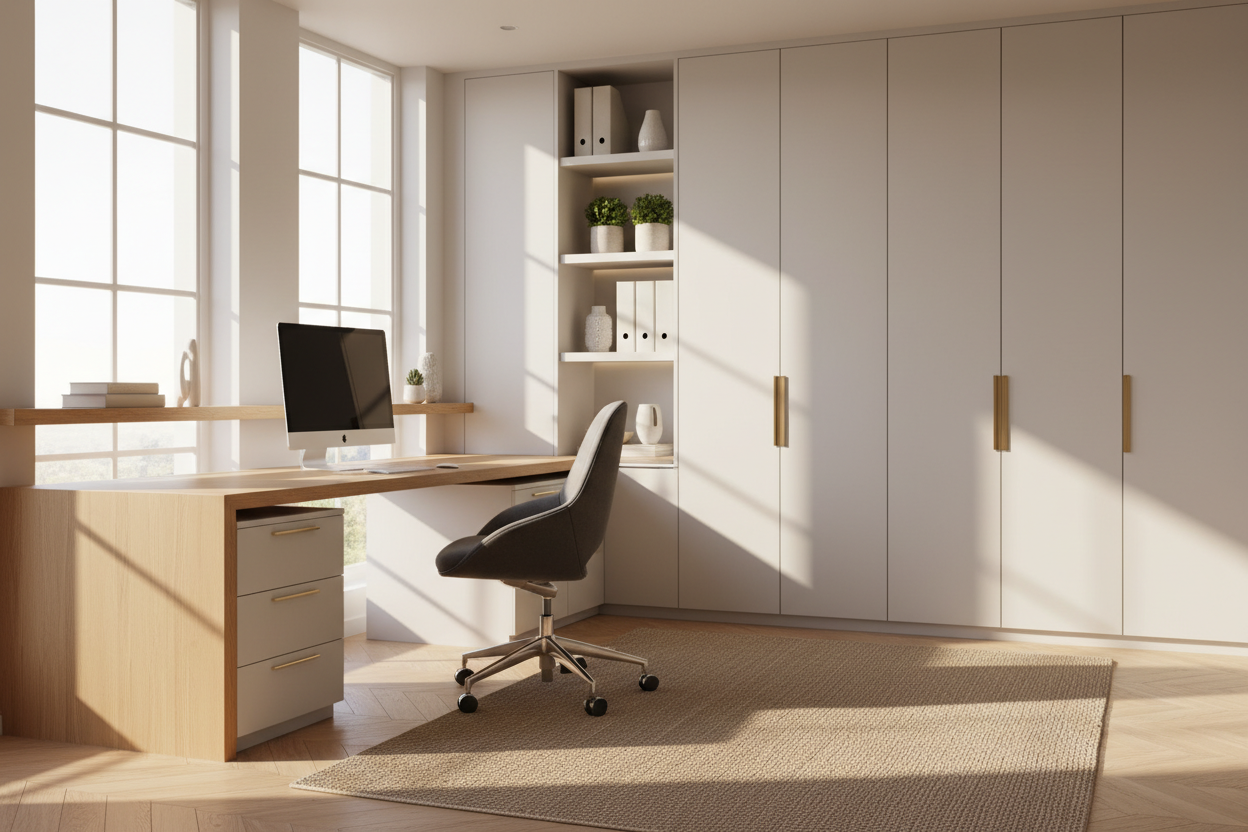
There is nothing quite as frustrating as a workspace that looks beautiful but functions poorly. You sit down, ready to work, but the drawers block your chair swivel, or the surface area is consumed by clutter because the storage is purely decorative. When clients approach me to design their study, the conversation almost always starts with the **desk and cabinets**. This pairing is the architectural backbone of the room; get it right, and the workflow feels effortless. Get it wrong, and you are fighting your furniture daily. This guide explores how to select and position these pieces for a sophisticated, high-performance home office.
Key Features to Look For
- Material Integrity: Prioritize solid hardwoods or high-grade veneers over hollow-core particle board for longevity and weight bearing.
- Ergonomic Clearance: Ensure there is at least 30 inches of width in the knee well between a home office cabinet desk setup.
- Visual Weight: Balance heavy storage units with lighter desk legs or open shelving to avoid overwhelming the room.
- Integrated Cable Management: Look for grommets or hidden channels behind the cabinet office desk to maintain a clean aesthetic.
Choosing the Right Configuration
The layout of your office desk and cabinet determines the room's flow. It is not just about fitting pieces against a wall; it is about creating zones. For executive styling, an L-shaped configuration often works best. This places your primary work surface in front of you and your secondary storage surface to the side. This "cockpit" style allows you to reach files without breaking your focus.
However, for smaller urban apartments, a linear wall unit—where the office desk with cabinets is built into a single run—saves floor space while maximizing verticality. The goal is to keep the footprint tight but the storage deep.
Materiality and Texture
As a designer, I constantly remind clients that texture dictates the mood. A high-gloss lacquer finish feels modern and reflects light, making a small room feel larger. Conversely, a matte walnut or oak home office desk and cabinet absorbs light, grounding the space and adding a sense of permanence and warmth.
The Case for Solid Wood vs. Veneer
While solid wood is the gold standard for durability, high-quality wood veneers are often more stable in fluctuating humidity. If you are looking at a home office desk cabinet, check the edge banding. If you can peel it with your fingernail, walk away. You want furniture where the joinery is seamless.
Maximizing Vertical Real Estate
If your floor plan is restricted, look up. Desk top cabinets (often called hutches) are excellent for storing reference materials that need to be within arm's reach but off the work surface. The key here is depth. A hutch should be significantly shallower than the desk surface—ideally 12 to 14 inches deep compared to a 24 to 30-inch desk—to prevent the unit from feeling claustrophobic while you work.
Visual Balance and Flow
A common mistake is pairing a heavy, blocky desk with equally heavy storage towers. This creates a "canyon" effect. If you have a substantial home office desk cupboard, try pairing it with a desk that features open legs or a glass top. This negative space allows the eye to travel through the room, maintaining an airy atmosphere even with substantial storage requirements.
My Personal Take on desk and cabinets
I learned a hard lesson early in my career regarding the "knee-knock" factor. I once specified a gorgeous, custom wraparound unit for a client. It looked stunning on the floor plan. However, I hadn't accounted for the hardware projection on the inner drawers. Every time the client swivelled in their chair, their knee hit the brass handle of the drawer unit.
It was a millimeter-detail that ruined the ergonomics. Now, whenever I assess an office desk and cabinet setup, I sit in it. I spin. I check the drawer extension. I also look specifically at the finish inside the knee well. That area takes a beating from shoes and chair legs. I prefer darker finishes or durable laminates in that specific zone to hide the inevitable scuffs that appear after six months of heavy use. It is these unglamorous details that define true luxury.
Conclusion
Investing in the right workspace furniture is about more than just storage; it is about respecting your own productivity. By selecting materials that age gracefully and configuring your layout for ergonomic ease, you create a space that invites you to do your best work. Measure twice, consider the visual weight, and prioritize your comfort.
Frequently Asked Questions
What is the ideal depth for a desk with cabinets?
For a standard workspace, a desk depth of 24 to 30 inches is ideal. If you are adding desk top cabinets or a hutch, ensure the desk is at least 30 inches deep so you still have usable workspace in front of the shelving.
Can I mix different wood tones for my desk and storage?
Absolutely. In fact, matching everything perfectly can look like a generic catalog. Try mixing a dark wood desk with painted cabinetry, or a glass desk with walnut storage. Just ensure the undertones (warm vs. cool) complement each other.
How do I hide wires in a floating desk setup?
If your desk doesn't have built-in management, mount a cable tray to the underside of the desk surface. Route cables down a single leg using a cable sleeve or zip ties that match the leg color to keep the visual clutter to a minimum.


Dejar un comentario
Este sitio está protegido por hCaptcha y se aplican la Política de privacidad de hCaptcha y los Términos del servicio.