










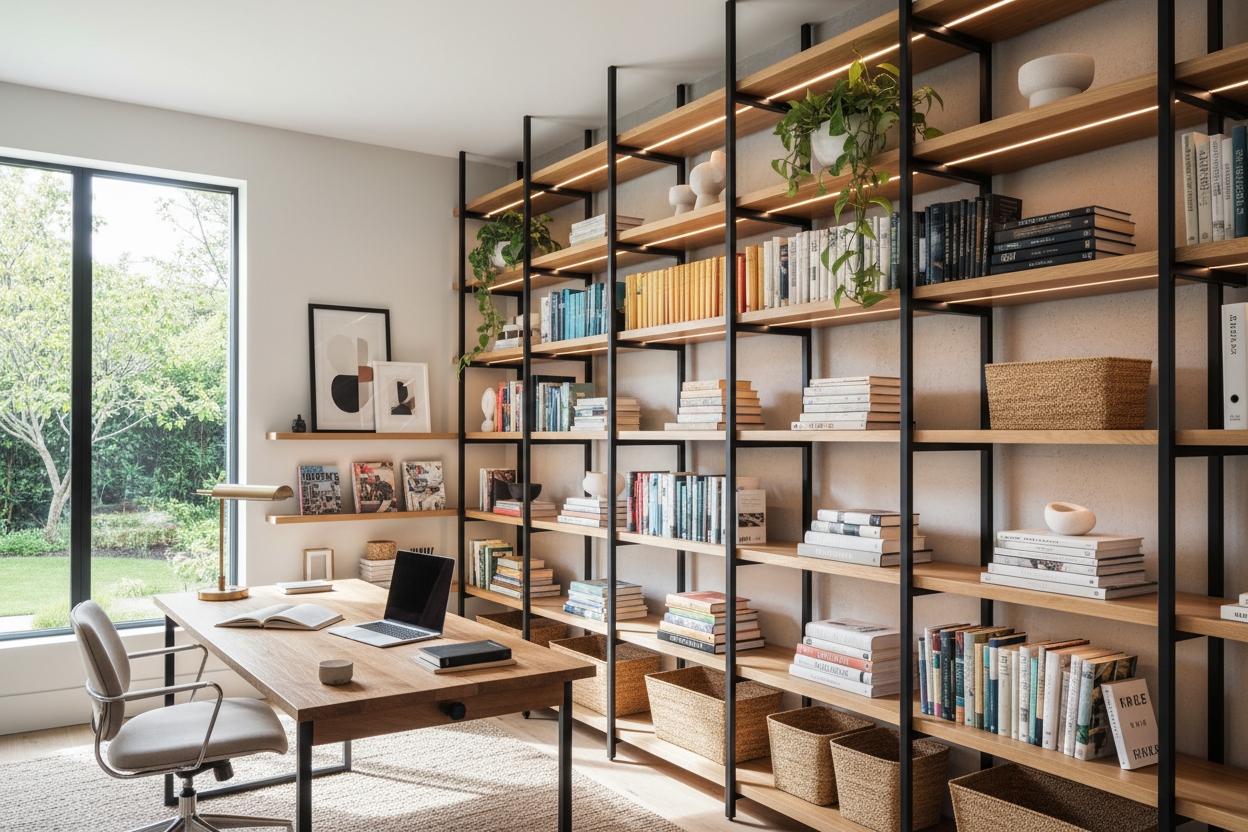
There is a distinct tension in workspace design between the need for rigorous organization and the desire for a visually calming environment. Clutter disrupts cognitive flow, yet sterile storage feels uninspiring. As an interior designer, I often find that the solution lies not just in buying furniture, but in selecting the right office shelving ideas that bridge the gap between architectural structure and personal curation. Whether you are outfitting a dedicated corporate suite or a compact nook at home, the way you utilize vertical space defines the room's character.
Key Features to Look For
Before committing to a specific aesthetic, consider these structural and functional pillars to ensure your shelving stands the test of time:
- Load-Bearing Capacity: Determine if you are storing heavy reference books or lightweight decor; solid wood requires less support than particle board, which is prone to bowing.
- Visual Weight: Open, floating shelves create an airy feel suitable for small rooms, while floor-to-ceiling units add gravitas and grounding to larger spaces.
- Mounting Hardware: For wall-mounted units, hidden brackets offer a modern, clean look, whereas industrial pipes or visible brackets add texture and architectural interest.
- Material Durability: High-pressure laminates resist scratching better than soft veneers, a crucial factor for high-traffic home office shelving.
Defining the Layout: Space Planning & Ergonomics
The most common error I see in home office shelving ideas is ignoring scale. In a small office shelf ideas scenario, floor space is premium currency. Here, we look upward. Wall shelving ideas for home office setups should maximize verticality. Installing shelves all the way to the ceiling draws the eye up, making the room feel taller while offering storage for items you don't access daily.
For larger rooms, a freestanding home office shelving unit can act as a room divider, separating the deep work zone from a lounge area. This provides a functional sound buffer and a visual break without closing off the light.
Materiality: Choosing Between Modern and Traditional
Your choice of material dictates the room's "temperature." Modern office shelf design often leans on mixed media—think matte black metal frames paired with walnut or oak shelves. This industrial-chic approach works exceptionally well because the negative space between the shelves prevents the unit from feeling heavy.
Solid Wood vs. Veneer
When exploring office shelves design, the debate between solid wood and veneer is inevitable. Solid wood offers longevity and can be refinished, adding a rich, organic texture that ages beautifully. However, high-quality architectural veneers are often more stable in fluctuating humidity, preventing the warping that can plague office wall shelving ideas in older homes.
Styling: The Art of the "Shelfie"
Functionality is paramount, but aesthetics drive how you feel in the space. Cool office shelves are rarely stuffed to the brim. They breathe. I recommend the "60/40 rule" for shelving ideas for office spaces: 60% books and storage, 40% decorative objects and negative space.
If you are leaning toward DIY office shelving ideas or modular systems, incorporate closed storage (bins or lower cabinets) to hide unsightly cables and paperwork. This allows the open wall shelf ideas for office areas to display curated items like awards, plants, or architectural models, keeping the visual noise low.
My Personal Take on office shelving ideas
I learned a hard lesson early in my career regarding modern home office shelving. I once specified a stunning, minimalist floating shelf system for a client who was a lawyer. The aesthetic was perfect—sleek, invisible hardware, lacquered white finish. It looked incredible on installation day.
Six months later, I visited the site and saw the shelves literally pulling away from the drywall. I had underestimated the sheer weight of legal encyclopedias and relied on standard heavy-duty toggles rather than insisting on blocking behind the wall or hitting every single stud. The "sag" ruined the clean lines entirely. Now, when I discuss office wall shelf ideas, I am militant about hardware. If you are storing paper—which is deceptively heavy—always prioritize the bracket strength over the minimalist look. A visible, heavy-iron bracket is far better than a floating shelf that slopes at a 5-degree angle.
Frequently Asked Questions
What is the ideal depth for office shelves?
For standard binders and books, a depth of 12 inches is standard. However, if you are looking for shelving for home office ideas that accommodate printers or deeper storage boxes, aim for 14 to 16 inches. Anything deeper than 16 inches on an upper wall shelf can start to feel looming and cast shadows on your workspace.
How do I style shelves without them looking messy?
Group items in odd numbers (threes or fives) and vary heights. Use magazine files or uniform baskets to corral loose papers. This uniformity is the secret behind modern office shelves design; it creates a rhythm that the eye finds pleasing rather than chaotic.
Are wall-mounted shelves better than freestanding units?
It depends on your tenure and wall type. Wall shelves ideas for office spaces save floor space and look custom, but they require drilling. Freestanding units offer flexibility and are renter-friendly, but they consume valuable square footage. For a small office shelving ideas approach, wall-mounted is almost always superior for flow.


Dejar un comentario
Este sitio está protegido por hCaptcha y se aplican la Política de privacidad de hCaptcha y los Términos del servicio.