










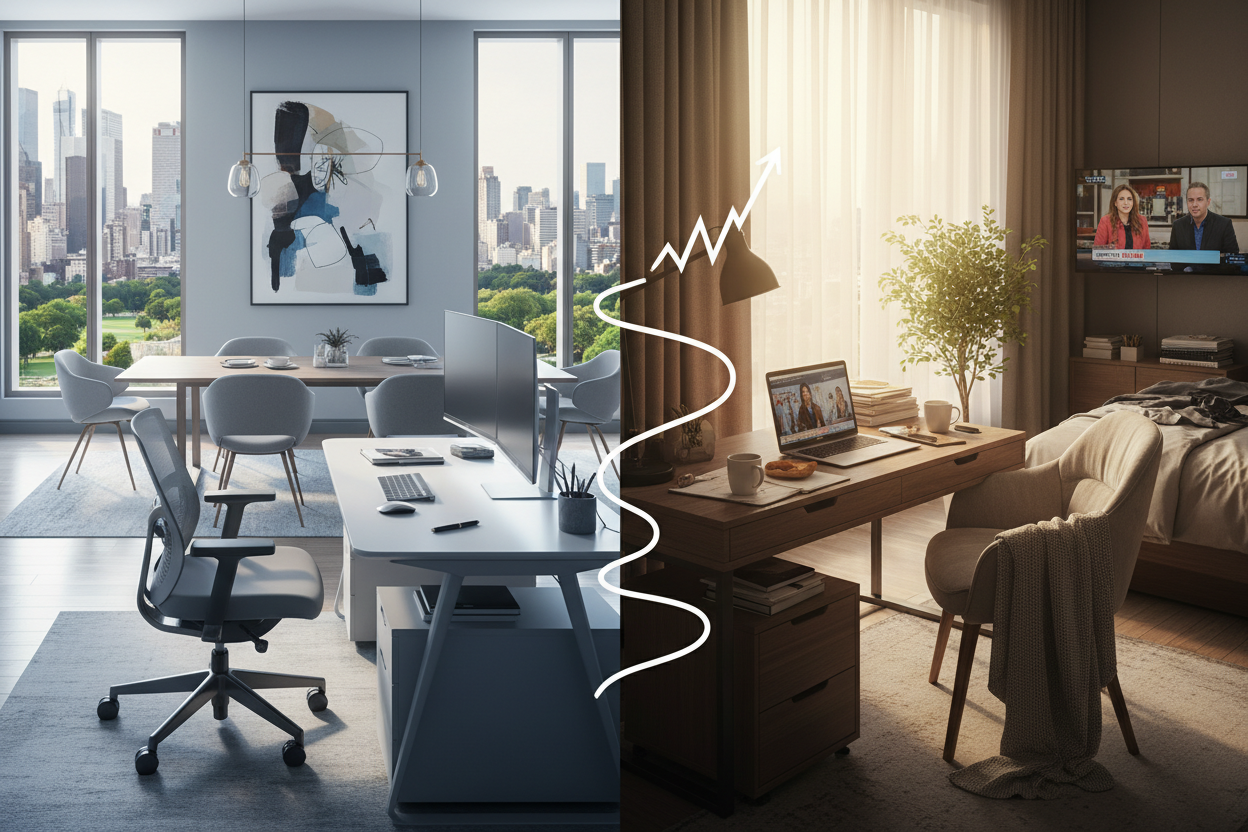
We often blame our discipline for a lack of focus, but as a designer, I usually blame the floor plan. The debate between remote work and corporate life isn't just about commute times or pajama policies; it is fundamentally a question of spatial psychology and ergonomic infrastructure. When analyzing the benefits of working in an office vs home, we are comparing a space engineered specifically for high-performance output against a space designed for relaxation and living. Understanding the design intent behind both environments is the only way to curate a workspace that truly serves your professional needs.
Key Environmental Differences
- Ergonomic Infrastructure: Corporate offices utilize contract-grade furniture rated for 8+ hours of continuous use, whereas residential furniture often prioritizes aesthetics over lumbar support.
- Lighting Temperature: Offices use cool, high-kelvin lighting (4000K-5000K) to stimulate alertness; homes typically use warm lighting (2700K) which triggers relaxation.
- Spatial Zoning: The physical separation of spaces in an office creates a psychological "work mode" boundary that is often blurred in open-concept homes.
- Acoustic Control: Commercial spaces use sound-dampening materials (baffles, carpet tiles) to manage reverberation, unlike the hard surfaces found in residential design.
The Ergonomic Equation: Commercial vs. Residential
The most significant divergence when you compare work at office vs work from home setups is the furniture classification. In the design industry, we distinguish between "residential grade" and "contract grade."
The Chair Dilemma
In a corporate setting, the seating is engineered for dynamic movement. A high-quality task chair offers synchro-tilt mechanisms and breathable mesh designed to dissipate body heat over an eight-hour shift. Conversely, the residential aesthetic often leans toward plush velvets or rigid dining chairs. While a mid-century modern bucket chair looks stunning in a vignette, it lacks the adjustable armrests and lumbar tension required to prevent fatigue. If you are staying home, investing in a chair that bridges this gap—balancing silhouette with mechanics—is non-negotiable.
Lighting and Visual Balance
Commercial lighting design is intentional. It creates a uniform wash of light that reduces eye strain on screens. In the home, we rely heavily on ambient lighting which creates shadows and contrast—great for mood, terrible for spreadsheets. One of the subtle working home vs office distinctions is the presence of glare. To replicate the office benefit, you must layer your lighting: combine overhead ambient light with a focused, adjustable task lamp to neutralize the contrast between your screen and the dark room behind it.
Spatial Psychology and The "Commute"
One of the hidden benefits of the office is the physical transition. Walking through a lobby and sitting at a dedicated desk signals the brain that it is time to work. In residential design, particularly in smaller urban apartments, this transition is lost.
To fix this, we look at "zoning." If you don't have a dedicated room, use an area rug to visually anchor your desk, creating an island of productivity. Orient your desk to face a window or the room, rather than a wall; this mimics the "command position" used in executive office layouts, reducing the subconscious anxiety of having your back to the activity of the house.
My Personal Take on benefits of working in an office vs home
I recently consulted for a client who insisted on a custom solid walnut desk for his home office to match his living room built-ins. It was a stunning piece of joinery. However, three months later, he called me in frustration. He missed his ugly, laminate corporate cubicle desk.
Why? Because real life happens at home. He was terrified to put his coffee mug down without a coaster, and the optical mouse didn't track well on the wood grain without a pad. In the office, surfaces are high-pressure laminate (HPL)—they are indestructible and designed to be invisible tools. At home, we often over-design for beauty and under-design for utility. My lesson from that project? If you work from home, choose materials that can take a beating. A matte Fenix laminate top or a leather desk blotter isn't just an aesthetic choice; it's a functional necessity that allows you to stop worrying about the furniture and start focusing on the work.
Conclusion
Ultimately, the choice isn't binary. By understanding the structural and ergonomic advantages of the corporate environment, you can reverse-engineer your home setup. Prioritize contract-grade seating, correct your lighting temperature, and create distinct zones. Your workspace should not just look good—it should work as hard as you do.
Frequently Asked Questions
What is the most critical furniture investment for a home office?
The task chair is paramount. Look for a chair with a 5-star base, adjustable seat depth, and lumbar support. Prioritize function over form here; your spine will thank you later.
How can I improve acoustics when working from home?
Offices use acoustic panels to stop sound bouncing. At home, introduce soft textures: heavy drapes, a thick wool rug, or even an upholstered pinboard behind your monitor can significantly reduce echo and background noise.
Should I use a standing desk at home?
Yes, but with a caveat. A standing desk is only beneficial if paired with an anti-fatigue mat. Without the mat, standing on residential hardwood or tile for long periods can cause more joint strain than sitting.


Dejar un comentario
Este sitio está protegido por hCaptcha y se aplican la Política de privacidad de hCaptcha y los Términos del servicio.