










Architectural Overview of Commercial-Grade Height-Adjustable Workstations
Modern commercial office environments demand dynamic surfaces capable of continuous ergonomic transitions. Evaluating a standing desk steelcase style platform involves understanding how precision steel subframes, motorized lifting columns, and synchronized control units interact under daily loads. The design ethos of a premium steelcase height adjustable desk centers on structural durability, low deflection during motion, and unobtrusive aesthetics that integrate across both executive suites and compact home workstations.
Kinetic Lifting Geometry: Telescoping Columns vs. Dual-Stage Columns
Kinetic lift systems rely on nested steel columns powered by internal linear actuators. In dual-stage and multi-stage configurations, precision-machined guide bushings facilitate quiet, linear movement while minimizing mechanical friction. Choosing between varying column geometries dictates the overall range of vertical travel, accommodating different seated and standing elbow heights across diverse user demographics. High-grade systems, such as those found on a steelcase electric standing desk or comparable motorized architecture, maintain steady ascent speeds regardless of equipment loads across the desktop.
Rigidity and Torsional Resistance Across Height Transitions
The primary structural challenge of any steelcase adjustable desk design is torsional sway when fully extended. As lifting columns extend, the lever arm increases, amplifying any tolerance gaps within the column sleeves. Commercial engineering addresses this with rigid cross-bracing channels, wide horizontal footings, and solid steel mounting plates that anchor directly to the underside of the desktop surface. When planning an ergonomic office setup with programmable memory presets for seamless sit-to-stand transitions, choosing a dedicated adjustable height standing product ensures stable motor operation and balanced lifting performance.
Step-by-Step Assembly Mechanics and Frame Unification
Assembling a high-performance sit to stand desk steelcase model requires methodical planning and precise fastener tensioning to prevent structural squeaks or uneven motor strain.
Subframe Alignment and Desktop Surface Inversion Setup
Begin by preparing a clean, padded workspace to protect the finished work surface. Invert the desktop so the underside faces upward, exposing pre-drilled threaded inserts or pilot holes. Position the expandable crossbar and mounting brackets symmetrically along the central spine. Similar to overcoming unwritten structural nuances outlined in a stand assembly instructions guide, assembling a precision kinetic desk frame requires verifying pre-drilled alignments and fastener torque before powering on electronic systems.
Drive Mechanism Integration, Fasteners, and Column Torque Balancing
Align the motorized lifting columns with the crossbar brackets. Hand-thread all primary bolts into place before applying final torque with hex keys. Alternating fastener tightening diagonally across each leg assembly ensures that the clamping pressure remains even, which prevents frame misalignment and eliminates microscopic tilts in the vertical columns.
Motor Synchronization, Control Box Calibration, and Initial Reset Cycle
Secure the digital control box and power brick to the designated under-desk mounting locations. Connect the multi-pin motor cables, ensuring locking tabs seat firmly. Once the desk is upright on its leveling glides, perform a calibration reset by depressing the downward drive button until the frame bottoms out and performs a short rebound, establishing the zero-point travel datum across all synchronized actuators.
Spatial Sizing Tiers and Dynamic Ergonomic Clearances
Integrating a steelcase solo desk or wider executive platform into an interior floor plan requires factoring in dynamic spatial envelopes rather than static furniture footprints.
Compact vs. Expansive Desktop Geometry Tiers
Workstation surfaces generally divide into compact tiers for focused task work and wider executive spans for dual or triple monitor setups. For expansive home workspaces requiring multiple ultra-wide screens and heavy desktop task gear, pairing your layout with an executive-sized height adjustable standing product delivers maximum usable surface area without sacrificing stability.
Dynamic Vertical Travel Envelopes and Wall Perimeter Offsets
Because sit-to-stand frames shift continuously throughout the working day, adequate wall and window sill clearance is essential. Maintain a perimeter buffer between the rear desk edge and adjacent walls to prevent monitor arms, desktop edges, or mounted accessories from making contact during rapid elevation shifts.
Kinetic Cable Routing and Dynamic Strain Relief Systems
Proper wire management is essential for any motorized workstation to protect electronic hardware during dynamic motion cycles.
Under-Desk Raceway Distribution vs. Articulated Cable Spines
Static desks allow for rigid wire anchoring, but a steelcase solo sit-to-stand desk requires dynamic slack management. Horizontal cable trays attached beneath the main crossbar hold power strips, dock hubs, and transformer bricks. To route power cords from the moving desk surface down to wall outlets, flexible articulated cable spines expand and compress smoothly without tangling.
Power Management for Dual Monitors and Dynamic Workloads
Mount power distribution blocks directly under the desk frame so peripheral cables—such as monitor cords, task lighting leads, and charging bricks—travel alongside the desk surface. Only a single master power line needs dynamic strain relief to reach the wall, minimizing snag points and cable wear.
Integrating Height-Adjustable Desks with Modular Perimeter Storage
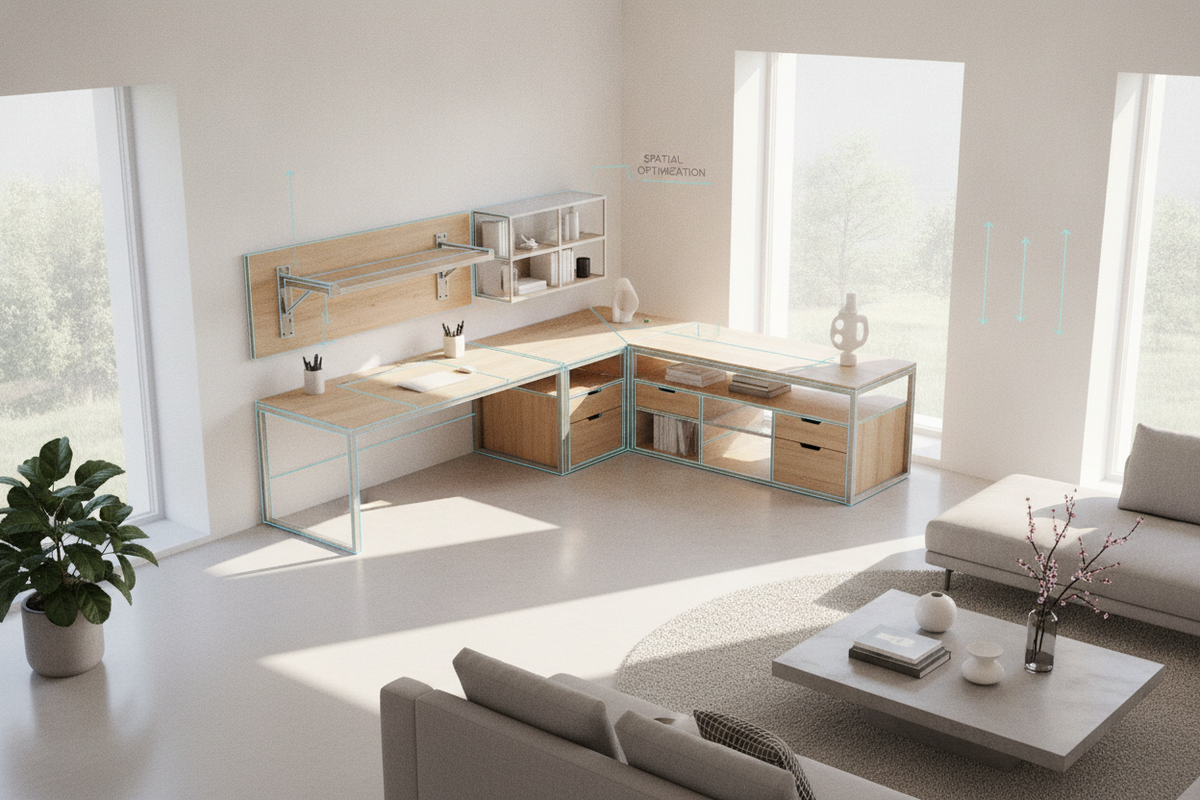
Because kinetic desks elevate, attached under-desk drawers can add uneven weight or limit legroom. Decoupling storage from the lifting frame offers superior functionality and aesthetic harmony.
Decoupled Storage Pedestals and Mobile Lateral Filing Units
Mobile file pedestals on casters provide low-profile storage that rolls neatly under the desk when lowered, yet glides aside when extra legroom is needed. To maintain visual continuity across multi-use rooms that combine tech-focused desks with traditional media storage, consulting a corner stand guide helps balance modern steel desktop hardware with classic living room cabinetry.
Vertical Wall Cabinets and Adjustable Shelving Clearances
When installing wall shelving or credenzas adjacent to a standing desk, always measure clearance against the desk's maximum travel height. Because sit-to-stand desktops continuously change vertical position, keeping heavy reference binders and files inside a perimeter adjustable collection prevents desktop clutter and protects moving frame mechanisms.
Long-Term Workstation Maintenance and Operational Best Practices
Regular maintenance ensures smooth motor performance and structural rigidity over years of daily elevation shifts.
Hardware Tightening Schedules and Frame Re-Leveling
Dynamic movement and daily typing vibrations can gradually loosen frame hardware. Periodically inspect and tighten column mounting bolts, foot brackets, and desktop fasteners. Additionally, use the adjustable leveling glides beneath the footplates to compensate for uneven flooring surfaces, preventing unwanted wobble.
Balancing Surface Weight Distribution to Maximize Lift Lifespan
Distribute heavy computer towers, multiple monitor mounts, and desk accessories evenly between the left and right lifting columns. Balancing the payload avoids asymmetrical motor strain, ensures synchronized elevation speeds, and extends the operational life of your height-adjustable workstation investment.


Dejar un comentario
Este sitio está protegido por hCaptcha y se aplican la Política de privacidad de hCaptcha y los Términos del servicio.