










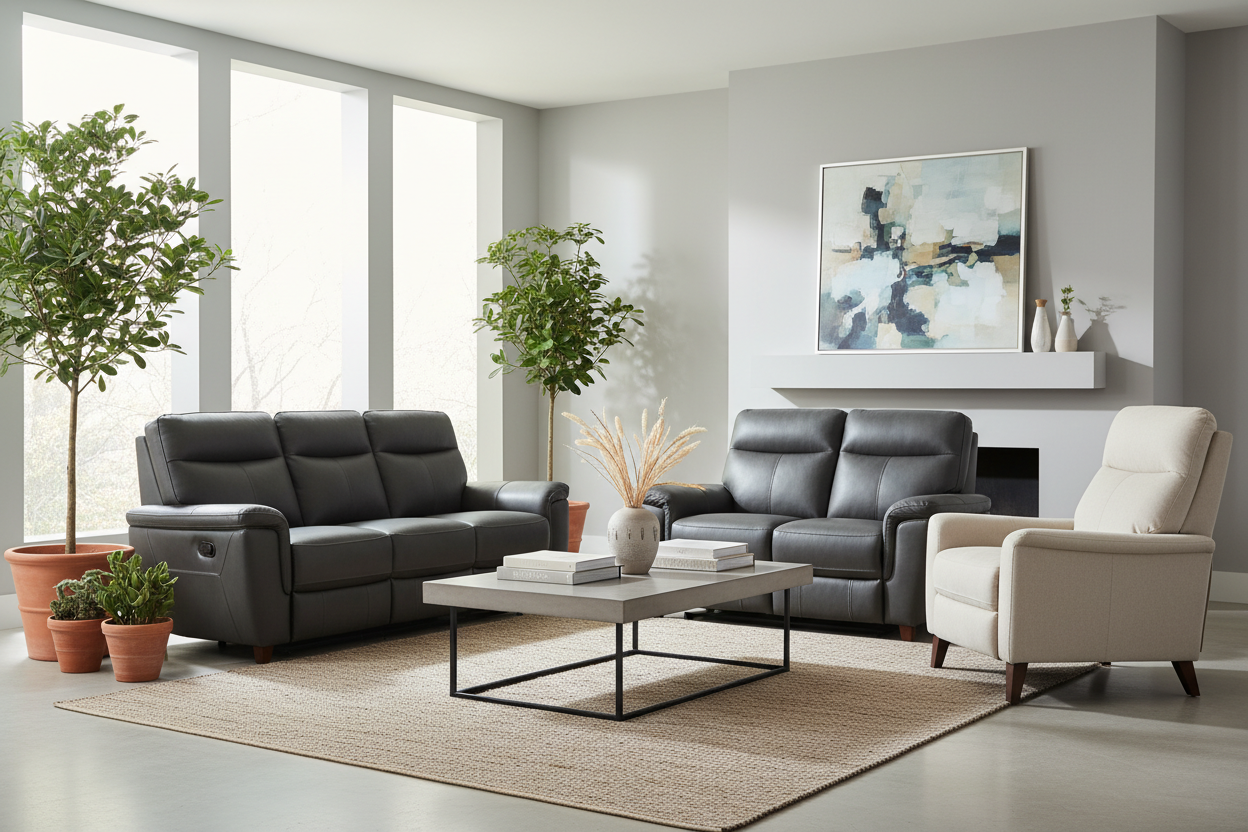
For years, the design community held a quiet prejudice against the recliner. It was often viewed as the "elephant in the room"—bulky, aesthetically jarring, and purely functional. However, the industry has evolved. Today, high-end manufacturers are producing living room reclining sofas that maintain sleek silhouettes while offering the ergonomic support homeowners crave. The challenge now isn't finding one; it's selecting a piece that doesn't dominate your visual landscape or disrupt the flow of your sanctuary.
Key Features to Look For
- Wall-Hugger Mechanisms: Essential for smaller footprints; allows the sofa to be placed within inches of a wall.
- Frame Construction: Look for kiln-dried hardwood frames rather than particle board for longevity.
- Upholstery Durability: Check the "double rub" count; aim for 50,000+ for high-traffic family rooms.
- Power vs. Manual: Power offers infinite positions but requires floor outlets; manual is cord-free but limits adjustability.
- Seat Density: High-resiliency foam (2.0 density or higher) prevents the dreaded "seat sag" over time.
Mastering Space Planning & Layout
The most common error I see in residential projects is ignoring the "fully extended" footprint. A static floor plan is useless if the footrest hits your coffee table. When designing a living room with couch and recliner elements, you must account for traffic flow when the furniture is in use.
The "Floating" Layout
Avoid pushing all furniture against the walls. If you have the square footage, float your reclining sofa in the center of the room. This creates an intimate conversation area. However, this poses a technical challenge: power cords. If you opt for a power recliner in a floating layout, you must either have floor outlets installed or purchase a rechargeable battery pack to avoid trip hazards.
Choosing the Right Material: Aesthetics vs. Reality
When you see a recliner sofa set for sale, the finish is usually the first thing that catches your eye, but it should be the last decision you make after mechanics and size.
Leather vs. Performance Fabric
Top-grain leather is the gold standard for recliners because the motion of the mechanism creates friction between cushions. Leather glides; fabric rubs. If you prefer the warmth of fabric, ensure you are buying a "performance" weave (like Crypton or Sunbrella) that resists pilling. Lower-quality fabrics will show wear patterns where the seat meets the armrest within a year.
Navigating Sales and Sets
It is tempting to jump on a recliner set for sale to furnish a room in one swoop. While this ensures color matching, it often leads to the "showroom look"—generic and uninspired. As a designer, I advise against buying matching 3-piece suites.
Instead, if you find recliners set on sale, consider buying just the sofa and pairing it with contrasting stationary armchairs. This reduces the visual weight of the room. If you do opt for full recliner couch sets for sale, break up the uniformity with textured throw pillows, a vintage rug, and varied lighting levels to reintroduce character.
My Personal Take on Living Room Reclining Sofas
I learned a hard lesson early in my career regarding "delivery clearance." I once specified a stunning, Italian leather power reclining sofa for a client's second-floor media room. We measured the room perfectly, but we forgot to measure the turning radius of the staircase.
Reclining sofas are significantly heavier and often deeper than standard sofas due to the metal motor mechanisms inside. We physically could not get the piece up the stairs. We had to hire a specialist hoisting crew to bring it in through the balcony door—a costly mistake.
Furthermore, I always warn clients about the "gap" hazard. I have a reclining sectional in my own basement, and despite being a high-end model, remotes and phones constantly slip down the side crevices into the abyss of the mechanism. If you have small pets or toddlers, always check underneath before closing the footrest. It’s a small operational detail that showrooms rarely mention.
Conclusion
Integrating motion furniture into your home doesn't mean sacrificing style for comfort. By focusing on wall-hugger designs, quality upholstery, and smart layout planning, you can create a space that looks curated and feels luxurious. Don't just buy a sofa; invest in your downtime.
Frequently Asked Questions
How much space do I need behind a reclining sofa?
Standard recliners require 8 to 12 inches of clearance. However, "zero-clearance" or "wall-hugger" models are engineered to slide forward as they recline, requiring as little as 2 to 4 inches from the wall.
Are power recliners prone to breaking?
Modern motors are generally reliable, but they are another moving part that can fail. Look for brands that offer a separate warranty (usually 3-5 years) specifically for the motor and electrical components, distinct from the frame warranty.
Can I mix a reclining sofa with a standard coffee table?
Yes, but shape matters. An oval or round coffee table works best as it allows for better flow around the extended footrests. Ensure the table is lightweight enough to be easily nudged out of the way if you need extra legroom.

Dejar un comentario
Este sitio está protegido por hCaptcha y se aplican la Política de privacidad de hCaptcha y los Términos del servicio.