










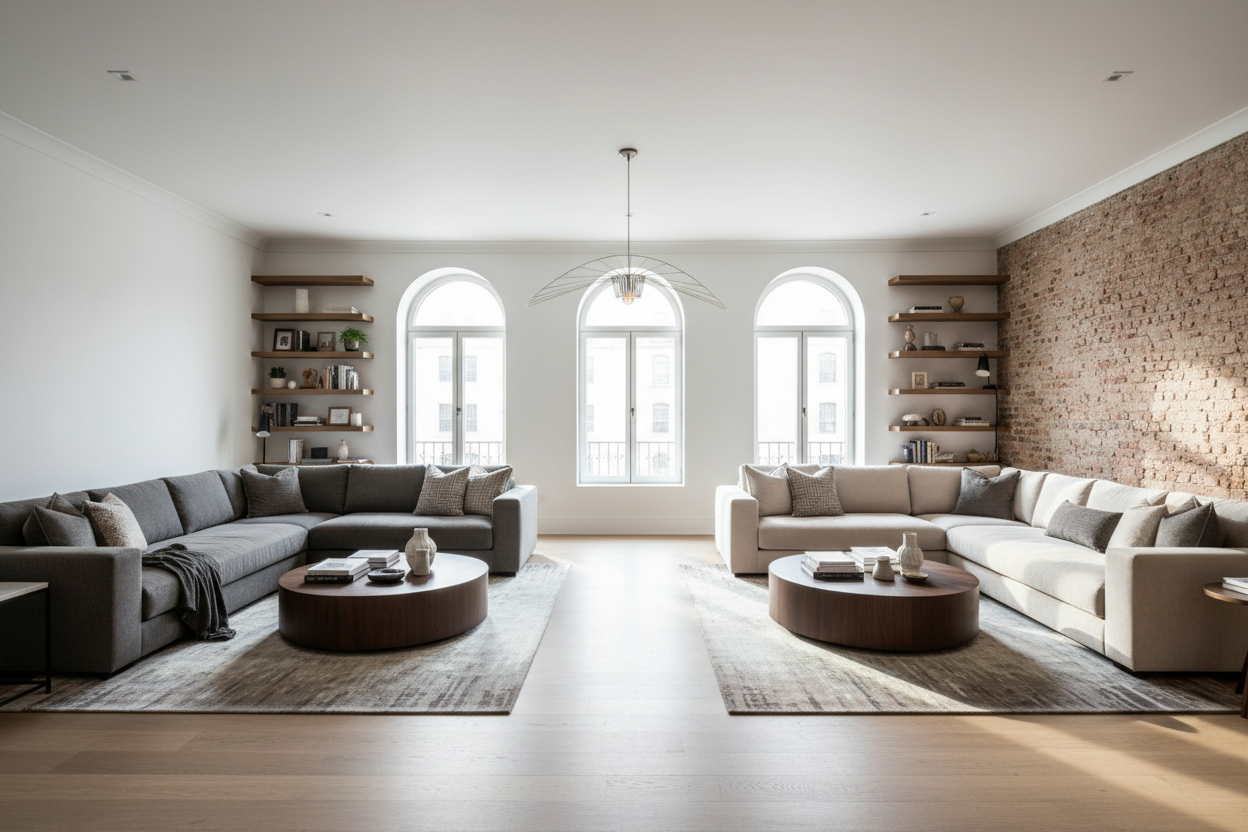
In open-concept living, the biggest challenge isn't usually finding furniture; it's defining the space. Without walls to guide us, a room can quickly feel like a disjointed furniture showroom rather than a cohesive home. This is where area sofas become the most critical architectural tool in your design arsenal. These aren't just places to sit; they are spatial anchors that dictate the flow, function, and feel of your living environment.
Quick Decision Guide: Key Features to Look For
If you are rushing to make a purchase, prioritize these four elements to ensure your sofa anchors the room effectively without overwhelming it:
- Scale & Proportion: The sofa length should be roughly two-thirds the length of the wall or area it anchors to maintain visual balance.
- Configuration Flexibility: Modular or reversible chaise options offer longevity if you move or redesign your layout.
- Suspension Quality: Look for 8-way hand-tied springs or heavy-gauge sinuous springs; avoid pure webbing for primary seating.
- Fabric Durability: For high-traffic areas, aim for a Martindale rub count above 25,000 or performance velvets/crypton fabrics.
Defining Space with Structural Integrity
When we discuss area sofas, we are looking at pieces with a silhouette strong enough to stand alone. Unlike a standard settee pushed against a wall, these sofas often float in the center of a room. This exposes the back profile, meaning the tailoring must be impeccable from all angles.
The Frame Construction
A sofa that defines an area takes a beating. It is approached from multiple sides and often acts as a partition. You need a frame made of kiln-dried hardwood (like maple or oak). Avoid particleboard or softwoods, which can warp over time. When I inspect a frame, I lift one front corner roughly six inches off the ground. If the other front leg doesn't rise immediately, the frame has too much torque and is structurally weak.
Ergonomics and Seat Depth
One of the most overlooked aspects of large-format sofas is the seat depth. There is a massive difference between a conversation sofa and a lounging sofa.
For a formal living area where you host guests, a depth of 21 to 24 inches allows people to sit upright with their feet on the floor. However, for a media room or a relaxed family zone, you want a depth of 24 inches or more. If you choose a deep sofa for a formal area, you will need substantial lumbar pillows to correct the posture, otherwise, your guests will look like they are struggling to stay afloat.
Fabric Selection: Beyond Color
The upholstery is the tactile interface of your design. For area sofas that act as a focal point, texture is paramount. A flat weave in a solid color can look severe on a large surface area. Instead, consider:
- Bouclé or Slubbed Weaves: These hide shadows and minor stains while adding warmth.
- Aniline Leather: It patinas beautifully but shows scratches; perfect for an industrial look, less so for a pristine minimalist aesthetic.
- Performance Velvet: Offers the luxe look of mohair but stands up to spills and pet claws.
My Personal Take on Area Sofas
I learned a hard lesson early in my career regarding "visual weight" versus actual measurements. I specified a stunning, dark charcoal Italian wool sectional for a client's loft. On the floor plan, it fit perfectly with 36-inch walkways on all sides.
However, once installed, the piece felt like a black hole. It sucked all the light out of the room because the legs were too short—it sat heavy on the floor. I realized too late that in that specific lighting, we needed a sofa with "leggy" architecture (exposed legs lifting the frame) to let light pass underneath. We ended up having to completely rethink the rug and lighting just to balance out that visual heaviness. Now, I always tell clients: if your floors are dark, get a sofa with legs. If your floors are light, you can get away with a skirted or plinth-base style. It's a small detail that saves the entire vibe of the room.
Conclusion
Investing in the right area sofa is about more than just filling a void in your living room. It is about curating a lifestyle and creating a center of gravity for your home. Prioritize the internal construction and the flow of the room over fleeting trends, and you will have a piece that serves you well for decades.
Frequently Asked Questions
How much space should I leave around a floating area sofa?
Standard design protocol dictates a minimum of 30 to 36 inches of clearance for walkways. This ensures traffic flows smoothly around the seating area without anyone having to turn sideways or shimmy past the furniture.
Can I mix different sofa styles in one large area?
Absolutely. In fact, matching sets can look dated. A large area sofa pairs beautifully with accent chairs that have a contrasting silhouette—for example, a blocky, low-profile modular sofa paired with sculptural, high-back armchairs creates dynamic visual tension.
What is the best way to prevent cushions from sagging on large sofas?
Regular maintenance is key. Rotate and flip your cushions every two weeks to distribute wear evenly. Additionally, look for cushions with a high-density foam core wrapped in down or dacron, as this provides structure that pure down fill lacks.


Dejar un comentario
Este sitio está protegido por hCaptcha y se aplican la Política de privacidad de hCaptcha y los Términos del servicio.