










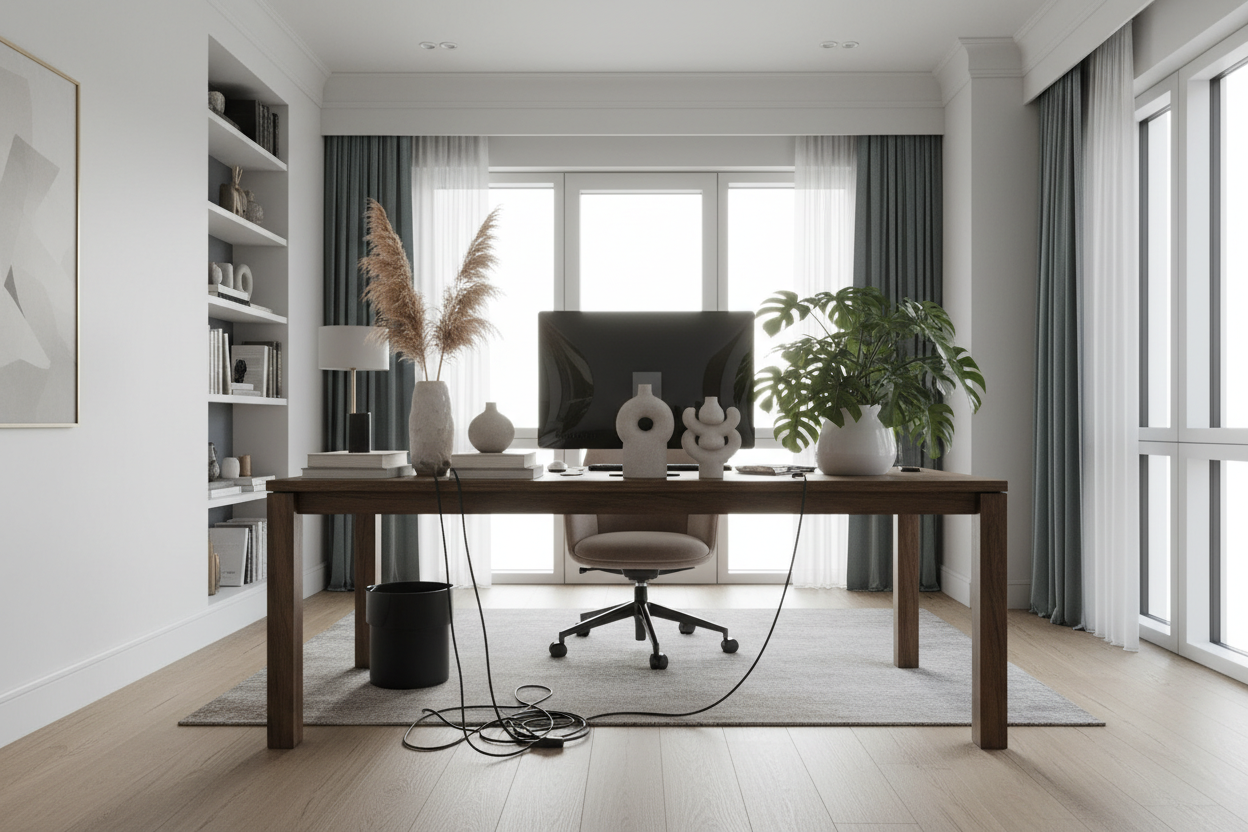
We have all experienced it: a workspace that feels either clinically sterile or chaotically cluttered. The dilemma isn't usually a lack of taste, but rather a misunderstanding of spatial psychology. When approaching the decoration office process, the goal is to curate an environment that reduces cognitive load while stimulating creativity. It is not just about filling a room with furniture; it is about orchestrating a workflow.
Key Features to Look For
- Ergonomics First: Prioritize chairs and desks that support neutral body posture over purely sculptural pieces.
- Lighting Layers: Ensure a mix of ambient (overhead), task (desk lamp), and accent lighting to reduce eye strain.
- Acoustics: Look for soft textures (rugs, curtains, acoustic panels) to dampen echo and improve focus.
- Material Durability: Select surfaces like high-pressure laminate or sealed wood that resist coffee rings and scratches.
- Storage Integration: Vertical shelving or hidden credenzas that maintain a clean visual horizon.
Mastering Space Planning and Layout
The most frequent error in the decoration of office spaces is pushing the desk directly against a wall. This command position—facing the door—is not just Feng Shui; it is a primal instinct that reduces anxiety. When planning your layout, consider the "triangle of efficiency" between your desk, your storage, and your natural light source.
Defining Zones with Rugs and Lighting
In open-plan homes or large corporate suites, visual zoning is essential. Use area rugs to anchor the desk, creating a distinct island of focus. This separates the "work mode" area from a nearby reading nook or lounge space intended for breaks.
Choosing the Right Materials
Materiality dictates the mood. For a sense of authority and permanence, walnut or oak veneers add warmth and visual weight. However, if you are looking for modern decor for offices, matte powder-coated metals and tempered glass offer a lighter, airier silhouette that works well in smaller footprints.
Be wary of high-gloss finishes on working surfaces. While they look stunning in a showroom, they can create distracting glare under task lighting and are notorious for showing dust and fingerprints instantly.
Ergonomics Meets Aesthetics
Design does not stop at the visual. The tactile experience of your furniture is paramount. An executive chair should offer lumbar support without looking like a piece of industrial machinery. Look for chairs upholstered in breathable performance fabrics or top-grain leather that patina over time, blending technical comfort with residential softness.
Lessons from My Own Projects
I learned a hard lesson early in my career regarding "aesthetic" choices versus functional reality. I once specified a stunning, raw reclaimed wood desk for a client who was a graphic designer. It was a visual masterpiece—full of texture, knots, and history.
Two weeks after installation, the client called me. The uneven surface made sketching impossible, and the mouse wouldn't track correctly on the rough grain. I had to commission a custom glass overlay to make it usable, which unfortunately introduced glare. Now, I always test the "writing surface" test with clients: if you can't sign a check on it smoothly without a blotter, it belongs in the dining room, not the office. Practicality must always precede visual drama.
Conclusion
Curating a workspace is an investment in your own efficiency. By prioritizing layout flow, controlling lighting, and selecting materials that age gracefully, you create a space that invites you to work rather than forcing you to. Start with the chair, position your desk correctly, and let the rest of the design follow function.
Frequently Asked Questions
How do I decorate a small home office without cluttering it?
Focus on verticality. Use wall-mounted shelving units that draw the eye up, keeping the floor clear. Choose furniture with exposed legs rather than solid blocks to maintain a sense of openness.
Is solid wood better than veneer for office desks?
Not necessarily. While solid wood is durable, high-quality wood veneer over MDF is often more stable in fluctuating temperatures and less prone to warping, making it a smart choice for long-term durability.
What is the best lighting temperature for productivity?
Aim for a color temperature between 3500K and 4000K (cool white). This range mimics daylight and keeps the brain alert, whereas warmer tones (2700K) can induce drowsiness.

Dejar un comentario
Este sitio está protegido por hCaptcha y se aplican la Política de privacidad de hCaptcha y los Términos del servicio.