










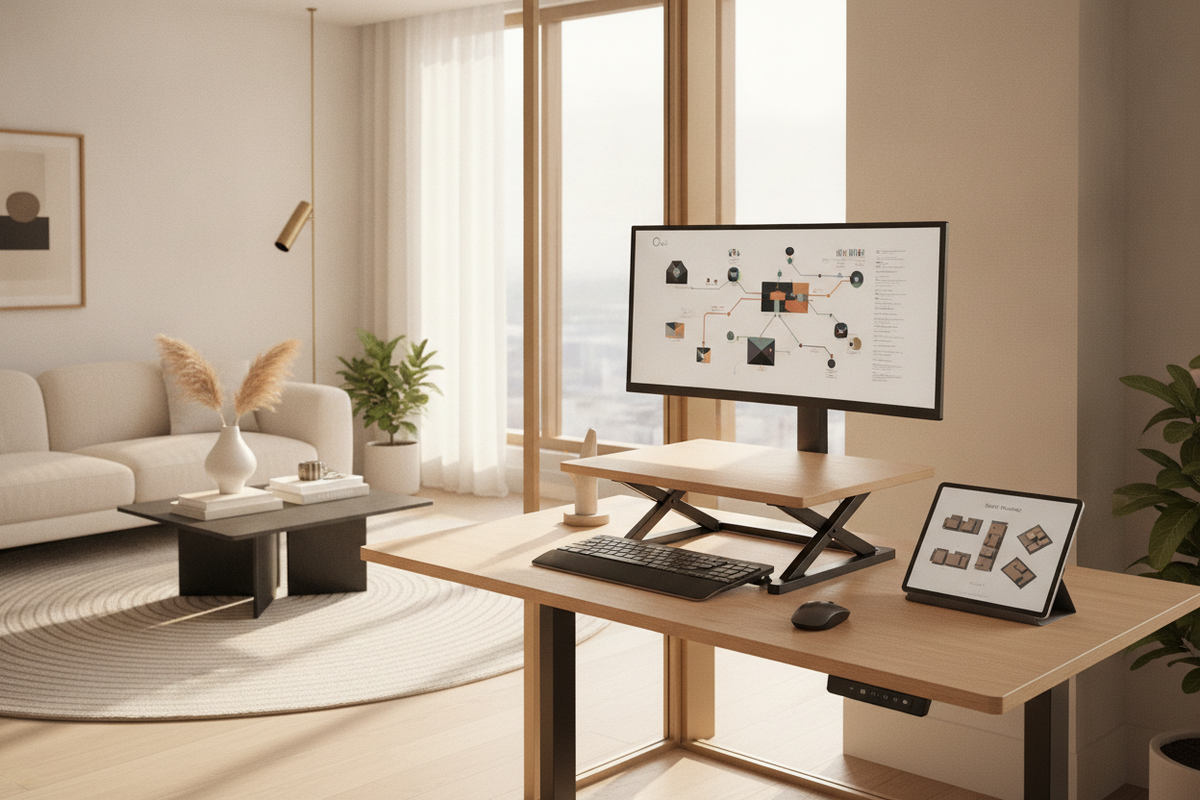
Balancing active work routines with limited square footage often leads remote professionals to evaluate compact desktop risers. Among minimalist designs, the cora standing desk converter—popularized alongside the wider fully cora design family—represents a streamlined approach to height adjustability. Unlike bulky dual-tier units with protruding keyboard trays, a single-surface scissor-frame riser prioritizes portability, clean visual lines, and adaptable spatial planning.
Understanding how a compact mechanism integrates into an existing room requires analyzing its mechanical movement, ergonomic geometry, and spatial relationship with your existing furniture. Whether you are outfitting a compact writing desk, adapting an antique dining table, or deciding between a portable riser and a dedicated sit-stand desk, spatial planning ensures your workstation remains functional, comfortable, and organized.
Understanding the Compact Converter: Mechanics and Workstation Geometry
The defining feature of low-profile risers like the fully cora standing desk converter is the cross-brace scissor-lift mechanism. Traditional converters often rely on forward-arching gas-spring arms or substantial stepped gas pistons that push the work surface forward into the room as they rise. In contrast, a true scissor lift travels primarily in a vertical path, keeping the overall footprint concentrated over the base desk.
This vertical trajectory is especially advantageous in narrow home offices, compact apartment nooks, or shared multipurpose spaces where extending outward could disrupt foot traffic. For broader perspectives on how different mechanical profiles fit within home styling frameworks, reviewing a comprehensive standing desk converter guide helps contextualize how single-tier frames compare to heavy-duty dual-level models.
Surface Footprint and Base Furniture Compatibility
Before placing a portable riser on an existing tabletop, assessing the structural support and dimensions of the base furniture is essential. A flat-folding converter must rest on a stable, level surface with sufficient depth to accommodate its base pads without overhang.
- Tabletop Depth: Slim converters work well on standard residential desks and slim console tables. Ensuring the base frame sits entirely within the perimeter prevents wobbling during height adjustments.
- Surface Material Protection: Scissor converters rely on padded non-skid feet. When pairing a metal frame with soft natural wood or delicate veneers, checking the integrity of rubber or silicone pads prevents surface scratches over repeated lifting cycles.
- Static Weight Distribution: Because the riser concentrates the weight of your laptop, peripherals, and the frame itself over a compact contact area, the underlying table must offer solid center support rather than a flexible or thin tabletop core.
Ergonomic Alignment and Single-Tier Versus Two-Tier Platforms
The primary spatial trade-off of a minimalist riser is the single-level platform. Dual-tier units offer a dropped keyboard tray to maintain an elbow-level typing height while raising a monitor to eye level. A single-tier design presents a uniform flat plane, which requires intentional peripheral arrangement to achieve neutral ergonomic posture.
When working directly on a laptop placed flat on the platform, raising the unit aligns the keyboard with your standing forearm angle, but the screen may remain lower than the ideal horizontal line of sight. To achieve comfortable alignment during extended work sessions, many users pair the converter with an auxiliary laptop stand or an external monitor alongside a wireless keyboard and mouse. This allows the screen to sit at eye level while the input devices remain comfortably positioned on the riser deck.
Compact Converters vs. Full Height-Adjustable Standing Desks
While compact risers offer flexibility and require no furniture disassembly, they are fundamentally designed for agile, lightweight setups. Evaluating whether a converter or a full electric desk suits your workflow depends on equipment load, screen quantity, and long-term space utilization.
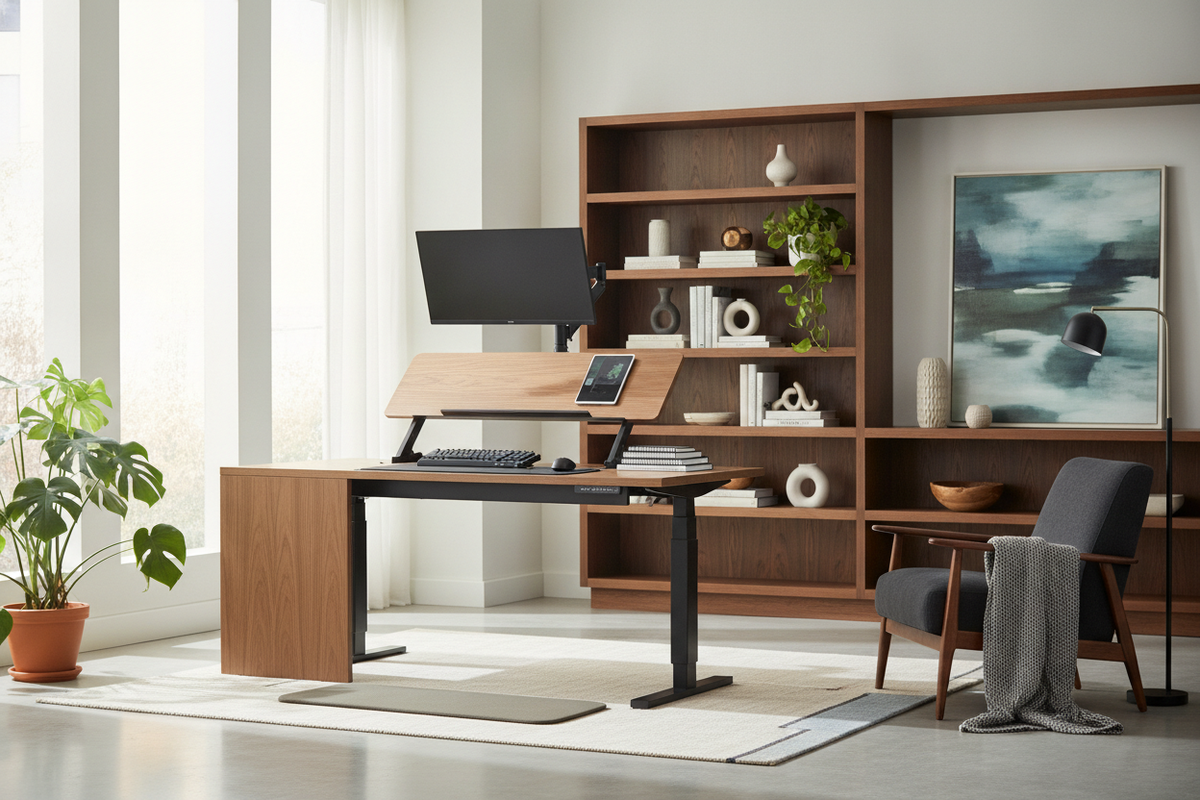
If your work routine requires multiple large monitors, heavy desktop audio equipment, or integrated surface storage, transitioning to a dedicated electric desk may provide greater stability and expansive workspace. A medium-format solution like an adjustable height standing desk with electric lift system delivers continuous motor-driven adjustment across a unified tabletop, eliminating tiered surface transitions.
For extensive multi-display configurations and expansive administrative work, a broader platform like a 71-inch height-adjustable standing desk offers generous surface real estate and substantial lifting capacity that exceeds the structural envelope of compact tabletop risers.
Cable Routing, Peripherals, and Desktop Storage Integration
Maintaining an uncluttered aesthetic with a portable riser requires thoughtful cord management. Because the platform moves vertically, power cables, display cords, and peripheral lines must have adequate slack to extend without tension when standing, yet fold cleanly without binding when lowered.
To maintain visual order in a multipurpose room, explore recommendations in our standing desk guide. Practical cable routing strategies for scissor converters include:
- Flexible Cable Sleeves: Bundling charging cords into a single flexible wrap prevents individual wires from catching in the scissor joints during downward travel.
- Anchor Points: Affixing adhesive clips along the rear edge of the riser deck directs cables toward the back of the base desk, keeping the sides clear for arm movement.
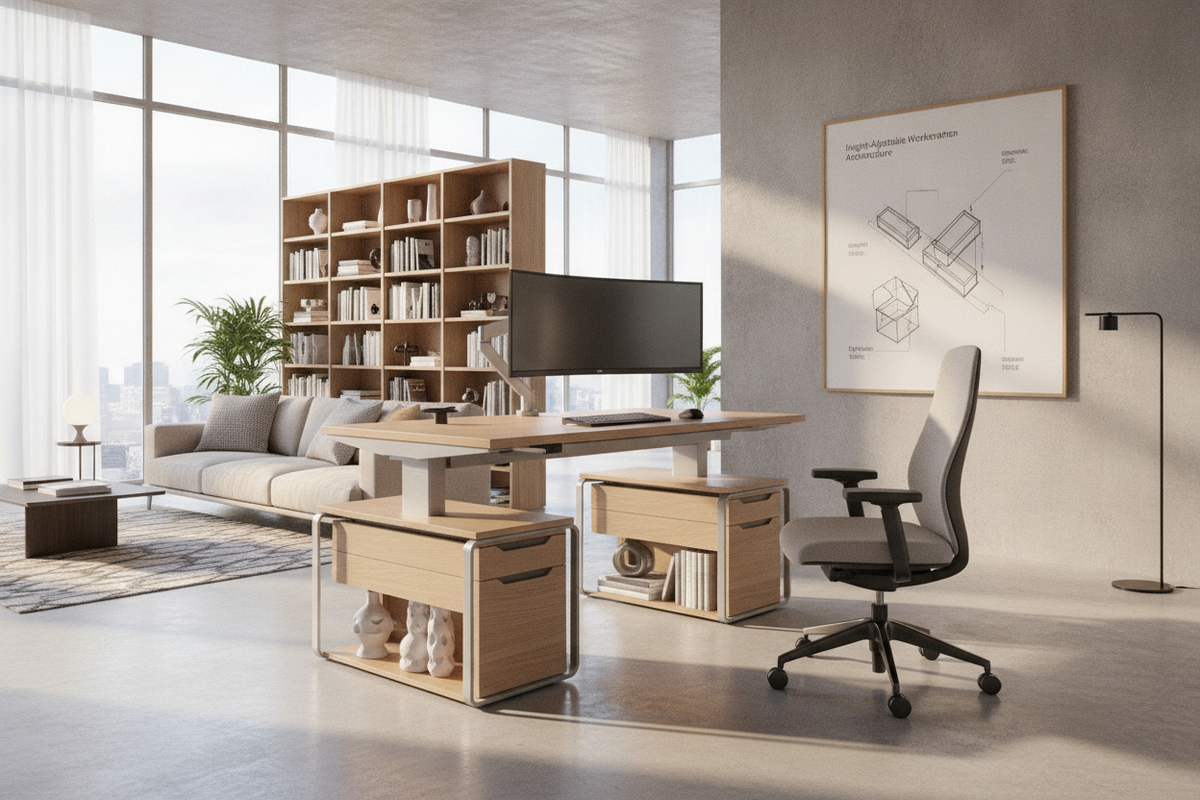
- Adjacent Mobile Storage: Because a converter occupies the center of your tabletop, utilizing under-desk mobile pedestals or side credenzas keeps notebooks, stationery, and external drives off the primary work surface.
Workstation Selection Framework: Matching Converter Dynamics to Daily Workflow
Selecting the right sit-stand configuration involves aligning your daily physical habits with your available room layout. Consider the following criteria when finalizing your setup:
- Portability vs. Permanence: If you frequently clear your workspace for drawing, crafting, or dining, a lightweight folding converter can be stored in a closet or leaned against a wall. For dedicated home offices, permanent sit-stand furniture provides seamless utility.
- Gear Footprint: Minimalist converters excel for single-laptop workflows. When upgrading to dedicated desktop towers, mounting arms, and dual screens, consider an expansive setup such as a super-sized electric standing desk.
- Adjustment Frequency: Manual scissor lifts rely on intuitive counterbalanced handles or release latches, offering swift adjustments without electrical cords, making them versatile across areas lacking wall outlets.
By understanding the spatial profile and ergonomic considerations of the Cora converter design, you can construct an active, organized workstation that respects both your physical posture and your home interior aesthetic.

Dejar un comentario
Este sitio está protegido por hCaptcha y se aplican la Política de privacidad de hCaptcha y los Términos del servicio.