











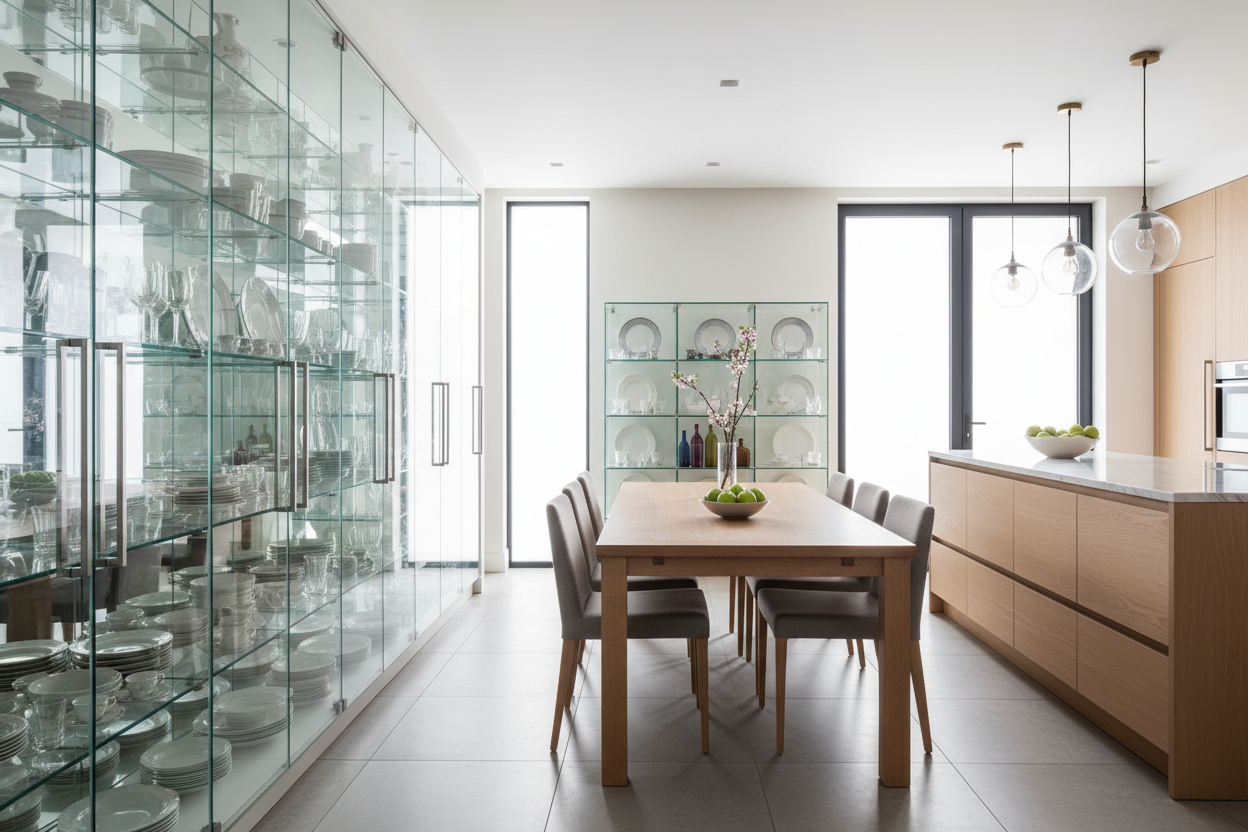
I remember the exact sound my bottom kitchen drawer made when I tried to stack my grandmother’s ironstone inside. It wasn't a snap; it was a slow, agonizing groan of particle board giving up on life. That was the day I realized that heavy plates need more than just a deep drawer—they need dedicated crockery storage cabinets built for the job.
If you are tired of playing Jenga with your cereal bowls every time you want a snack, you are probably eyeing a display unit. But before you buy that pretty glass-front piece, let’s talk about the reality of living with one. It is not all Pinterest-perfect stacks and soft lighting.
Quick Takeaways
- Check shelf weight ratings; a stack of 12 dinner plates can weigh over 20 pounds.
- Glass doors require frequent cleaning if you have kids, pets, or hands.
- Solid wood or high-quality MDF is non-negotiable for heavy stoneware.
- If your kitchen is tiny, look toward the dining or living room for extra wall space.
The 'Deep Drawer' Myth (And Why I Bailed)
Modern kitchen design loves to tell you that deep lower drawers are the solution for everything. They lied. While drawers are great for Tupperware or light pots, they are a nightmare for heavy ceramic sets. Every time you pull the drawer open, the momentum shifts, and your expensive plates clatter against each other. After watching my favorite serving platter chip, I started hunting for real kitchen dining storage that wouldn't wobble under pressure.
I spent weeks browsing through different collections, trying to find something with the structural integrity of a bank vault but the looks of a boutique hotel. Most standard kitchen cabinets are built to be light and modular, which is the opposite of what you want when you're storing forty pounds of clay and glaze. I eventually realized I needed a standalone unit with reinforced shelving.
Weight Limits Are Not Suggestions
People underestimate how heavy dishes actually are. A single stoneware dinner plate can weigh 2 pounds. Stack twelve of them, and you're at 24 pounds on one small section of a shelf. A flimsy crockery stand for kitchen use, especially the cheap flat-pack variety, will start to bow in less than a month. I've seen shelves sag so badly the glass doors wouldn't even slide shut anymore.
When you are shopping, look for the 'max load' per shelf. You want something rated for at least 40-50 pounds if you plan on stacking plates. If the manufacturer doesn't list a weight limit, it’s usually because the limit is embarrassingly low. Stick to kiln-dried hardwoods or thick, high-density fiberboard. Avoid anything with thin, 'floating' glass shelves unless you only plan on displaying a few champagne flutes.
The Glass Door Dilemma: Dust, Dog Noses, and Styling Anxiety
There is a specific kind of pressure that comes with owning a glass crockery stand. Suddenly, your mismatched mugs and that one chipped plastic bowl from college are on display for the world to see. I spent the first three days of owning mine obsessively rearranging my bowls by color. It’s a level of styling anxiety I didn't expect.
Then there’s the maintenance. If you have a dog with a wet nose or a toddler with sticky fingers, those glass panes will never be clean. You will become a person who carries a microfiber cloth in your back pocket. If the thought of perfectly curated stacks makes you sweat, you might want to consider a credenza with sliding glass doors. It keeps the dishes visible but keeps the 'mess' at waist height where it's less obvious than a full-height hutch.
Stealing Space from the Living Area
Most of us don't have a kitchen large enough for a massive new cabinet. I live in a house built in the 1940s where the kitchen is basically a hallway with a stove. I had to get creative. I realized that my dining area and living room were underutilized, and there is no law saying your plates have to live within three feet of the sink.
In my last place, I actually swapped my TV stand for a modern wall cabinet to gain more vertical storage. It felt weird at first to have my dinnerware in the living room, but it cleared up so much counter space in the kitchen that I didn't care. It turns out, a beautiful cabinet full of white dishes looks a lot better than a black plastic TV stand anyway. Don't be afraid to let your storage bleed into other rooms.
Are They Actually Worth the Floor Space?
If you are a 'one set of dishes' kind of person, you probably don't need a dedicated cabinet. But if you have inherited sets, holiday platters, or a slight obsession with artisanal pottery, these units are life-savers. They protect your investment from getting chipped in a crowded drawer and they actually make you use your 'nice' things because you can see them.
Just be honest about your cleaning habits. If you hate Windex, get solid doors. If you have heavy plates, buy the heavy-duty wood. It’s better to spend a little more now than to watch your favorite gravy boat take a dive when a cheap shelf finally snaps.
FAQ
How do I know if a shelf is strong enough?
Look for the thickness. A shelf should be at least 3/4 of an inch thick. If you press down on the center with your hand and see even a tiny bit of flex, it will not hold a full set of stoneware over time.
How do I keep glass doors from looking cluttered?
Stick to a color palette. If all your dishes are white, clear, or wood, it will look intentional even if the stacks aren't perfectly straight. Hide the neon plastic kids' cups in a solid drawer or at the very bottom.
Is it hard to move these cabinets?
Yes. Because they are built to hold weight, they are heavy themselves. Always check if the unit comes with a wall-anchor kit—if it doesn't, buy one. A top-heavy cabinet full of glass and ceramic is a massive safety hazard if it’s not bolted to a stud.

Dejar un comentario
Este sitio está protegido por hCaptcha y se aplican la Política de privacidad de hCaptcha y los Términos del servicio.