










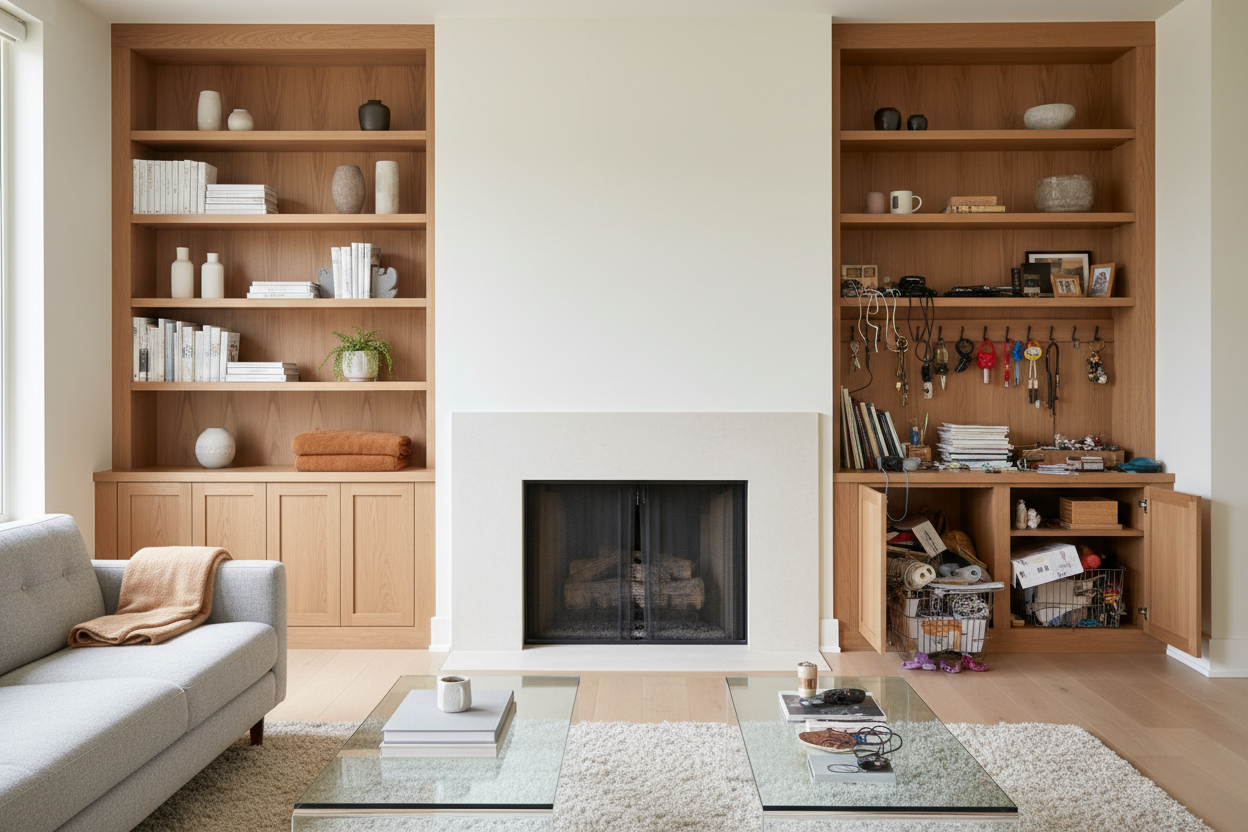
I once spent three hours on a Saturday moving a single ceramic bowl exactly two inches to the left. I was trying to nail that 'effortless' look on my built in cabinet and shelves, only to realize the bottom shelf was currently holding a half-eaten bag of pretzels and three years of unfiled tax returns. It’s a classic trap: we treat expensive architectural features like they’re kitchen junk drawers just because they have doors.
The truth is, most built-ins fail because we don't respect the boundary between 'storage' and 'display.' We cram every gap with a souvenir or a stray charger, and suddenly that custom millwork looks like a thrift store clearance rack. Here is how I stopped overthinking the 'shelfie' and started actually using my storage.
Quick Takeaways
- Doors are for the ugly stuff; open shelves are for the art.
- Leave 30% of every shelf empty to let the eye rest.
- Vary heights by stacking books horizontally and vertically.
- The 'Squint Test' is the easiest way to find visual imbalances.
The 'I Have Too Much Stuff' Dilemma
We all want that Pinterest-perfect wall, but we live real lives with real clutter. The biggest mistake I see (and have made) is treating the entire built in cabinet and shelves unit as a drop zone. When you come home and toss your mail, keys, and that weird plastic part you found on the floor onto an open shelf, you’re killing the aesthetic. Built-ins are supposed to provide a sense of order, not just more horizontal surfaces to colonize with mess.
I used to have a 12-foot run of built in shelf cabinet units in a rental, and for the first six months, it was a disaster. I tried to display every single book I owned, spine-out, packed tight. It felt heavy, dusty, and honestly, a bit claustrophobic. It wasn't until I purged about 40% of the 'filler' items that the architecture of the room actually started to shine. You have to be a ruthless editor of your own belongings.
Rule 1: The Bottom Half is for Hiding
If your built-ins have lower cabinets, consider them your get-out-of-jail-free card. This is where the unglamorous essentials live. I’m talking about the bulky printer, the tangled nest of HDMI cables, and the board games with the taped-up corners. By stuffing the 'ugly' stuff down low, you balance display and concealment perfectly.
I recommend using internal bins even inside these closed cabinets. There is nothing worse than opening a cabinet door and having a landslide of lightbulbs and batteries hit your feet. Keep the heavy stuff—think photo albums or that 20-pound mixer you only use for Christmas cookies—on the very bottom. It keeps the unit grounded and prevents the shelves from looking top-heavy.
Rule 2: Stop Treating Open Spaces Like Storage
The upper half of your built in cabinet and shelves is an art gallery, not a warehouse. If you can buy it in bulk at a big-box store, it shouldn't be on an open shelf. I stick to a mix of three things: books (grouped by color or size, but never perfectly), organic shapes (vases, stones, driftwood), and personal art. Negative space is your most important 'object.' If a shelf is packed edge-to-edge, it’s not a design choice; it’s a storage problem.
If you find that you simply have too much stuff that needs protection but you still want it visible, you might need a different piece of furniture entirely. Sometimes a standalone black cabinet with glass doors works better for collections like vintage glassware or delicate ceramics that would just get dusty on open built in cabinet shelves. It keeps the clutter contained behind glass while still letting you show off the goods.
What if You Don't Actually Have Architectural Built-Ins?
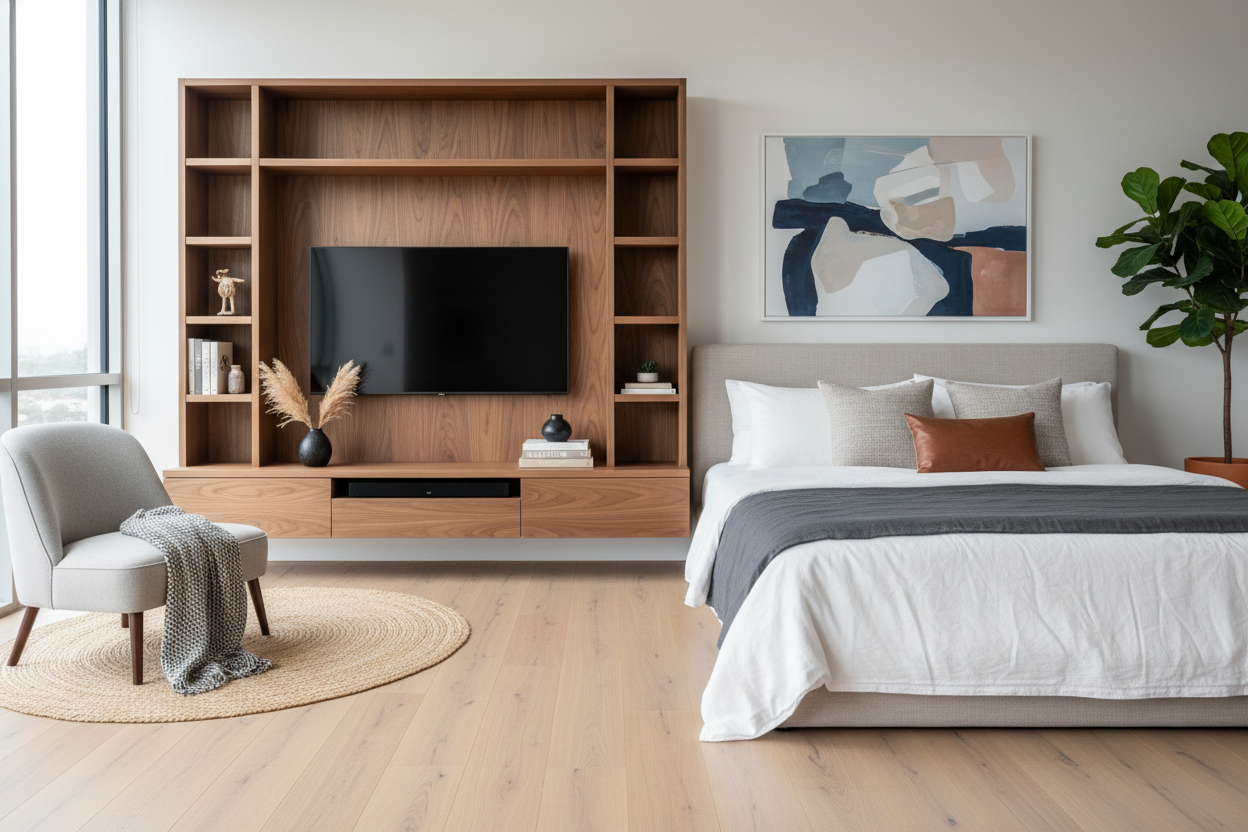
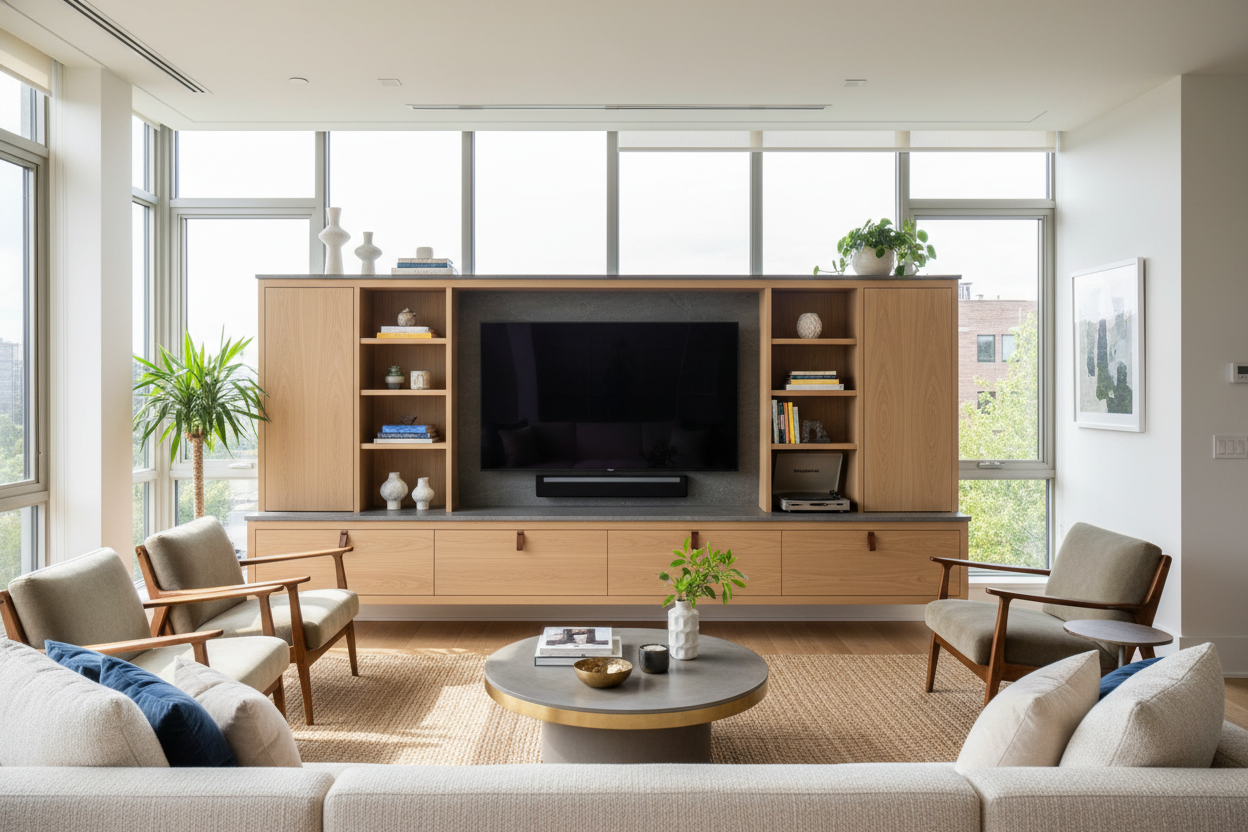
Not everyone lives in a home with custom millwork. If you're a renter or your house is a 'blank box' of drywall, you can fake the look with modular pieces. I’ve done this using three or four tall bookcases pushed together to fill a wall from corner to corner. Using a corner shelf storage organizer bookshelf helps bridge the gap between two walls, making the furniture look like it was built into the room's skeleton.
To really sell the 'custom' lie, try to integrate a workspace. A cabinet desk combo for a custom built in look can make a random living room wall feel like a high-end library. The key is consistency: keep the heights and colors the same across all pieces so they read as one massive unit rather than a hodgepodge of budget finds.
The Final 'Squint Test'
Once you think you're finished styling your built in cabinet and shelves, walk to the other side of the room. Now, squint your eyes until the objects turn into blurry shapes. If you see a giant dark blob on the left and nothing on the right, your 'visual weight' is off. Move a stack of books or a large vase to balance it out. The goal is an even distribution of 'stuff' and 'air' across the whole unit. If it looks balanced when you can't even see the items clearly, it'll look incredible when you open your eyes.
FAQ
How do I stop my shelves from looking cluttered?
Follow the 70/30 rule: cover 70% of the shelf and leave 30% empty. Also, group small items on a tray or a stack of books so they look like one 'unit' instead of five tiny distractions.
Should I organize my books by color?
It’s a polarizing choice. If you have a massive library, it’s a nightmare to find anything. But for a small built in shelf cabinet, it can calm the visual noise. I prefer grouping by size—it looks less 'staged' but still tidy.
What is the best way to hide cords in built-ins?
If you didn't have the foresight to install outlets inside the cabinets, use cord clips along the back corners. Better yet, drill a small 2-inch hole in the back panel behind a stack of books to snake wires down to the lower cabinets.

Dejar un comentario
Este sitio está protegido por hCaptcha y se aplican la Política de privacidad de hCaptcha y los Términos del servicio.