










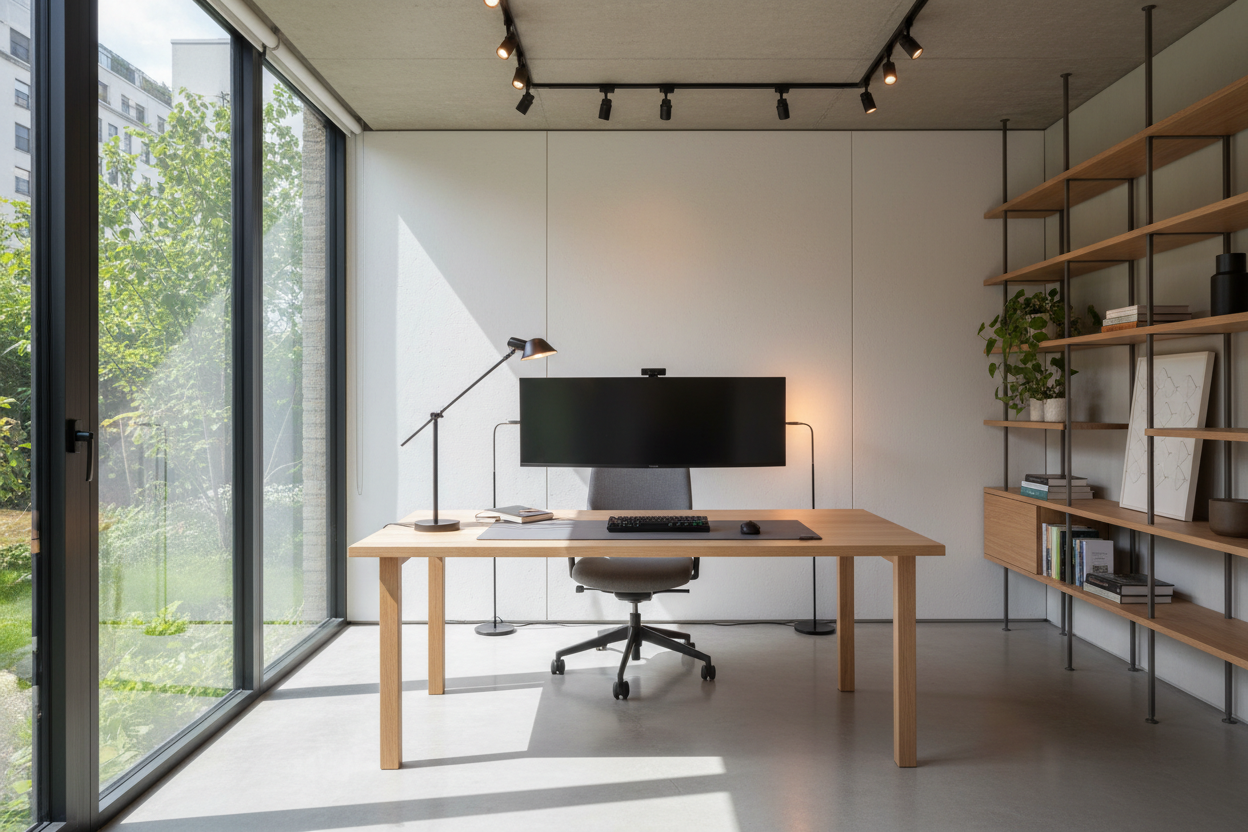
You have invested in the ergonomic chair, selected a desk with the perfect wood grain, and organized your shelving to perfection. Yet, by 3:00 PM, you find yourself squinting at the screen, battling a subtle headache, or feeling inexplicably drained. The culprit is rarely the workload; it is almost always the illumination. Properly lighting a home office is not merely about buying a lamp; it is an architectural balancing act between visual comfort, color temperature, and aesthetic coherence. As a designer, I see too many clients rely on a single overhead fixture, which creates harsh shadows and flattens the room's depth. Let’s correct the balance and treat your workspace with the same design rigor as a living room.
Key Features for Office Illumination
- Color Temperature (Kelvins): Aim for 3500K to 4000K for focus; anything lower induces sleepiness, while anything higher feels clinical.
- Layering Strategy: A mix of ambient (overhead), task (focused), and accent (decorative) lighting is non-negotiable.
- Color Rendering Index (CRI): Look for a CRI of 90+ to ensure wood finishes and paint colors look true to life.
- Adjustability: Articulating arms and dimmable switches allow you to adapt the light to the time of day.
- Glare Control: Fixtures must have diffusers or shades to prevent bounce-back from monitors and glossy desk surfaces.
The Art of Layering Light
In interior design, we never rely on a single light source. To achieve a sophisticated look that functions correctly, you must employ a three-tiered approach to lighting in home office environments.
1. The Ambient Foundation
This is your general illumination. Avoid the dreaded "boob light" flush mount in the center of the room. Instead, opt for recessed lighting on a dimmer or a semi-flush mount with a fabric drum shade. The goal is to cast a soft, even glow that bounces off the ceiling and walls, reducing the contrast between your bright monitor and the surrounding room. High contrast causes eye fatigue.
2. Task Lighting: The Workhorse
The desk lamp is where function meets sculpture. For a home office, an articulating task lamp is superior to a fixed table lamp. You need the ability to direct light exactly where you are writing or reading, without it spilling onto your screen. Materiality matters here; a heavy brass or machined aluminum base adds a tactile sense of permanence and luxury to the desk setup.
3. Accent Lighting: The Mood
This is where the "office" starts to feel like a "home." Use LED strip lighting inside bookshelves to highlight your library or a small picture light over a piece of art. This layer adds depth and prevents the room from feeling like a sterile cubicle.
Color Temperature and Productivity
The color of light profoundly impacts your circadian rhythm. Warm light (2700K) signals the brain to relax, which is disastrous for productivity. Conversely, daylight (5000K+) can feel harsh and anxious in a residential setting. The designer's sweet spot is usually 3000K to 4000K. This range provides a crisp, clean white light that improves concentration without making your home office feel like a hospital laboratory.
Managing Glare and Shadows
Positioning is just as critical as the fixture itself. If you are right-handed, place your task lamp on the left side of the desk to prevent your hand from casting shadows across your writing. Furthermore, consider the finish of your furniture. If you have a desk with a high-gloss lacquer or glass top, direct downlighting will create blinding hotspots. In these cases, a linear suspension light with a frosted diffuser hung above the desk is a much smarter choice than a focused beam.
My Personal Take on Lighting a Home Office
I learned a hard lesson early in my career regarding finish interaction. I once designed a moody, masculine study for a client featuring a stunning, high-gloss burl wood desk. I paired it with a high-intensity architectural task lamp that looked beautiful in the catalog.
The moment the client turned it on, the reflection off the glossy wood was like a laser beam hitting him in the eyes. It was unusable. I had to swap it out for a lamp with a linen shade and a lower lumen output to diffuse the light. Since then, I always check the "sheen" of the furniture before selecting the bulb intensity. Also, a small detail people forget: if you wear glasses, avoid exposed bulbs at eye level. The reflection on the inside of your lenses is maddening after an hour of work.
Conclusion
Treating your workspace lighting with intention changes the way you work. It shifts the room from a place of obligation to a space of inspiration. By layering your sources and selecting the right temperature, you protect your eyes and elevate the architecture of your home.
Frequently Asked Questions
What is the best position for a desk lamp to avoid screen glare?
Place the lamp to the side of your monitor, not directly behind or in front of it. Angle the head so the light is directed downward onto your papers, ensuring the bulb is not visible to your eyes or reflecting off the screen.
How do I light my office for video calls?
Avoid having a window directly behind you, as this silhouettes your face. Place a soft light source (like a lamp with a shade) behind your webcam or laptop to illuminate your face evenly. Ideally, use two sources at 45-degree angles to fill in shadows.
Can I use smart bulbs for a home office?
Absolutely. Smart bulbs are excellent for home offices because they allow you to change the color temperature throughout the day—starting with cool, energizing light in the morning and shifting to warmer light as you wind down in the evening.


Dejar un comentario
Este sitio está protegido por hCaptcha y se aplican la Política de privacidad de hCaptcha y los Términos del servicio.