










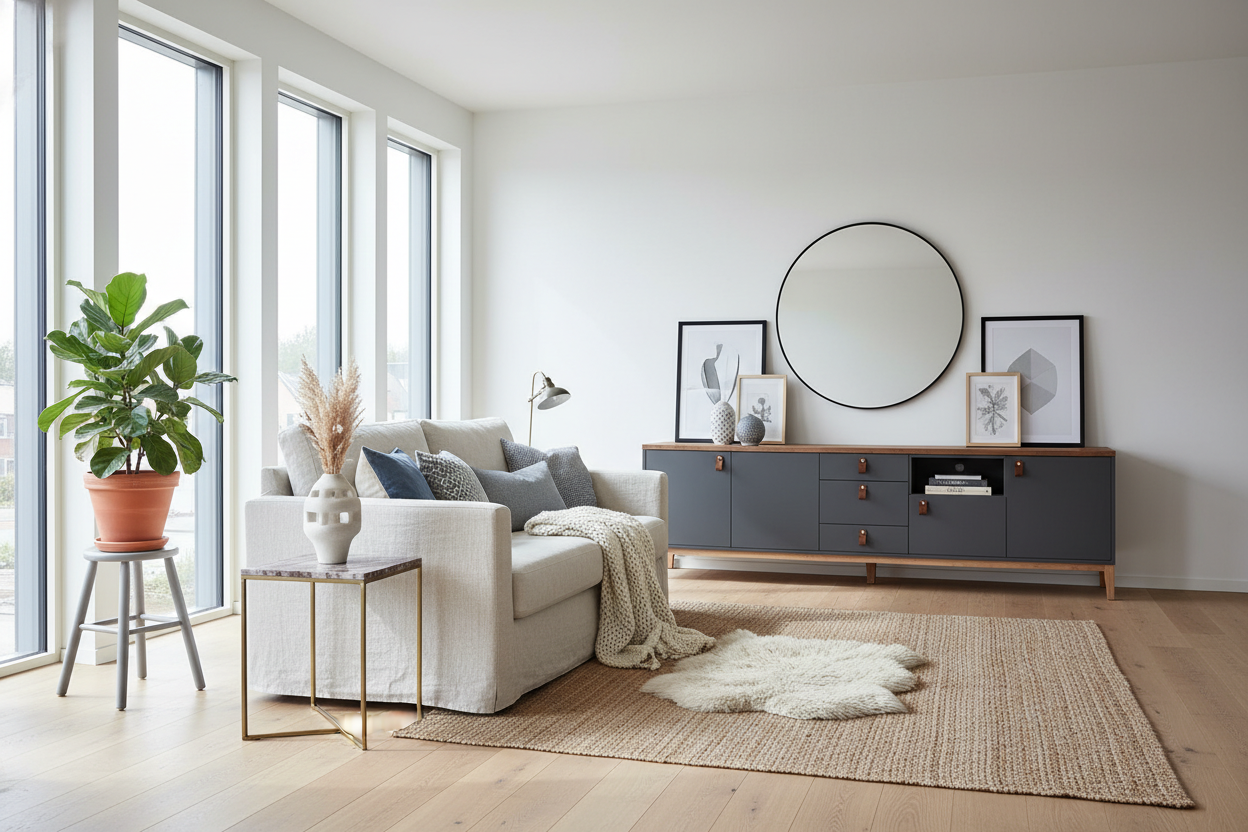
We have all walked into a room that feels less like a home and more like page 45 of a catalog. The challenge with mass-market design isn't the aesthetic itself—Scandinavian minimalism is timeless—but the lack of personal narrative. As a designer, my goal isn't to dissuade you from decor ikea, but to teach you how to curate it so it feels intentional, not inevitable.
Key Features to Look For
- Material Authenticity: Prioritize natural materials like glass, metal, and solid wood over hollow-core composites.
- Visual Weight & Scale: Ensure the item’s size grounds the space rather than floating aimlessly within it.
- Texture Variance: Look for tactile finishes (linen, stoneware, jute) to counteract flat, manufactured surfaces.
- Modularity: Select pieces that allow for configuration changes as your spatial needs evolve.
Curating Ikea Home Décor for Visual Balance
The distinction between a dormitory feel and a high-end interior lies in the mix. When selecting ikea home décor, the rule of thumb is to avoid the "set" mentality. Never buy the matching vase, rug, and throw pillow from the same vignette collection. Instead, treat the store as a resource for foundational elements.
Prioritizing Natural Materials
To elevate the look, strictly filter your choices by material. Ikea decorative items made from mouth-blown glass, stoneware, or powder-coated steel age significantly better than plastic or foil finishes. For example, their ceramic vases often have organic, imperfect silhouettes that mimic artisan pottery. When placed on a vintage console or a marble countertop, these items lose their mass-produced context and simply become beautiful objects.
Textiles and Soft Furnishings
Soft furnishings are where you can make the most significant impact on a budget. However, stock inserts are often where the quality drops. A professional trick regarding ikea decor items—specifically cushions—is to purchase the cover but upgrade the inner pad. If you buy a 50x50cm cover, stuff it with a 55x55cm down or feather insert. This overstuffing eliminates the dreaded "dog-ear" corners and provides a plump, luxurious silhouette that looks bespoke.
Lighting as Sculptural Elements
Lighting is rarely just about illumination; it is about architecture. Many Ikea lighting fixtures, particularly their paper and bamboo lines, offer substantial volume for a low price point. Large-scale pendants can act as a focal point, drawing the eye upward and creating a sense of grandeur. The key is to pair these fixtures with warm-dim bulbs (2700K) to avoid the sterile, clinical cast often associated with budget LEDs.
Lessons from My Own Projects
I want to share a specific reality check from a living room refresh I did last year. We used the popular "Sinnerlig" pendant lamp—the large cork and bamboo lattice one. Visually, it was stunning and anchored the room perfectly.
However, here is the unpolished truth I learned during installation: the bamboo lattice is incredibly fragile. While trying to adjust the height, a single wrong grip snapped a piece of the weaving. Furthermore, after six months, I noticed that because of the intricate weaving, it became a significant dust trap that was nearly impossible to clean with a standard duster without risking more breakage. We ended up having to use compressed air cans to clean it. It’s a beautiful piece of decor ikea offers, but it requires a maintenance commitment that the price tag doesn't warn you about.
Conclusion
Transforming your space isn't about how much you spend, but how you layer your choices. By mixing ikea decorative items with heirloom pieces, upgrading inserts, and focusing on natural materials, you can build a home that feels curated and unique. Design is about the eye, not just the brand.
Frequently Asked Questions
How do I stop my Ikea decor from looking cheap?
The secret is context. Mix high and low. Place an Ikea vase next to a stack of hardcover art books or on a solid wood shelf. Avoid clustering too many plastic or particleboard items together.
Which Ikea decor items have the best longevity?
Focus on their glassware, metal candlesticks, and 100% cotton or linen textiles. These materials are durable and wash well, whereas synthetic blends and foil-wrapped accessories tend to show wear and scratches quickly.
Can I paint Ikea decorative items?
Absolutely. Ceramics and untreated woods are the easiest to customize. For glazed ceramics, use a bonding primer first. A simple coat of matte black or terracotta paint can turn a generic vase into a statement piece.

Leave a comment
This site is protected by hCaptcha and the hCaptcha Privacy Policy and Terms of Service apply.