






A large-format workstation serves as the operational anchor of a dedicated home office or executive suite. When transitioning to a big L shaped desk, the primary objective is balancing expansive surface area with seamless room flow. Unlike standard linear desks, large corner and corner-extended workstations introduce dual work zones, deep corner junctions, and significant structural footprints that demand deliberate spatial planning.
Understanding Big L Shaped Desk Dimensions and Wing Proportions
Choosing the right big L desk starts with analyzing how its two primary surfaces—the main desktop and the return wing—interact with your daily workflow. The proportion between these two sections dictates whether your workstation functions as an immersive digital cockpit, a dual-purpose administrative zone, or a collaborative executive desk.
Symmetrical vs. Asymmetrical Large-Format Wing Profiles
Large L-shaped workstations generally fall into two structural silhouettes: symmetrical footprints and asymmetrical extended wings. Symmetrical configurations feature equal span lengths along both walls, creating balanced visual symmetry in square rooms and providing identical surface space for dual-purpose workflows.
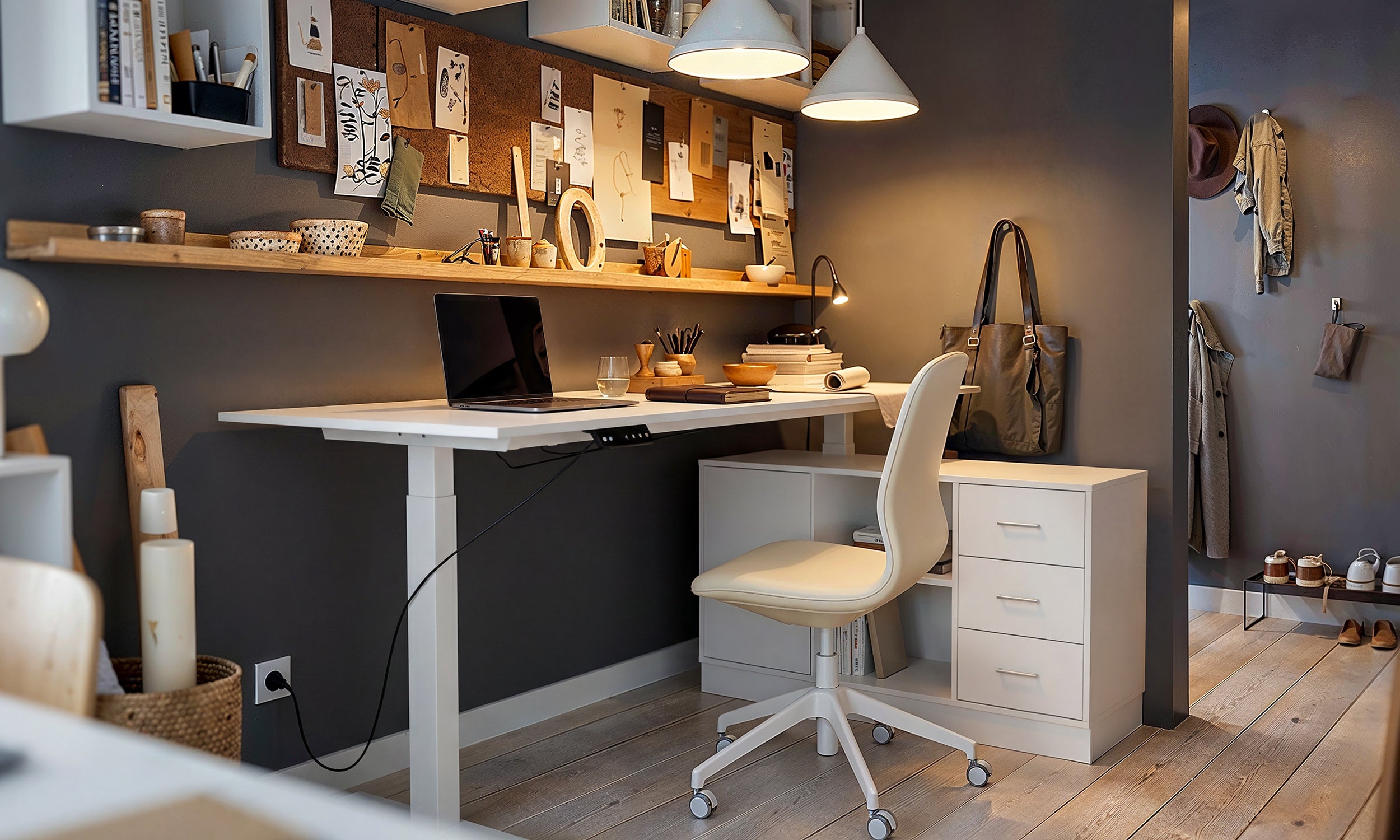
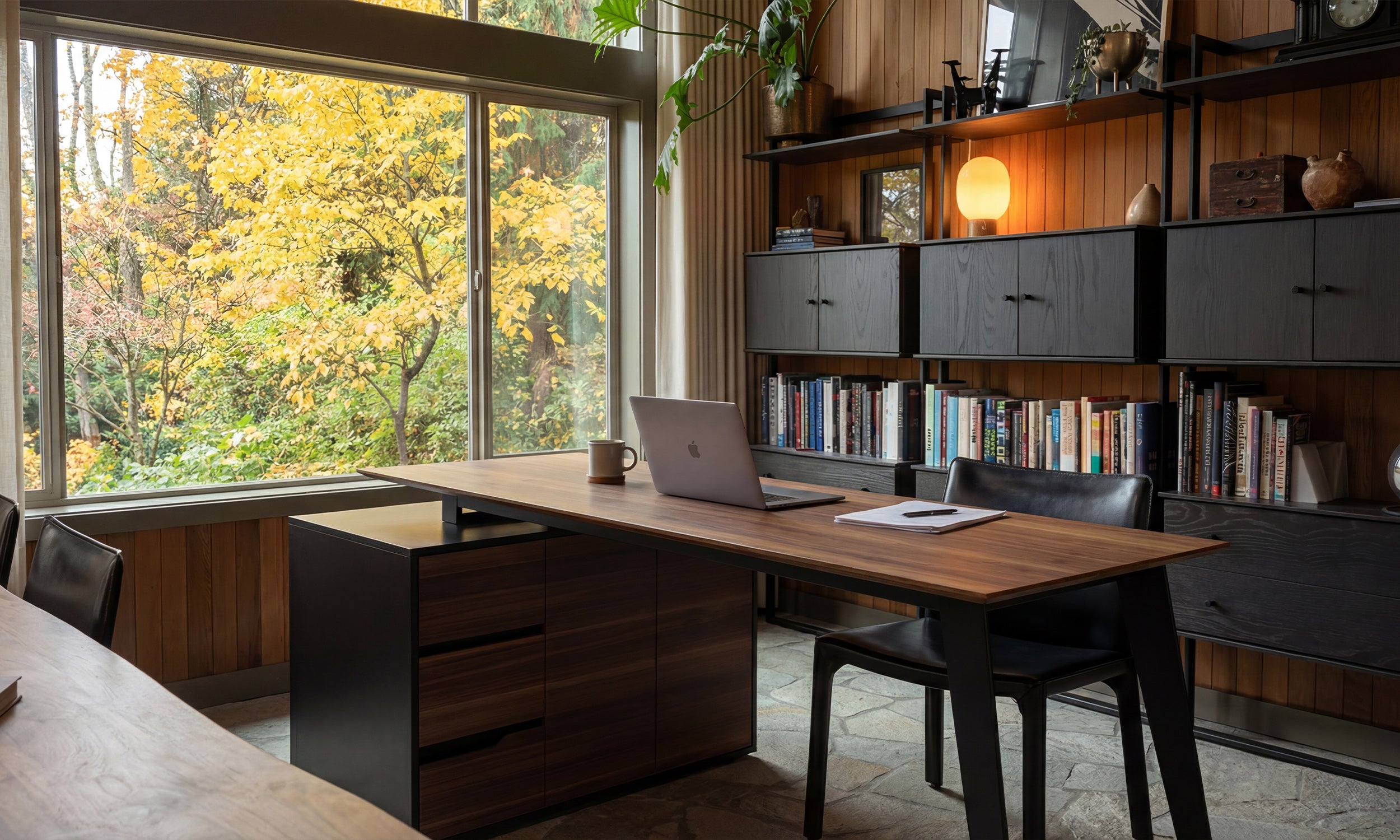
Asymmetrical designs feature a dominant primary desk paired with an extended or shortened return credenza. In many professional layouts, choosing an L-shaped corner desk with built-in storage provides a dedicated primary area for monitors while using the secondary wing for physical file sorting, secondary hardware, or creative projects.
Surface Depth and Usable Reach Envelopes Across Dual Spans
Beyond length, desktop depth determines ergonomic comfort. A main surface requires sufficient depth to accommodate deep display stands and keyboard placement without crowding forearm resting space. The return wing can often feature a slightly shallower profile to keep storage drawers and desktop accessories within comfortable seated reach.
Room Fit and Spatial Layout Strategies for a Big L Desk
Because of their commanding scale, large L-shaped desks exert substantial visual mass on an office interior. Positioning requires careful consideration of architectural elements, door swings, and natural light sources to prevent the room from feeling constricted. For an in-depth breakdown of spatial configurations, consult our L-shaped desk office layout planning guide.
Corner Placement vs. Floating Peninsula Room Zoning
The classic application places both desk wings flush against intersecting perimeter walls. Tucking a wide L-shaped corner workstation into a corner maximizes open floor space in the center of the room, keeping peripheral pathways clear and anchoring cable drops near wall outlets.
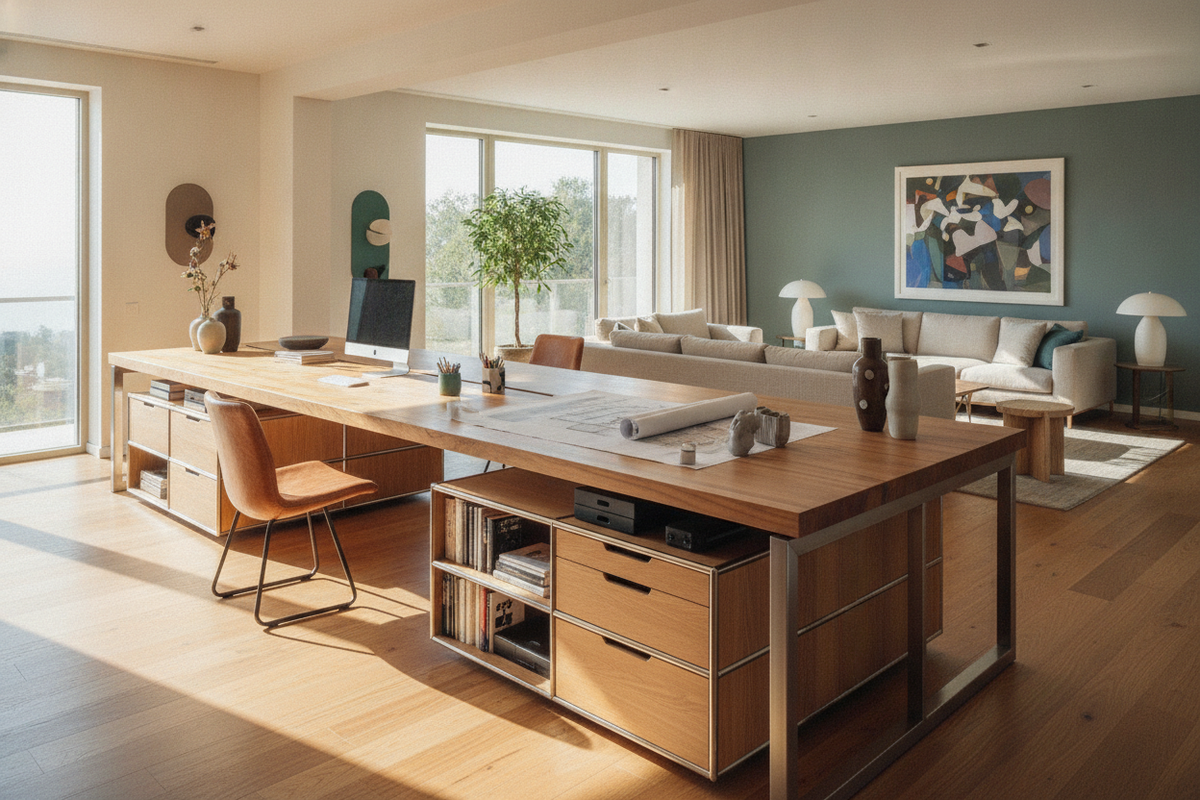
Alternatively, a floating peninsula layout positions one wing against a wall while extending the other outward into the room. This arrangement acts as an architectural room divider, creating an authoritative executive aesthetic that faces the entrance while separating active work zones from lounge seating or storage credenzas.
Circulation Pathways, Swivel Clearance, and Visual Mass
Large desks require ample surrounding clearance to maintain comfortable movement. Plan for generous space behind the main seating area to allow an executive chair to roll back and swivel without brushing adjacent walls or cabinets. Ensure that primary entryways and window access pathways remain wide and unobstructed.
Storage Architecture and Leg Clearance Balancing
An expansive desktop is only as functional as its underlying organization. High-capacity workstations frequently integrate cabinetry, drawers, and shelving that must be strategically positioned to avoid impeding lower-body ergonomics.
Pedestal Drawers, Lateral Filing, and Open Storage Integration
Integrated storage pedestals anchor the structure while keeping administrative essentials organized. Selecting a spacious L-shaped computer desk with integrated drawers allows users to consolidate office supplies, technical peripherals, and document archives beneath the return wing, leaving primary desktop surfaces pristine.
Preserving Unobstructed Knee Wells and Inner Corner Ergonomics
A common issue with poorly designed corner furniture is an intrusive inner support leg that obstructs lateral movement. Well-engineered large workstations utilize cantilevered inner frames or recessed structural legs, enabling smooth, uninterrupted chair gliding when transitioning between the primary screen and the secondary work wing.
Material Construction, Structural Stability, and Load Distribution
Because big L desks span wide distances and support heavy equipment arrays, material density and subframe bracing are fundamental considerations for long-term stability.
Engineered Wood, Hardwoods, and Reinforced Steel Frames
Workstations manufactured with high-density engineered wood panels and durable laminate surfaces provide exceptional resistance to daily scratches, heat rings, and surface wear. When paired with heavy-gauge steel framing or robust wood aprons, these structures resist central sagging under the distributed weight of desktop computers, books, and peripheral mounts.
Cable Routing Architecture and Multi-Display Support
A sprawling multi-wing workspace involves extensive power and data connections. Look for desks equipped with desktop grommets, under-desk cable management trays, and modesty panels that conceal wiring harnesses. Keeping cables contained ensures clean aesthetics from every viewing angle in open office layouts.
Decision Framework: Matching Big L Desks to Workstation Use Cases
Aligning the desk configuration with your specific daily responsibilities ensures optimal utility and comfort:
- Multi-Monitor and Production Setups: Prioritize deep primary desk spans with heavy-duty framing capable of holding multi-screen display arms and audio-visual accessories.
- Executive and Administrative Work: Choose models with integrated filing pedestals, modesty panels, and floating layout suitability for welcoming visitors.
- Compact Office Adaptations: In tighter secondary spaces where a full executive footprint overwhelms the room, consider a compact writing desk with integrated storage as a space-conscious alternative.
Assembly, Placement Logistics, and Care Best Practices
Large L-shaped workstations typically arrive in multiple heavy cartons. Staging your assembly inside the designated room prevents the challenge of navigating an assembled unit through narrow interior doorways. Assemble the frame on a protective rug or blanket, ensure all leveling foot pads are adjusted for uneven flooring, and verify that modular connection plates are firmly fastened.
Maintain the desktop by wiping surfaces regularly with a soft, damp microfiber cloth and avoiding harsh chemical cleansers that can degrade laminate finishes. Periodic checks of structural fasteners ensure the workstation remains rigid through years of daily use.
Frequently Asked Questions About Big L-Shaped Desks
Can I assemble a big L-shaped desk in a reversible configuration?
Many modern L-shaped desks feature modular, reversible designs allowing the return wing to be installed on either the left or right side. Always verify product layout options prior to assembly to match your specific room layout.
How do I manage power access for a floating big L desk?
When positioning a desk away from perimeter walls, route power cords using low-profile floor cable covers or run connections along the base of the wing that touches the nearest wall outlet.

Leave a comment
This site is protected by hCaptcha and the hCaptcha Privacy Policy and Terms of Service apply.