










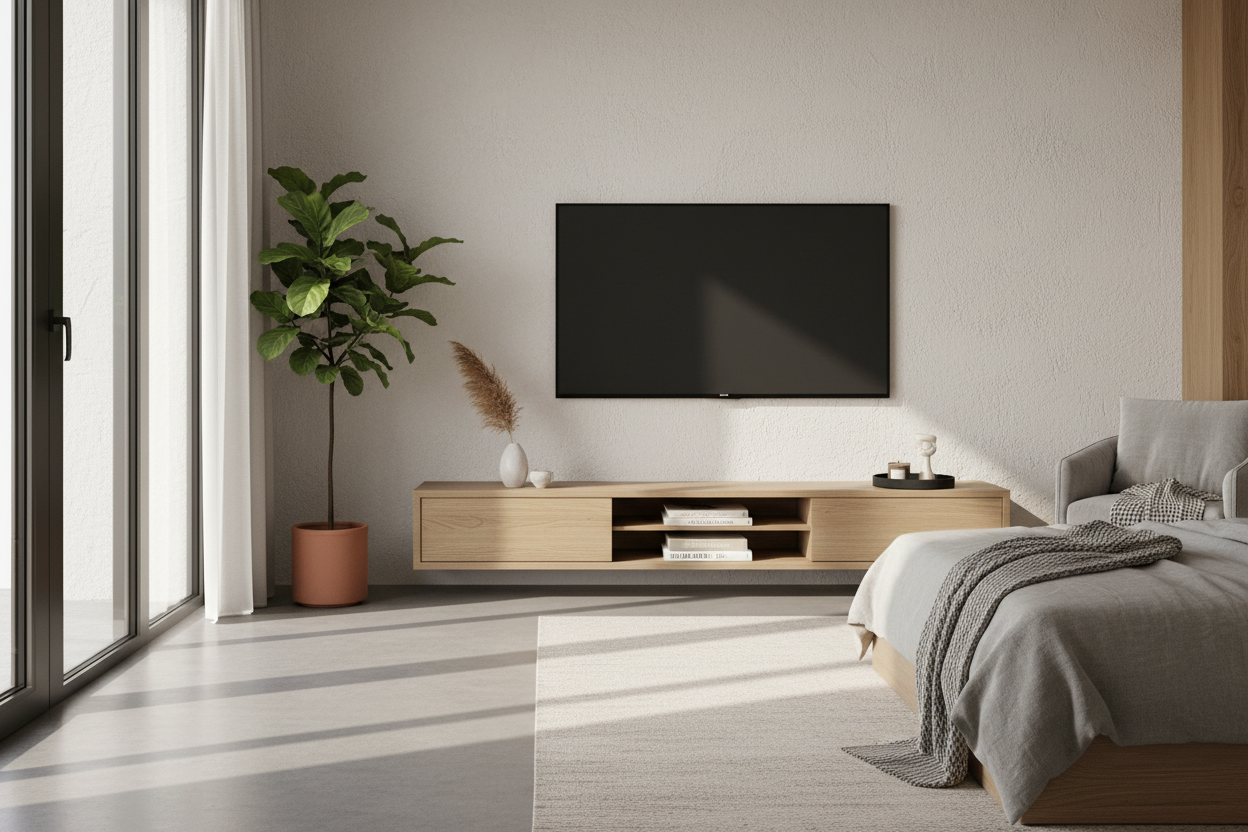
I spent years being a total snob about screens in the bedroom. I told everyone who would listen that my room was a 'sanctuary' for sleep and reading only. Then I spent a week down with a brutal flu, staring at my ceiling because propping a laptop on my knees felt like a workout I wasn't ready for. I finally caved and bought a screen, but I made the rookie mistake of shoving it on top of my tall, six-drawer dresser.
Big mistake. Within two nights, I had a crick in my neck that no amount of Ibuprofen could fix. That is when I realized that television stands for bedroom setups aren't just extra furniture—they are ergonomic necessities. If you are currently squinting at a screen perched way too high or balancing a TV on a wobbly nightstand, it is time to fix your layout.
Quick Takeaways
- Standard dressers are usually too tall for comfortable viewing from a bed.
- A bedroom tv console should be shallower than living room furniture to save floor space.
- The ideal height depends entirely on your mattress thickness and your sitting-up posture.
- Cable management is non-negotiable in a small space to avoid a cluttered look.
The Dresser Dilemma (And Why My Neck Hated It)
Most dressers sit between 34 and 42 inches high. When you add a TV on top, the center of the screen ends up nearly five feet off the ground. If you are propped up on pillows, you are essentially sitting in the front row of a movie theater, cranking your neck upward. It is physically exhausting. A dedicated bedroom tv table or a low-profile bedroom tv console brings that screen down to eye level, which is usually much lower when you are lounging in bed versus sitting on a firm sofa.
For those of us who rent or just hate the idea of patching drywall, I actually suggest looking into TV stands with mount over drilling. These units give you the height flexibility of a wall mount without the permanent commitment. I used one in my last apartment and it saved me from losing my security deposit over a 55-inch OLED.
What Actually Makes a Good Bedroom TV Cabinet?
The biggest hurdle in a bedroom is the 'walkway tax.' Most living room consoles are 18 to 22 inches deep. In a standard bedroom, that extra depth means you are going to be stubbing your toe every time you walk to the bathroom at 2 AM. You want a bedroom tv cabinet that is 'slim-fit'—ideally 12 to 15 inches deep.
Storage is the second hurdle. You don't need a massive media center. You just need enough space to hide a power strip, a streaming stick, and maybe a stray remote. I personally look for bedroom furniture for tv placement that features sliding doors or mesh fronts. It keeps the visual noise down, which is essential when you are trying to wind down for sleep.
The Lying-Down Height Rule
Here is the math I use: Sit in your bed exactly how you normally watch TV. Have someone measure the distance from the floor to your eyes. Subtract half of your TV's height from that number. That is the ideal height for your bedroom tv furniture. Usually, for a standard 12-inch mattress on a platform frame, you are looking for a stand that is roughly 24 to 28 inches tall. Anything higher and you are back in 'neck-pain' territory.
Do You Really Need a Matching Bedroom Set With TV Stand?
Please, I am begging you: skip the 5-piece matching bedroom set with tv stand. Nothing makes a room look more like a mid-range hotel than perfectly coordinated 'espresso' wood from the headboard to the dresser to the TV unit. It feels sterile and lazy.
I prefer mixing materials. If you have a heavy upholstered bed, try a sleek metal bedroom tv unit or a painted vintage piece. Mixing a wood grain with a solid color makes the room feel like it was collected over time rather than bought in one panicked afternoon at a big-box store. It gives the eye a place to rest and makes the TV feel like a deliberate design choice rather than an afterthought.
How to Make a Cheap Bedroom TV Stand Look Expensive
If you are on a budget, a cheap bedroom tv stand can actually look high-end with about twenty minutes of effort. First, swap the hardware. Those plastic or basic silver knobs that come in the box? Toss them. Buy some heavy brass or matte black pulls from a hardware store. It changes the tactile experience of using the piece immediately.
Second, manage your cords. A 'cheap' look is almost always caused by a 'messy' look. Use adhesive cable clips to run wires down the back of the legs so they aren't dangling. If you want more tips on avoiding the 'dorm room' aesthetic, check out these rules for picking bedroom TV stands that don't look tacky. Finally, lean a piece of art next to the screen. It breaks up the 'big black rectangle' vibe and makes the furniture feel like part of your decor.
FAQ
Is a 55-inch TV too big for a bedroom?
It depends on your distance from the bed. If you are 8-10 feet away, it is fine. Just make sure the stand is wide enough so the TV doesn't overhang the edges, which looks top-heavy and unstable.
Can I use a nightstand as a TV stand?
Only if you have a very small screen (32 inches or less). Most nightstands aren't wide enough to support the feet of a modern flat screen, and they are often too low for comfortable viewing if you have a high bed.
Should I put the TV stand opposite the bed?
Ideally, yes. Having the screen at the foot of the bed is the most ergonomic setup. If you have to put it in a corner, make sure you get a stand with a swivel mount so you aren't twisting your spine to see the screen.


Leave a comment
This site is protected by hCaptcha and the hCaptcha Privacy Policy and Terms of Service apply.