










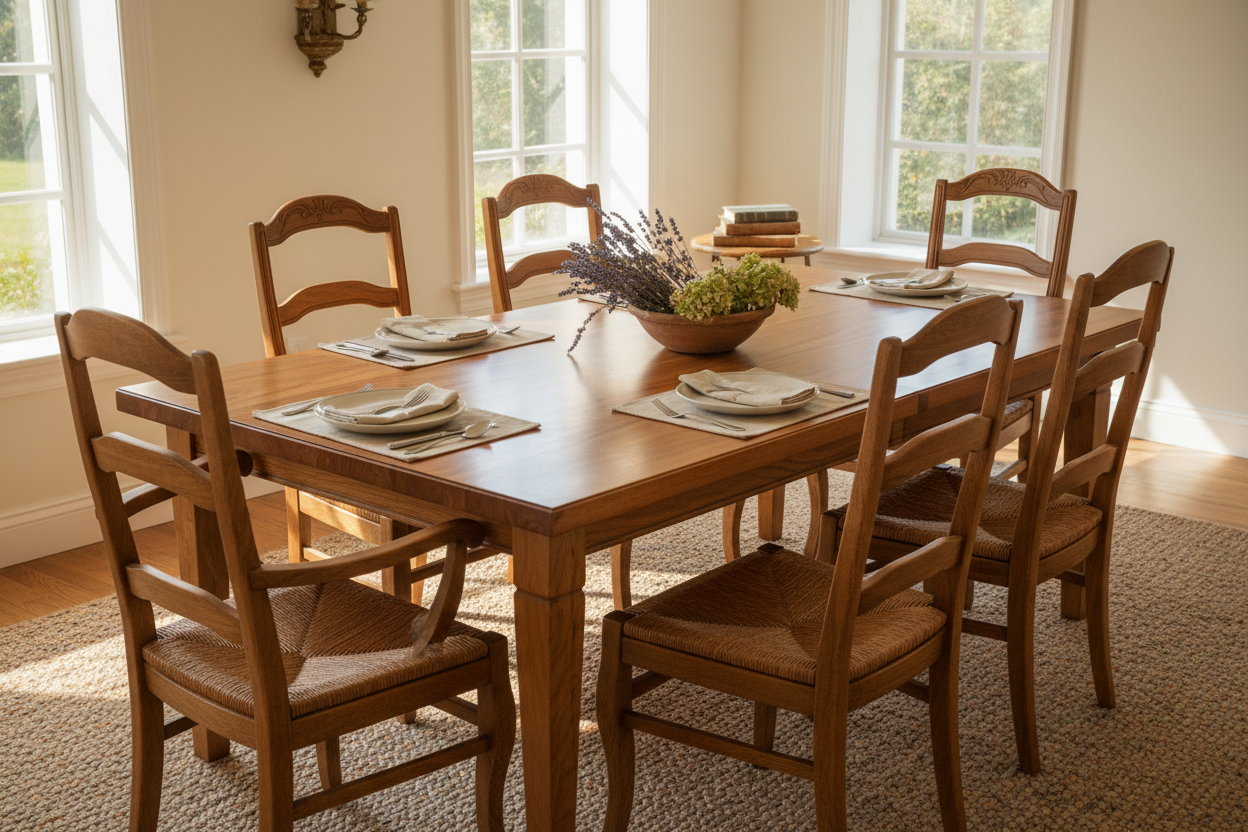
Few pieces of furniture anchor a home quite like a substantial wooden dining table. It serves as the command center for family life, a desk for homework, and obviously, the place where meals and memories are shared. When you begin the search for the perfect table, the options can feel overwhelming. You aren't just buying a surface to put plates on; you are investing in a material that reacts to its environment, ages with use, and requires specific care to maintain its beauty.
Choosing the right table starts with understanding that wood is an organic material. Unlike glass or metal, it breathes. It expands when the air is humid and contracts when it's dry. This movement is natural, but it dictates what kind of construction quality you need to look for to ensure the piece doesn't crack or warp over time. A high-quality table accounts for this movement through smart joinery rather than rigid glue ups that fight against the grain.
My Experience with Restoration and Grain
My appreciation for solid timber deepened significantly a few years ago when I decided to restore a beat-up farmhouse table I found at an estate sale. It was covered in a thick, tacky polyurethane that had yellowed over the decades. Stripping that finish off was a labor of love, but what lay beneath was a stunning quarter-sawn oak with medullary rays that caught the light beautifully. That project taught me a crucial lesson: the bones of the furniture matter more than the initial finish. If the wood itself is solid and the joinery is tight, cosmetic damage is almost always fixable. This is the primary advantage of a genuine wood eating table over veneer or laminate alternatives; you can fix your mistakes.
Understanding Hardwood vs. Softwood
The longevity of your furniture depends largely on the species of timber used. Hardwoods like oak, maple, walnut, and cherry come from deciduous trees and are generally denser. This density translates to resistance against dents and scratches. A dining table wooden construction made from hard maple, for instance, can withstand the assault of toddler cutlery much better than softer alternatives.
Softwoods, such as pine, come from coniferous trees. While often more affordable and possessing a charming, rustic aesthetic, they are prone to dinging easily. If you write on a single sheet of paper directly on a pine table, you might find your grocery list permanently etched into the varnish. However, some homeowners prefer this lived-in look, viewing every mark as part of the table's history.
The Visual Impact of Grain Patterns
Beyond durability, the species dictates the vibe of the room. Walnut offers rich, dark chocolate tones and swirling grain patterns that look sophisticated in modern settings. Oak tends to have a more prominent, open grain that hides crumbs and dust well, making it a practical choice for busy households. When you look at a design dining table wood choice, consider how the grain direction runs. Long, continuous planks usually suggest higher quality and better stability than many short staves glued together like a butcher block.
Shape, Size, and Flow
The physical footprint of the table defines the flow of your dining area. A common mistake is buying a table that fits the room physically but doesn't allow for movement. You generally need at least 36 inches of clearance between the table edge and the wall or nearest piece of furniture to allow a diner to slide their chair back comfortably.
Rectangular tables are the standard for formal dining rooms and seat more people, but they can create tight pinch points in smaller square rooms. Round or oval tables are often better for conversation and flow. Because there are no sharp corners to navigate, they allow traffic to move more fluidly around the space. Pedestal bases on round tables also solve the issue of knocking knees against table legs, offering a more comfortable wooden dining experience for everyone seated.
Veneer vs. Solid Wood
There is a misconception that veneer is always synonymous with low quality. High-end veneers allow for intricate inlays and stability in climates with wild humidity swings. A veneer is a thin slice of premium wood glued over a stable core, like plywood or MDF. Because the core doesn't expand and contract like solid wood, it can be more stable.
However, solid wood reigns supreme for longevity. If you scratch a veneer table deep enough to expose the core, the repair is difficult and often unsightly. With a solid piece, you can sand out the scratch and refinish the spot. If you are looking for an heirloom piece that your grandchildren might fight over one day, solid wood is the only real contender.
Protecting Your Investment
Once you have the table in your home, maintenance becomes the priority. Water and heat are the enemies. A white ring on the surface usually means moisture has trapped itself in the finish, while a dark mark often indicates the heat or water has penetrated down to the wood itself. Using placemats and coasters is the easiest way to prevent this.
For the finish itself, you generally have two paths. Lacquer or polyurethane creates a hard shell on top of the wood. It is durable and requires zero maintenance until it fails, at which point it requires stripping. Oil finishes, like linseed or tung oil, soak into the wood fibers. They offer a more natural, matte look and feel. While they require re-oiling once or twice a year, they are much more forgiving. If you get a scratch on an oil-finished table, you can usually buff it out with a little steel wool and fresh oil without stripping the whole top.
Matching the Table to Your Style
Mixing wood tones is acceptable and often encouraged by interior designers to avoid a "catalog" look. You do not need your dining table to perfectly match your hardwood floors or your buffet. Instead, look for undertones. If your floors have warm, red undertones, a table with similar warmth will harmonize well, even if the shade is different. Contrast also works wonders; a dark walnut table can look stunning against light oak flooring. The goal is to create a curated feel where the table stands out as a focal point rather than blending into the background camouflage.
Frequently Asked Questions
How do I fix white heat rings on my wood table?
White rings are usually moisture trapped in the finish, not the wood. You can often remove them by placing a thick towel over the spot and running an iron on a low, dry setting over the towel for a few seconds to draw the moisture out. Alternatively, a mixture of baking soda and toothpaste gently rubbed on the spot can sometimes polish it away.
Is a solid wood table worth the extra cost over veneer?
If you plan to keep the table for more than five to ten years, solid wood is usually worth the investment because it can be refinished multiple times. Veneer is a good budget-friendly option or suitable for very specific intricate designs, but it lacks the repairability of solid timber.
How often should I oil my wooden dining table?
If your table has a natural oil finish, you should re-apply oil every six to twelve months, or whenever the wood starts to look dull and dry. If the table has a lacquer or polyurethane finish, no oiling is necessary, and adding oil can actually leave a sticky residue.


Leave a comment
This site is protected by hCaptcha and the hCaptcha Privacy Policy and Terms of Service apply.