










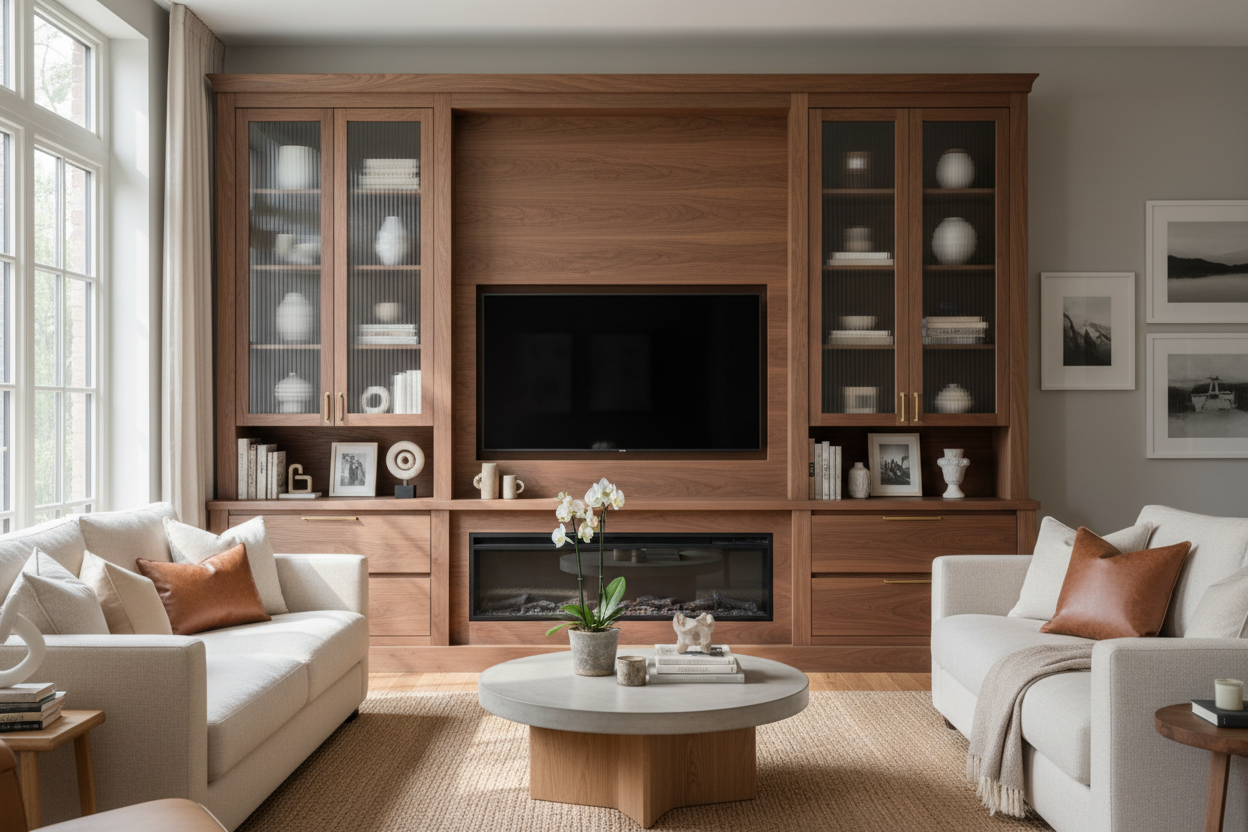
I remember my first 'adult' apartment. I spent three weeks agonizing over a velvet sofa, only to realize I had exactly zero dollars left for a place to put my TV. I ended up with a $40 particle board bench from a big-box store that started sagging the moment my 50-inch screen touched it. It looked like a college dorm room, even with the nice rug and the expensive candles. It was a glaring reminder that if you don't treat your media setup with respect, it will drag the rest of your decor down with it.
Finding a tv cabinet for living room that doesn't look like it belongs in a Best Buy clearance aisle is surprisingly difficult. Most of them are too low, too flimsy, or designed with way too many open cubbies that just collect dust and tangled HDMI cables. If you want a room that feels curated rather than just 'assembled,' you have to stop thinking about it as a tech accessory and start thinking about it as a piece of anchor furniture.
Quick Takeaways
- Always choose a cabinet at least 10-12 inches wider than your TV to maintain visual balance.
- Prioritize closed storage to hide routers, consoles, and cable nests.
- Look for 'sideboards' or 'credenzas' instead of just searching for media units.
- Solid wood or high-quality veneers will outlast MDF every single time.
The 'Tech Altar' Problem (And Why We Fall for It)
We have all been there: you walk into a living room and every single piece of furniture is pointed at the giant black rectangle like it is a deity. This is the 'Tech Altar.' When you choose a cheap, open-shelving unit, you are essentially highlighting every wire, power brick, and dust bunny. It makes the entire room feel temporary and cluttered. The TV becomes the only thing you see because the furniture holding it is so unremarkable.
If you are serious about upgrading your living room, you have to break the habit of treating the TV stand as an afterthought. A flimsy stand sends a message that the room is just a place to consume content, not a place to live. When I finally swapped my sagging bench for a heavy, well-made piece, the energy of the room shifted immediately. Suddenly, the TV was just something in the room, not the entire personality of the room.
Why I Started Using Sideboards as a Living Room TV Unit
Here is a secret the furniture industry does not want you to know: you do not have to buy something labeled as a 'TV stand.' In fact, you probably shouldn't. Most pieces marketed specifically for TVs are built too low to the ground and lack the depth for real storage. I started using dining room sideboards and entryway credenzas instead. A solid wood modern sideboard usually features better hardware, more interesting textures, and actual craftsmanship.
The height of a sideboard (usually 30 to 34 inches) is often much better for viewing if you have a standard-height sofa. It also provides a much more substantial presence. When I moved my 55-inch screen onto a beautiful oak sideboard, it looked intentional. The living room tv unit finally had enough visual weight to compete with the sofa and the coffee table. It felt like a grown-up home, not a temporary landing pad.
The Golden Rule of TV Furniture Living Room Layouts
Proportions are the hill I will die on. If your TV is 55 inches wide and your stand is 55 inches wide, it looks top-heavy and anxious. It looks like your TV is about to fall off a cliff. The golden rule for a tv furniture living room layout is the 1.5x rule: your cabinet should be significantly wider than the screen. You want at least 6 to 10 inches of 'breathing room' on either side of the television frame.
This extra width allows the eye to rest on the furniture rather than just the screen. If you are struggling with a small space or an oddly sized wall, an adjustable tv stand for living room can be a lifesaver. It allows you to customize the footprint to fit your wall perfectly while still giving you that necessary horizontal ledge. Remember, a TV that overhangs its base is the fastest way to make an expensive room look cheap.
Ditching the Clutter: Rethinking What Goes Inside
For years, I thought I needed open shelves to show off my 'collection' of DVDs and games. I was wrong. All those colorful plastic spines just created visual noise. The moment I found a TV cabinet for living room storage with solid doors, my stress levels dropped. I tucked the Xbox, the router, and the messy stack of board games behind closed doors and never looked back.
If you are worried about your electronics overheating, you can easily use a 2-inch hole saw bit to add extra ventilation to the back panel. Most modern consoles do fine in a cabinet as long as there is a bit of airflow. By hiding the 'tech' part of the tech, the furniture is allowed to be beautiful. Now, instead of looking at a mess of wires, I see a clean, mid-century inspired facade that holds everything from extra throw blankets to my laptop charger.
How to Style the Top Without Distracting from the Screen
To make a TV cabinet feel like real furniture, you have to style the top like you would a console table. The goal is to blend the technology into the decor. Start with a lamp on one end. A small table lamp provides a warm, soft glow that is much easier on your eyes during movie night than a harsh overhead light. It also breaks up the horizontal line of the TV.
On the other side, stack two or three large coffee table books. This creates a pedestal for a small decorative object or a low-profile plant. Avoid anything too tall or distracting right in front of the screen. A trailing Pothos is perfect because it softens the hard edges of the black screen without blocking the view. The key is asymmetry; you want it to look lived-in, not like a showroom display.
FAQ
How high should my TV be?
Your eyes should ideally be level with the middle of the screen when you are seated. If you find yourself tilting your neck up, the cabinet is too high or the TV is mounted too high. Sideboards are usually the 'sweet spot' for most setups.
Do I need a special cabinet for a heavy TV?
Yes. Check the weight rating. Cheap MDF (particle board) will bow over time. If you have a large screen, look for solid wood or metal frames that can support 100+ lbs without sagging in the middle.
How do I hide the wires if the cabinet is open?
You don't—you buy a cabinet with a solid back. If you are stuck with an open one, use cable management sleeves that match your wall color, or use adhesive Command hooks along the back legs to route the wires out of sight.


Leave a comment
This site is protected by hCaptcha and the hCaptcha Privacy Policy and Terms of Service apply.