










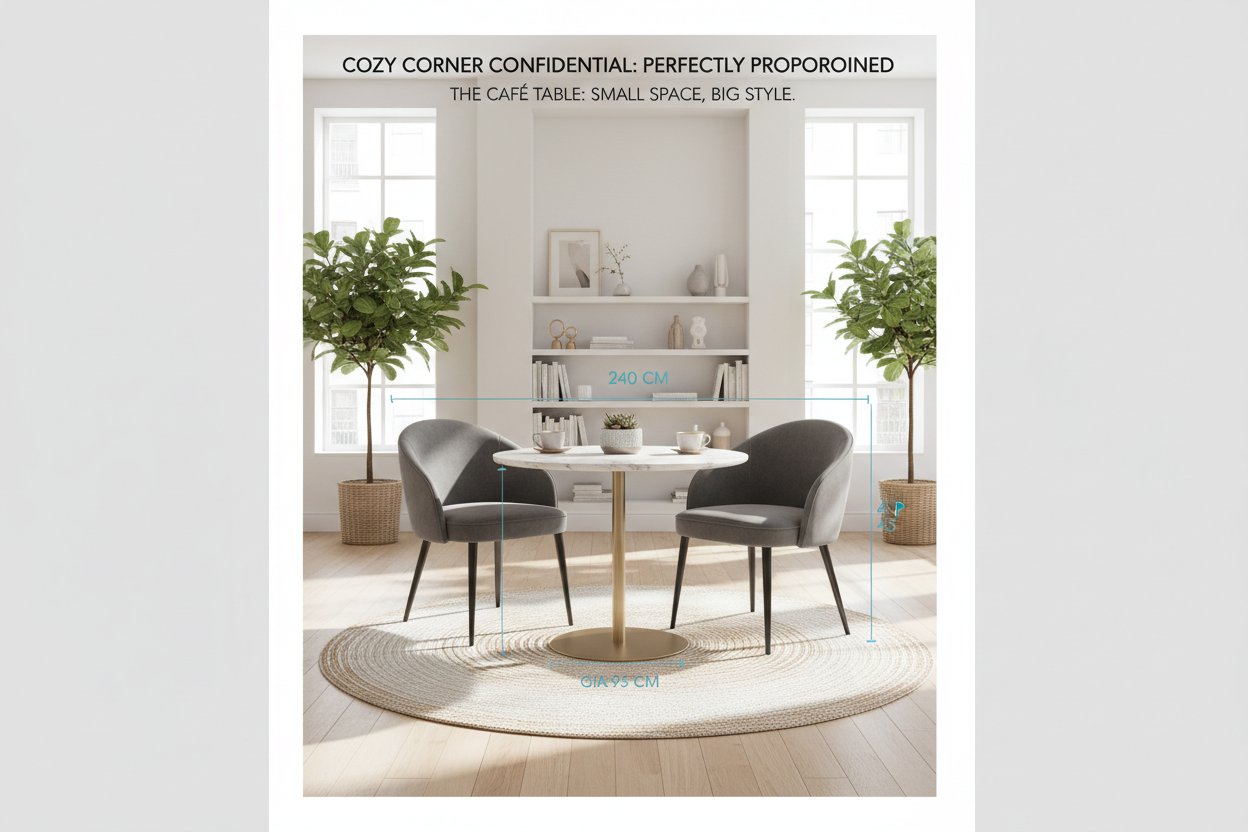
When furnishing a compact dining area, breakfast nook, or cozy corner, selecting the right small round table can greatly enhance both functionality and aesthetics. The choice of small round table dimensions is essential to maintaining comfort, accessibility, and proportionality with the surrounding space.
Understanding Small Round Table Dimensions
Small round table size is generally defined by the diameter of the tabletop, which typically ranges from 30 to 48 inches for domestic use. The right measurements depend on how many people you intend to seat and the amount of space available. A 36-inch diameter table comfortably accommodates two to four people, while a 42-inch table can seat up to four or five without crowding.
Height also matters. The standard dining table height is around 29 to 30 inches. This ensures proper legroom, ergonomic comfort, and compatibility with most dining chairs. If you are aiming for a café-style or occasional table, heights may vary from 26 to 28 inches depending on intended use.
How to Choose the Best Size for Your Space
Selecting small round table size is not just a matter of fitting the table into the room. You must ensure there is enough clearance for chairs and movement. A general guideline is to allow at least 36 inches between the edge of the table and the nearest wall or piece of furniture. This spacing permits guests to sit and get up without obstruction, and facilitates easy cleaning.
In open-plan layouts, larger clearance can create a more expansive feel. For small apartments or studio spaces, carefully measuring the area before purchasing is essential to avoid crowding and to maintain airiness.
Material Considerations for Small Round Tables
The choice of materials can influence both the perceived size and actual utility of the table. Glass-top small round tables can make a tight space feel larger due to their transparency, while wood offers warmth and solidity. Metal and composite materials provide durability in multi-use settings. The dimensions remain important regardless of material, but lighter-toned surfaces can visually expand the space.
Shape and Seating Arrangements
Round tables encourage social interaction as everyone faces each other equally. With small round tables, leg placement and pedestal design affect comfort. Pedestal bases, for example, reduce leg interference, maximizing usable chair positioning even on smaller diameters.
For everyday dining, consider how the table will be used. If it doubles as a workspace or craft station, factor in the need for elbow room. A 36-inch diameter may suffice for casual meals, but could feel cramped during hands-on projects.
Measuring Tips Before Purchase
Accurate measurements are critical. Here is a simple process:
- Measure your intended space length and width.
- Deduct clearance space (minimum 36 inches) from each side.
- Calculate the maximum tabletop diameter that fits the remaining area.
- Check doorway dimensions for delivery clearance.
My Personal Experience Selecting a Small Round Table
In my first apartment, the dining corner measured just over 7 feet wide. Initially, I bought a 42-inch round table for hosting friends, but moving chairs felt constrained. After careful reassessment, I switched to a 36-inch pedestal table. The change made the space feel markedly larger and more comfortable during meals. That practical adjustment taught me the importance of prioritizing clearance and movement over slightly increased seating capacity.
Optimal Placement for Comfort and Flow
Beyond size, placement affects usability. Position your small round table where natural light can enhance the dining experience, but without blocking walkways. In tighter spaces, aligning the table diagonally can sometimes create more movement flow and visual interest.
Conclusion
Small round table dimensions directly influence comfort, usability, and aesthetics. Whether you opt for a 30-inch diameter for intimate dining, or push toward the upper end of 48 inches for versatile use, careful measurement and planning are key. By considering table size alongside clearance, material choice, and placement, you can create a balanced and inviting environment, even in limited spaces.


Leave a comment
This site is protected by hCaptcha and the hCaptcha Privacy Policy and Terms of Service apply.