










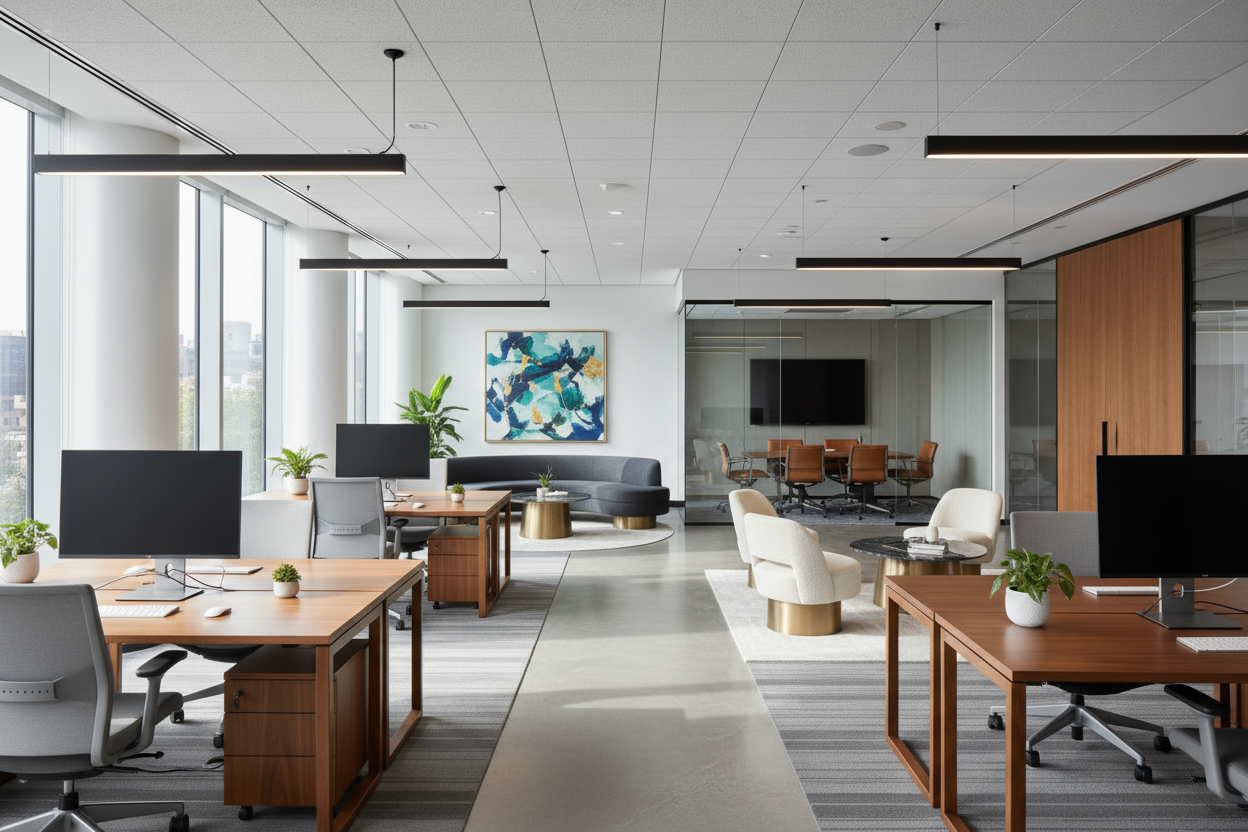
The era of the sterile, grey cubicle farm is officially behind us. Today, the physical environment is a tangible extension of your brand identity and a critical tool for employee retention. Whether you are outfitting a sprawling headquarters or refining corporate office interior design ideas for a boutique firm, the challenge remains the same: balancing high-end aesthetics with rigorous functionality. A well-executed design doesn't just look impressive to clients; it facilitates workflow and reduces cognitive load for your team.
Key Features for High-Performance Workspaces
Before selecting finishes or furniture, consider these fundamental pillars that define well designed offices. Focusing on these elements ensures your investment yields long-term value.
- Acoustic Zoning: Incorporate sound-dampening materials (baffles, acoustic panels) in open areas to prevent noise fatigue.
- Ergonomic Flexibility: Prioritize sit-stand desks and seating with adjustable lumbar support over purely decorative pieces.
- Lighting Layers: Combine 4000K (cool white) task lighting for focus with 2700K (warm) ambient lighting in breakout zones.
- Material Durability: Check the Martindale rub count on upholstery; commercial spaces require heavy-duty fabrics (50,000+ rubs).
- Biophilic Elements: Integrate natural light and greenery to reduce stress and improve air quality.
Defining the Zone: Layouts for Every Scale
Space planning is the skeleton of interior design. Without a logical flow, even the most expensive furniture will feel cluttered.
Large Office Space Design Ideas
In substantial footprints, the danger is creating a cavernous, impersonal atmosphere. The solution lies in "neighborhoods." Break down large office space design ideas into smaller clusters separated by collaborative nodes or acoustic pods. This maintains the energy of an open plan while providing the psychological safety of a smaller team environment.
Small Business & Suite Strategies
For small business office interior design ideas or compact office suite design ideas, verticality is your ally. Use floor-to-ceiling glass partitions to define private offices without blocking light. This transparency makes the footprint feel larger while maintaining acoustic privacy. Multi-functional furniture, such as credenzas that double as bench seating, is essential for maximizing square footage.
The Aesthetic Spectrum: From Classy to Fun
Your design language should mirror your company culture. There is no one-size-fits-all approach.
Classy and Professional
For law firms or financial consultancies, classy office design often relies on a restrained palette. Think rich walnut veneers, marble reception desks, and leather upholstery. However, modern professional office interior design ideas are moving away from heavy ornamentation toward sleek lines and high-quality textures. Matte black metal accents paired with warm wood tones offer a timeless, sophisticated look.
Creative and IT Environments
Conversely, it office design ideas and creative agencies often benefit from fun office interior design. This doesn't mean installing a slide in the lobby. Instead, inject personality through bold accent walls, industrial exposed ceilings, and breakout areas that mimic a high-end coffee shop. These fun office design ideas encourage casual collision—those serendipitous moments where employees from different departments spark new ideas.
Materiality and Lighting: The Invisible Comfort
When curating interior design ideas for office room setups, lighting and texture are paramount. A simple interior design for office spaces can be elevated purely through lighting temperature. Avoid fluorescent tubes that cast a green hue. Opt for LED linear pendants with high CRI (Color Rendering Index) to ensure colors look true and eyes don't strain.
regarding materials, be wary of trends. New office design ideas often feature high-gloss surfaces, but in a high-traffic office building interior design ideas context, these become magnets for fingerprints and dust. Textured laminates or matte finishes are far more forgiving and easier for your facilities team to maintain.
My Personal Take on Corporate Office Interior Design Ideas
Lessons from My Own Projects
Early in my career, I designed a stunning boardroom for a tech startup. We specified a massive, high-gloss black glass conference table. It looked incredible in the renderings and on installation day. It screamed "sleek" and "futuristic."
Three months later, I visited the client, and the table was a disaster. It was covered in smudge marks from arms and hands, and worse, the optical mouse devices didn't track well on the glass surface without mousepads, which ruined the clean look they wanted. Furthermore, the glare from the overhead pendant lights bounced off the table and into people's eyes during video calls.
The lesson? I learned that new office space ideas must be vetted for real-world friction. Now, I always steer clients toward matte, anti-fingerprint laminates (like Fenix) or honed stone for conference tables. It might not sparkle as much in a photo, but it functions infinitely better during a two-hour strategy meeting.
Conclusion
Transforming a workspace requires looking beyond the catalog photos. Whether you are implementing small office office interior design ideas or outfitting a multi-story building, the goal is to create a habitat that supports human performance. Prioritize acoustics, invest in ergonomic furniture, and choose materials that age gracefully. A well-designed office isn't an expense; it's a strategic asset.
Frequently Asked Questions
How do I make a small office look professional but spacious?
To execute small office office interior design ideas effectively, use a monochromatic color scheme to reduce visual noise. utilize glass partitions instead of solid walls, and choose furniture with exposed legs (raised off the floor) to maintain a sense of open floor space.
What are the current trends for IT and Tech offices?
Modern it office design ideas are shifting away from pure open-plan layouts toward "agile" workspaces. This includes soundproof phone booths for coding focus, soft seating areas for stand-up meetings, and heavy investment in cable management solutions to keep tech invisible.
Is it worth hiring an interior designer for a small office suite?
Yes. Even for office suite design ideas, a specialist understands code requirements, ergonomic distances, and lighting calculations that prevent eye strain. They can also source commercial-grade furniture that lasts significantly longer than residential options.

Leave a comment
This site is protected by hCaptcha and the hCaptcha Privacy Policy and Terms of Service apply.