










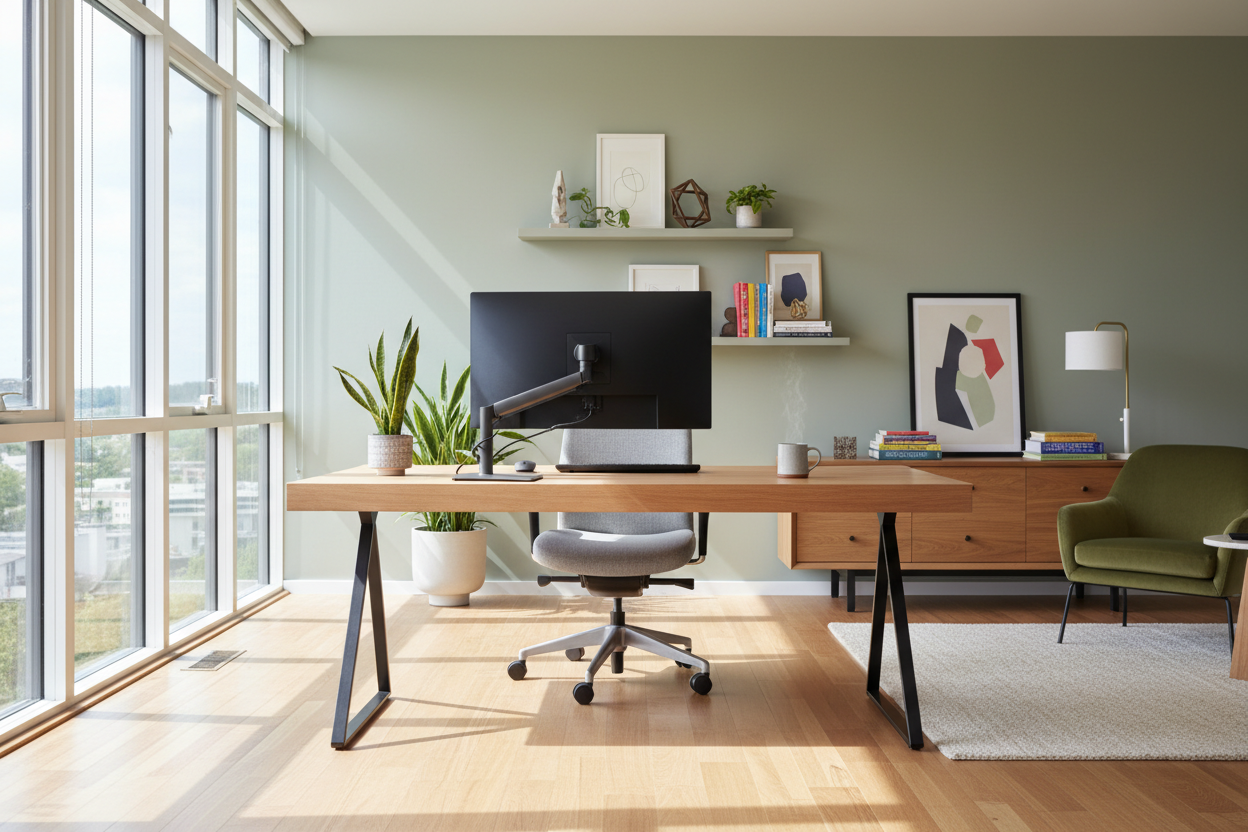
We have all attempted to work from the sofa or the dining table, only to end the day with a stiff neck and a scattered mind. The difference between a makeshift corner and a truly productive environment lies in intentional design. Creating an ideal working space isn't just about buying a desk; it is about curating an environment that balances ergonomic function with visual calm, ensuring your home office serves you rather than draining you.
Key Features to Look For
- Ergonomic Integrity: Prioritize chairs with adjustable lumbar support and seat depth to match your femur length.
- Lighting Quality: Aim for a mix of natural light and 4000K (cool white) task lighting to reduce eye strain.
- Surface Material: Choose matte finishes (wood or laminate) over glass to prevent glare and fingerprint fatigue.
- Acoustic Control: Incorporate soft textures like rugs or curtains to dampen echo and improve focus.
Structuring the Optimal Workspace Layout
When planning your layout, consider the concept of "command position." In design theory, facing the entrance of the room—rather than staring at a blank wall—subconsciously lowers anxiety and increases authority. However, avoid placing your screen directly opposite a window, as the contrast creates glare that fatigues the eyes.
Zoning for Mental Clarity
An ideal office space requires distinct zones. You need a primary "active zone" for computer work and a secondary "passive zone" for reading or reviewing documents. Even in a compact room, simply having a comfortable armchair in the corner allows you to physically shift gears, signaling to your brain that it is time to think creatively rather than reactively.
Materiality: Choosing Surfaces That Last
The tactile experience of your furniture significantly impacts your daily comfort. While glass desks offer a sleek, modern silhouette, they often feel cold to the touch and amplify sound.
Solid Wood vs. Veneer
For a premium feel, solid wood (like walnut or white oak) provides warmth and durability. It ages beautifully, developing a patina over time. However, high-quality architectural veneers are a practical alternative for an optimal workspace. They offer the same visual texture as solid wood but are less susceptible to warping in environments with fluctuating humidity. Avoid low-grade thermofoil finishes, which tend to peel at the edges after a few years of wear.
Lighting and Ambiance
Never rely solely on overhead recessed lighting, which casts unflattering shadows on your face during video calls and creates contrast strain on your desk surface. Layer your lighting. Start with ambient light, add a focused task lamp with an adjustable arm, and consider bias lighting behind your monitor to soften the brightness of the screen.
My Personal Take on ideal working space
Early in my career, I designed a home office for myself centered around a stunning, high-gloss black lacquer desk. It looked incredible in photos—sleek, reflective, and expensive. However, living with it was a different story. Within a week, I realized my mistake: the high-gloss finish acted like a mirror for my overhead lights, creating a constant, low-level glare that gave me headaches by 2:00 PM. Furthermore, the "micro-scratches" from simply sliding my coffee mug or laptop across the surface became visible within a month. I spent more time dusting and polishing that desk than I did working at it. Now, I always steer clients toward matte or satin finishes. They are forgiving, tactile, and let you focus on the work, not the maintenance.
Conclusion
Designing your workspace is an investment in your own efficiency and well-being. By selecting the right materials, prioritizing ergonomics, and controlling your lighting, you create a room that invites you to do your best work. Don't settle for temporary solutions; build a space that lasts.
Frequently Asked Questions
What is the minimum depth for a functional desk?
For a setup with a laptop and an external monitor, aim for a depth of at least 24 to 30 inches. This allows you to maintain the proper focal distance from your screen (about an arm's length away) without feeling cramped.
How do I make a small room feel like an ideal office space?
Utilize vertical storage to keep the floor clear. Wall-mounted shelving draws the eye upward, making the room feel taller. Additionally, choosing furniture with exposed legs rather than solid block bases increases the visible floor area, creating a sense of openness.
Is a standing desk worth the investment?
Yes, but only if you actually use the height function. The benefit comes from the movement, not just the standing. Look for a dual-motor mechanism for smoother transitions, as single-motor desks can be noisy and wobble at full height.


Leave a comment
This site is protected by hCaptcha and the hCaptcha Privacy Policy and Terms of Service apply.