











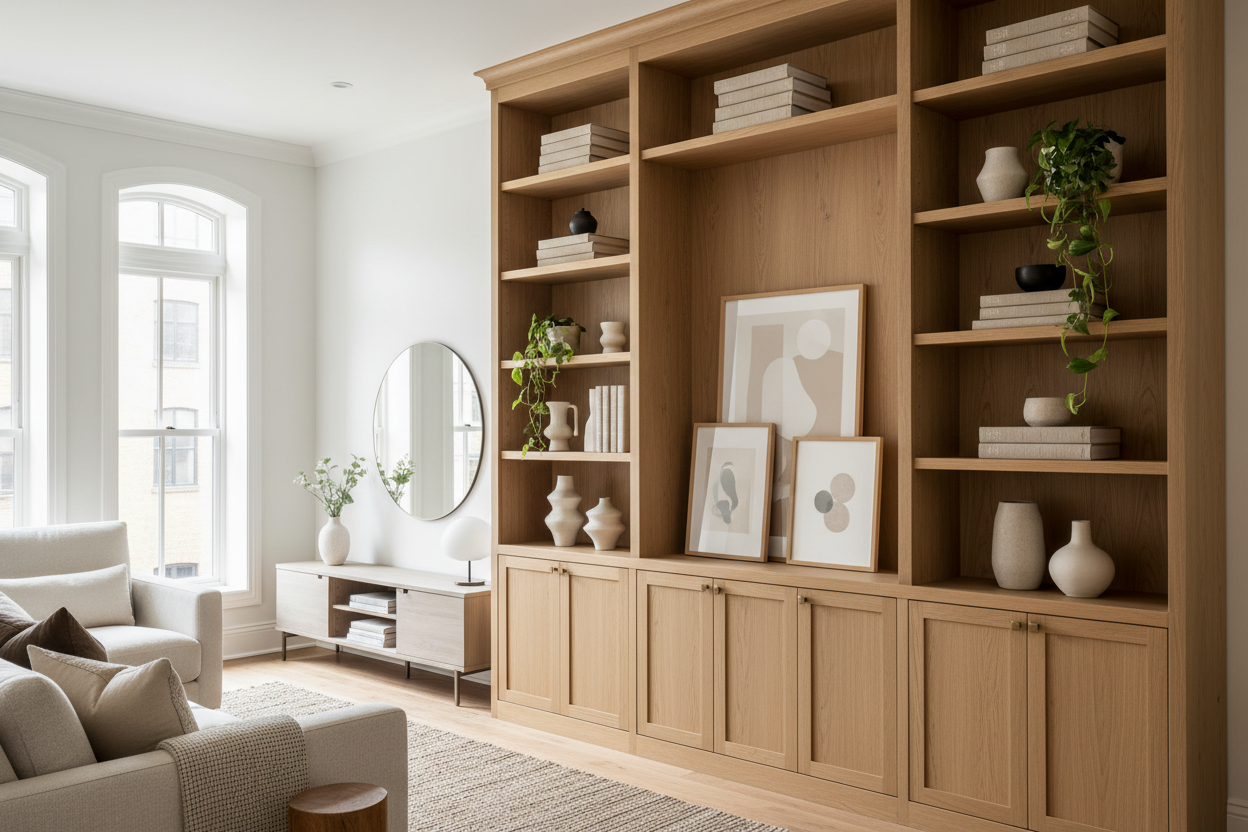
We have all been there. You buy a beautiful accent piece, set it up in the living room, and realize it holds absolutely nothing useful. Open shelving looks fantastic in architectural magazines, but in a real home with kids, pets, and everyday clutter, it often just becomes another surface to dust.
This is exactly why a well-built cupboard with shelves remains a staple in my residential projects. It offers the visual weight to anchor a room while providing the hidden capacity we actually need to live comfortably. In this guide, I will walk you through exactly what to look for—from structural integrity to aesthetic proportion—so you can choose a piece that works hard and looks incredible.
Quick Decision Guide
- Check shelf adjustability: Never buy a unit with fixed shelves unless you know exactly what you are storing. Adjustable pins are essential for long-term versatility.
- Measure internal depth: Ensure the interior shelves are at least 14 inches deep to accommodate standard bins, board games, and dinnerware.
- Test the hardware: Soft-close, adjustable European hinges are a non-negotiable sign of quality construction.
- Anchor it: Any piece over 30 inches tall must be secured to a wall stud, regardless of how heavy or stable it feels empty.
Space Planning and Proportion
Finding the Right Scale
In typical North American open-concept homes, a storage unit cabinet needs enough visual mass so it does not look like it is floating aimlessly. If you have eight-foot ceilings, a piece that is 72 to 80 inches tall draws the eye upward and establishes a strong focal point. If your ceilings are taller, consider adding artwork above the piece to bridge the negative space.
Clearance and Flow
Always leave at least 36 inches of walkway clearance in front of any cupboards and storage pieces. You need enough room to fully open the doors and bend down to reach the bottom shelf without bumping into a coffee table or dining chair.
Material Matters: What You Are Actually Paying For
Solid Wood vs. Veneers
When clients ask for a reliable cupboard with storage, we immediately discuss materials. Solid wood offers incredible longevity and can be sanded down or refinished decades later. However, high-quality wood veneers applied over a stable MDF core are often better for climates with wild humidity swings, as they will not warp or crack like solid slabs sometimes do.
Hardware and Hinges
The true test of heavy-duty storage cupboards is the hardware. If the doors sag slightly on the showroom floor, they will only get worse once loaded with items in your dining room. Look for thick metal hinges and solid drawer glides if the piece includes lower drawers.
Style and Visual Weight
Blending with Your Aesthetic
A tall cupboard with shelves for storage naturally commands attention. If your room is already heavy with dark, chunky furniture, opt for a piece with glass upper doors or a lighter wood finish to create breathing room. Conversely, in a stark, minimalist space, a richly textured walnut or painted black cabinet can ground the entire design.
Lessons from My Own Projects
Early in my career, I sourced a stunning, reclaimed oak shelved storage cupboard for a client's modern farmhouse kitchen. It was gorgeous, but I made a rookie mistake: I assumed the interior layout would work for their needs without verifying the dimensions.
Once delivered, the client realized her stand mixer and tall serving vases were two inches too tall for the fixed compartments. We had to hire a local carpenter to retrofit the interior, costing hundreds of extra dollars. Now, I never specify a storage cupboard with shelves unless it features heavy-duty, adjustable shelving. Always check the interior functionality before falling in love with the exterior silhouette. A beautiful piece of furniture that frustrates you daily is a bad investment.
Frequently Asked Questions
How deep should a cupboard be for general storage?
For living rooms and home offices, aim for 15 to 18 inches of depth. This easily accommodates books, electronics, and standard storage baskets without protruding too far into your floor plan.
Can I use a tall cupboard in a small room?
Yes. Tall furniture actually helps small spaces by drawing the eye upward, making ceilings feel higher. Just keep the width relatively narrow and match the paint color closely to your walls so the piece blends rather than visually dominating the room.
How much weight can adjustable shelves hold?
It depends heavily on the material. A standard 3/4-inch solid wood or high-grade plywood shelf spanning 30 inches can typically hold 40 to 50 pounds without bowing. Particleboard will warp under heavy loads like stacks of ceramic plates, so reserve those shelves for lighter linens or decor.

Leave a comment
This site is protected by hCaptcha and the hCaptcha Privacy Policy and Terms of Service apply.