










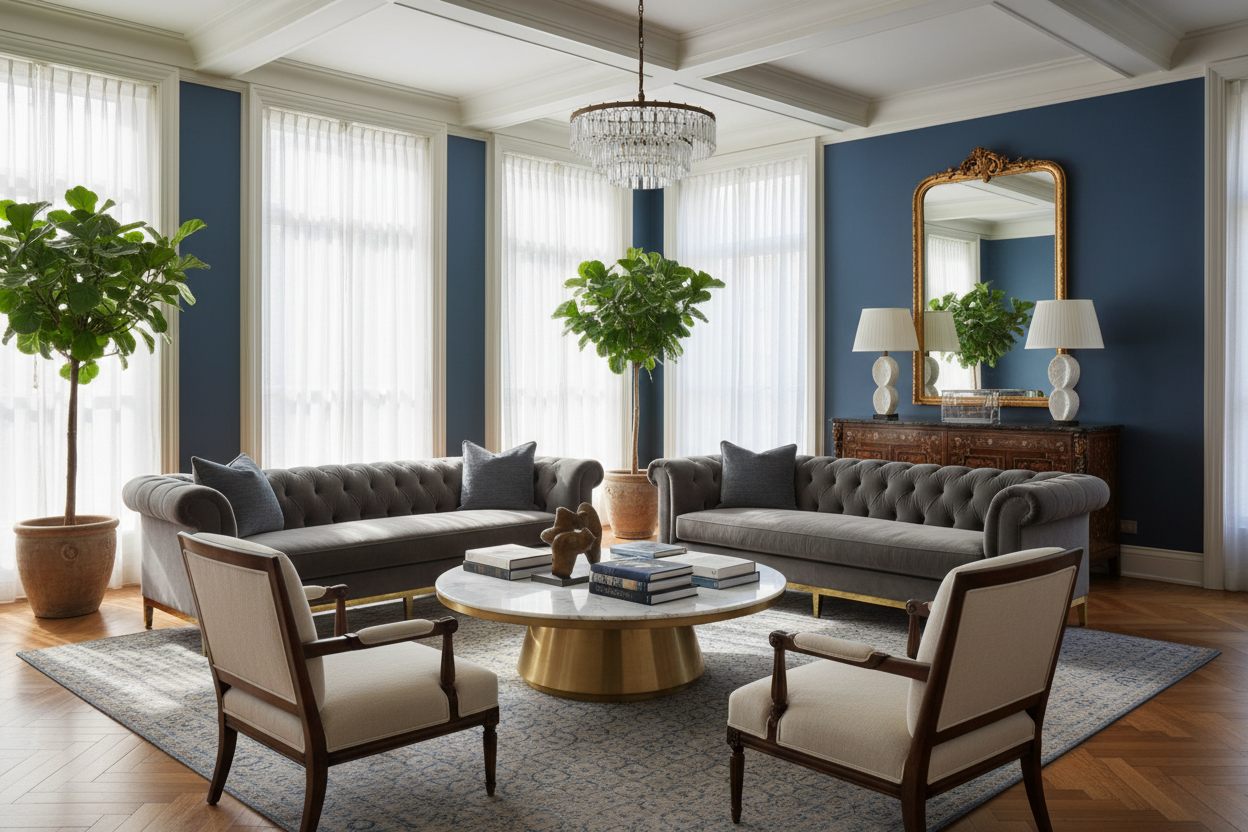
The phrase "formal living room" often conjures images of stiff, plastic-covered sofas and spaces that feel more like museums than parts of a home. However, in contemporary interior design, the definition has shifted. A successful design creates a space that demands respect through its aesthetic but invites conversation through its comfort. The challenge lies in selecting a **formal furniture living room** arrangement that balances architectural beauty with genuine livability.
Key Features to Look For
If you are scanning options for your parlor or drawing room, prioritize these elements to ensure investment-grade quality:
- Silhouette & Line: Look for structured profiles, such as tuxedo backs or tight-back sofas, rather than loose, slouchy cushions.
- Material Integrity: Prioritize solid hardwoods (walnut, mahogany) over veneers, and natural stones like marble or onyx for tabletops.
- Fabric Grade: High-traffic formal spaces benefit from mohair or performance velvets; low-traffic areas can accommodate silk blends or bouclé.
- Scale & Proportion: Formal furniture generally requires a lighter visual weight with exposed legs, creating a sense of airiness compared to heavy family room sectionals.
Defining the Modern Formal Aesthetic
Gone are the days when formal furniture meant heavy distinct periods like Victorian or Georgian reproductions exclusively. Today, formal living room furniture modern styles rely on clean lines, luxurious materials, and a monochromatic or tone-on-tone palette. The goal is to create a focal point—often a fireplace or a piece of art—and orient the seating to face it or each other, rather than a television.
When curating this look, avoid over-stuffing the room. Negative space is a crucial component of formal design; it allows each piece to breathe and be appreciated as an individual sculptural element.
Selecting Materials that Speak Volumes
The distinction between casual and formal furniture is almost entirely found in the textiles and finishes. For a truly sophisticated look, texture is your most powerful tool. A high-gloss lacquer coffee table paired with a matte velvet sofa creates a dynamic tension that feels expensive and curated.
The Upholstery Hierarchy
For seating, avoid linens that wrinkle easily. Instead, opt for fabrics with memory and sheen. Mohair is a personal favorite for its durability and way it catches the light, adding depth to the room without needing patterns. If you prefer leather, choose a full-grain aniline hide that is pulled tight, rather than the distressed, puffy leather styles found in recreational rooms.
Layout and Flow
Formal room furniture is designed for conversation. The layout should encourage engagement. A classic approach is the mirrored arrangement: two identical sofas facing each other, or a sofa flanked by two substantial armchairs. This symmetry instinctively signals to the brain that the space is ordered and calm.
Ensure you leave adequate flow space. In formal rooms, we usually aim for 30 to 36 inches of walkway space between furniture groupings to maintain that grand, uncluttered atmosphere.
My Personal Take on formal furniture living room
I learned a hard lesson early in my career regarding the "sit test" for formal spaces. I once specified a stunning, low-profile Italian sofa for a client's formal receiving room. Visually, it was a masterpiece—architectural and sleek. However, I failed to account for the primary use case: cocktail hour with older guests.
The seat height was a mere 15 inches, and the depth was expansive. While it looked incredible in photos, guests struggled to stand up gracefully after sitting down, completely ruining the dignified vibe of the gathering. Now, when I select formal pieces, I physically measure the seat height relative to the client’s knee. For a room intended for conversation and cocktails, a firmer seat with a height of 17 to 19 inches is non-negotiable. It’s a small, unpolished detail that determines whether the room is actually used or just looked at.
Conclusion
Designing a formal space is about intentionality. By choosing pieces that offer structural elegance and high-quality finishes, you create a room that transcends trends. Don't be afraid to mix eras or textures; the most captivating rooms are those that feel collected, not just purchased.
Frequently Asked Questions
How do I protect formal furniture fabrics from fading?
Formal rooms often feature large windows. I always recommend applying a UV-protective window film or ensuring your drapes have a high-quality lining. Additionally, rotate your area rugs and cushions every six months to ensure any sun exposure is distributed evenly.
Can I mix antique and modern formal furniture?
Absolutely. In fact, it is encouraged. A sleek, modern glass coffee table can make an antique wingback chair feel fresh and relevant. The key is to match the visual weight of the pieces so one doesn't overpower the other.
What is the ideal size for a rug in a formal living room?
In a formal setting, skimpy rugs are a major design error. The rug should be large enough that all legs of the furniture grouping sit on it. This anchors the space and defines the conversation area, adding a layer of acoustic softening that is essential for a refined atmosphere.

Leave a comment
This site is protected by hCaptcha and the hCaptcha Privacy Policy and Terms of Service apply.