










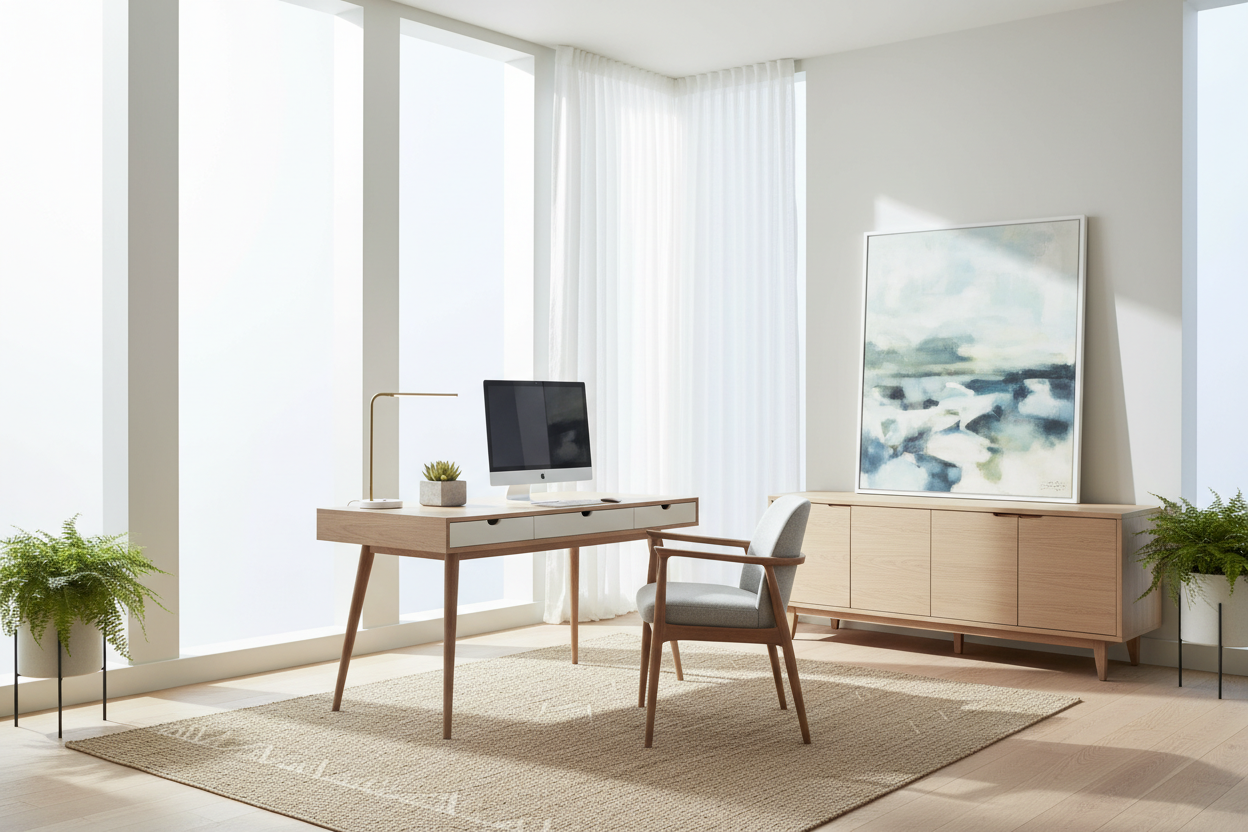
There is a distinct psychological difference between working in a space that feels enclosed and one that feels expansive. As an interior designer, I often see clients mistake emptiness for openness. A truly light and airy home office is not about removing everything from the room; it is about mastering the flow of light and the visual weight of your furnishings. It is the difference between a room that feels sterile and one that feels breathable and invigorating. This guide breaks down how to balance functionality with an aesthetic that promotes mental clarity.
Core Design Principles for Airy Spaces
- Visual Weight: Prioritize furniture with exposed legs and slim silhouettes over blocky, solid-to-the-floor pieces.
- Material Selection: Opt for light-reflective materials like glass, acrylic, or pale woods (ash, white oak) rather than heavy mahogany or walnut.
- Vertical Storage: Utilize floating shelves instead of bulky bookcases to keep floor space visible.
- Light Layering: Combine natural light control with ambient and task lighting to eliminate dark corners.
Managing Visual Weight in Furniture
The quickest way to suffocate a room is by selecting furniture that looks heavy. In a light and airy office, we want to maximize the amount of floor that is visible. This is where the concept of "negative space" becomes critical. When selecting a desk, look for "leggy" designs—pieces with slender metal or wood frames rather than solid pedestal desks. A writing desk with a glass top or a pale timber finish allows the eye to travel through the piece, making the room feel significantly larger.
Ergonomics Without the Bulk
The challenge with an airy aesthetic is that ergonomic chairs are often bulky and visually dominant. To maintain the look without sacrificing your back, look for mesh-backed task chairs in light grey or white frames. These offer the necessary lumbar support but lack the visual density of a black leather executive chair. If you prefer upholstery, choose a high-performance linen blend in a neutral tone, which adds texture without absorbing all the light in the room.
The Material Palette and Textures
A common misconception is that "light and airy" means exclusively white. This often results in a clinical, hospital-like atmosphere. To avoid this, we introduce warmth through texture. Layering is key here. Consider a jute or wool rug in a cream tone to ground the space without darkening it. For cabinetry or shelving, white oak or birch veneers offer a natural warmth that pure white lacquer lacks.
When incorporating metal accents, brushed brass or matte champagne finishes reflect light softly, whereas matte black absorbs it. If you use black, use it sparingly—perhaps in a thin picture frame or a lamp base—to provide an anchor point so the room doesn't feel like it's floating away.
Strategic Illumination
Natural light is the primary asset of a light and airy office, but it must be managed. Harsh sunlight creates glare on monitors, which is a productivity killer. I recommend sheer linen drapery or light-filtering cellular shades. These diffuse the sunlight, creating a soft glow rather than a hard beam. For artificial lighting, avoid heavy, opaque shades. Glass pendants or open-weave rattan fixtures allow light to disperse in all directions, keeping the upper volume of the room bright.
Lessons from My Own Projects
I want to share a specific reality check from a project I completed last year. We designed a stunning, minimalist workspace featuring a clear acrylic "ghost" desk and open-frame shelving. It was the epitome of airy design. However, two weeks later, the client called me about the cables.
Here is the unpolished truth about open, airy furniture: it leaves you nowhere to hide the mess. With a solid wood desk, you can shove a power strip and a tangle of HDMI cables behind the back panel. With a glass or open-frame desk, every single wire is visible against the wall. We ended up having to install paintable cable raceways along the desk legs and mount a cable management tray directly to the underside of the glass top using heavy-duty adhesive. If you are going for this look, you must plan your wire management strategy before you buy the furniture, or the visual clutter will ruin the airy effect instantly.
Conclusion
Designing a workspace that feels open is an exercise in restraint and careful selection. by prioritizing light-reflective materials and furniture with a light visual footprint, you can create a sanctuary that fosters creativity. It is not just about style; it is about creating room for your thoughts to breathe.
Frequently Asked Questions
What are the best wall colors for a light and airy office?
While pure white (like Benjamin Moore's Chantilly Lace) is popular, off-whites with warm undertones often feel more welcoming. Consider colors like pale greige, soft cloud blue, or a very subtle sage green. These hues reflect light well but add more character than a stark white.
Can I use dark furniture in a light and airy room?
Yes, but it requires balance. If you have a dark vintage desk you love, pair it with a ghost chair or a very light rug. Keep the walls and window treatments pale to offset the heavy piece. The goal is contrast, not conflict.
How do I make a small, windowless office feel airy?
In windowless spaces, mirrors are your best friend. Place a large mirror on the wall opposite your main light source to bounce illumination around. Additionally, use daylight-balanced LED bulbs (around 4000K-5000K) to mimic natural light, and keep vertical surfaces free of clutter.


Leave a comment
This site is protected by hCaptcha and the hCaptcha Privacy Policy and Terms of Service apply.