










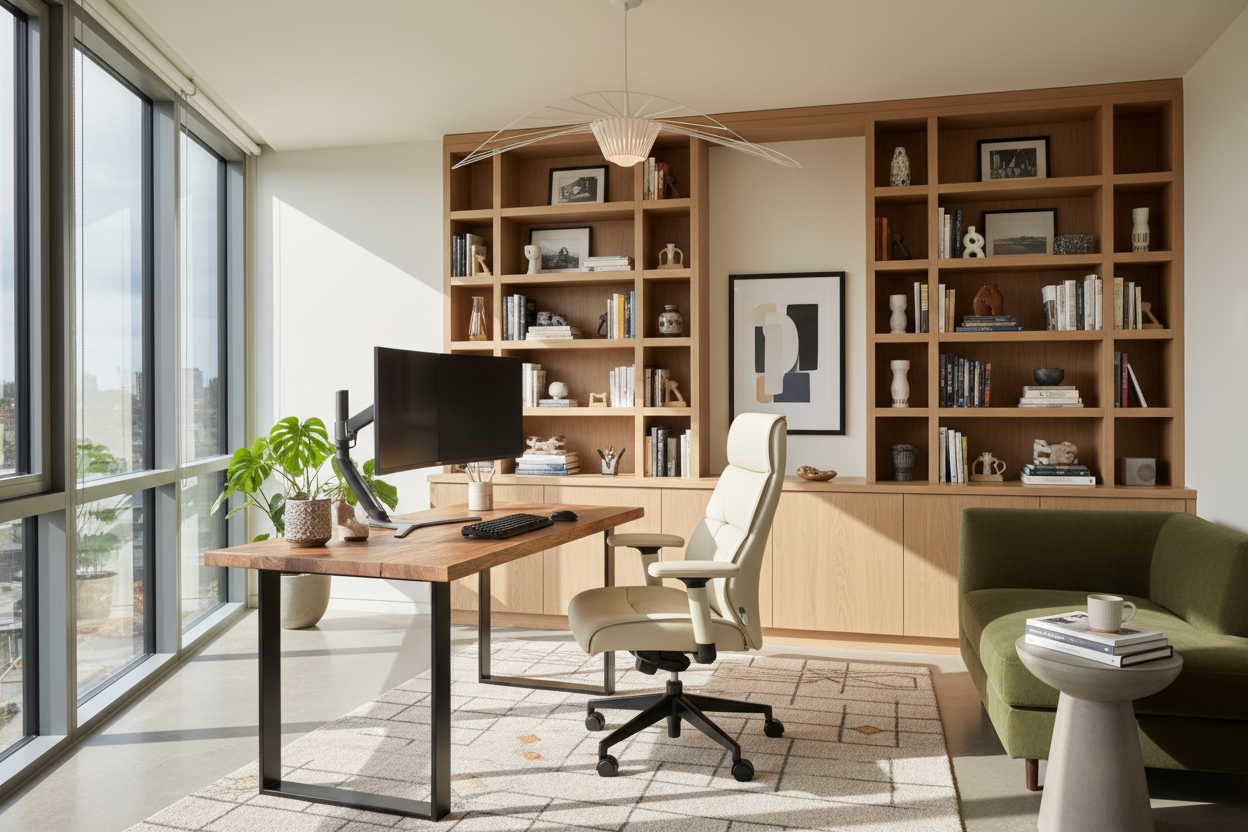
We often underestimate how heavily our environment dictates our output. You might find yourself fatigued by 2 PM not because of the workload, but because of poor lighting or a chair that fights your natural posture. Designing the perfect office space isn't just about selecting a mahogany desk or a trendy lamp; it is about orchestrating a balance between high-performance ergonomics and an aesthetic that induces a state of flow.
Key Features to Look For
Before we delve into layouts and finishes, here is a checklist of non-negotiables for a high-functioning workspace. These are the foundational elements that separate a makeshift desk from a professional sanctuary:
- Ergonomic Integrity: Seating and desk heights that support a neutral spine position to prevent long-term fatigue.
- Lighting Layers: A blend of ambient (overhead) and task lighting (focused) to reduce eye strain.
- Material Tactility: Surfaces that feel good to the touch and resist wear, such as hardwoods or high-pressure laminates.
- Acoustic Control: Soft furnishings or architectural elements that dampen echo and absorb distraction.
- Visual Breathing Room: Sufficient negative space to prevent a cluttered mind.
Mastering Space Planning & Layout
When clients ask me what makes a good office, I always start with the "Command Position." Ideally, your desk should face the door, but not be directly in line with it. This offers a psychological sense of security and authority. If you are facing a wall, you are subliminally closing yourself off; if your back is to the door, you are vulnerable to distraction.
Ensure you have a minimum of 48 inches behind your desk for chair clearance. The flow of movement should be unobstructed—if you have to shimmy past a bookshelf to sit down, the layout has failed.
Choosing the Right Materials
The Desk: Solid Wood vs. Veneer
The desk is the anchor. For a luxury feel, solid walnut or white oak offers a warmth that cold metals cannot replicate. However, be mindful of maintenance. Solid wood reacts to humidity. If you require a surface that can withstand coffee rings and heavy writing pressure without a blotter, a high-grade architectural veneer or even a matte Fenix laminate might be the superior choice for longevity.
Seating: Beyond the Mesh
While mesh chairs are breathable, a good office space often benefits from the structure of upholstered leather or high-performance fabric. Look for a chair with a synchro-tilt mechanism, where the seat and back move in a ratio (usually 2:1) to support your body through various reclining angles. The aesthetic should complement the room, not look like a piece of industrial machinery parked in a study.
Lighting and Visual Balance
Lighting is the unsung hero of the perfect office space. Avoid cool, blue-tinted overhead lights (4000K+) which can feel clinical. Aim for a color temperature between 2700K and 3000K for ambient lighting. Layer this with a dedicated task lamp featuring an adjustable arm. This creates pools of light that draw focus to your work zone while letting the rest of the room recede into a softer background.
Lessons from My Own Projects
I want to share a specific realization from a project I completed last year in a historic brownstone. We designed a stunning, custom floating desk made of lacquered ebony. Visually, it was a masterpiece. However, I learned a hard lesson about "wire management reality."
In my pursuit of a clean silhouette, I hadn't accounted enough for the client's specific hardware—two massive external hard drives and a tangled web of charging bricks. We ended up having to retrofit a cable tray underneath after installation, which was a nightmare to drill into the lacquer without cracking it. Now, I always insist on integrated power grommets and hidden cable spines, even if the client claims they "work wireless." Real life always involves cords, and the perfect office space hides them effectively.
Creating Your Sanctuary
Your office is a tool for your ambition. By investing in quality materials, respecting ergonomic principles, and carefully planning your lighting, you create an environment that respects your time and energy. It is not just about filling a room with furniture; it is about curating a backdrop for your best work.
Frequently Asked Questions
How do I determine the right desk size for my room?
A good rule of thumb is to ensure the desk takes up no more than 15-20% of the floor area to avoid overcrowding. However, functionally, aim for a surface depth of at least 30 inches if you use multiple monitors, so you aren't sitting too close to the screens.
What is the best way to handle acoustics in a home office?
Hard surfaces bounce sound, creating a "hollow" feeling on calls. Introduce a high-pile wool rug, heavy drapery, or even an upholstered armchair in the corner. These soft textures absorb sound waves and immediately elevate the audio quality of the room.
Is a standing desk necessary for a good office space?
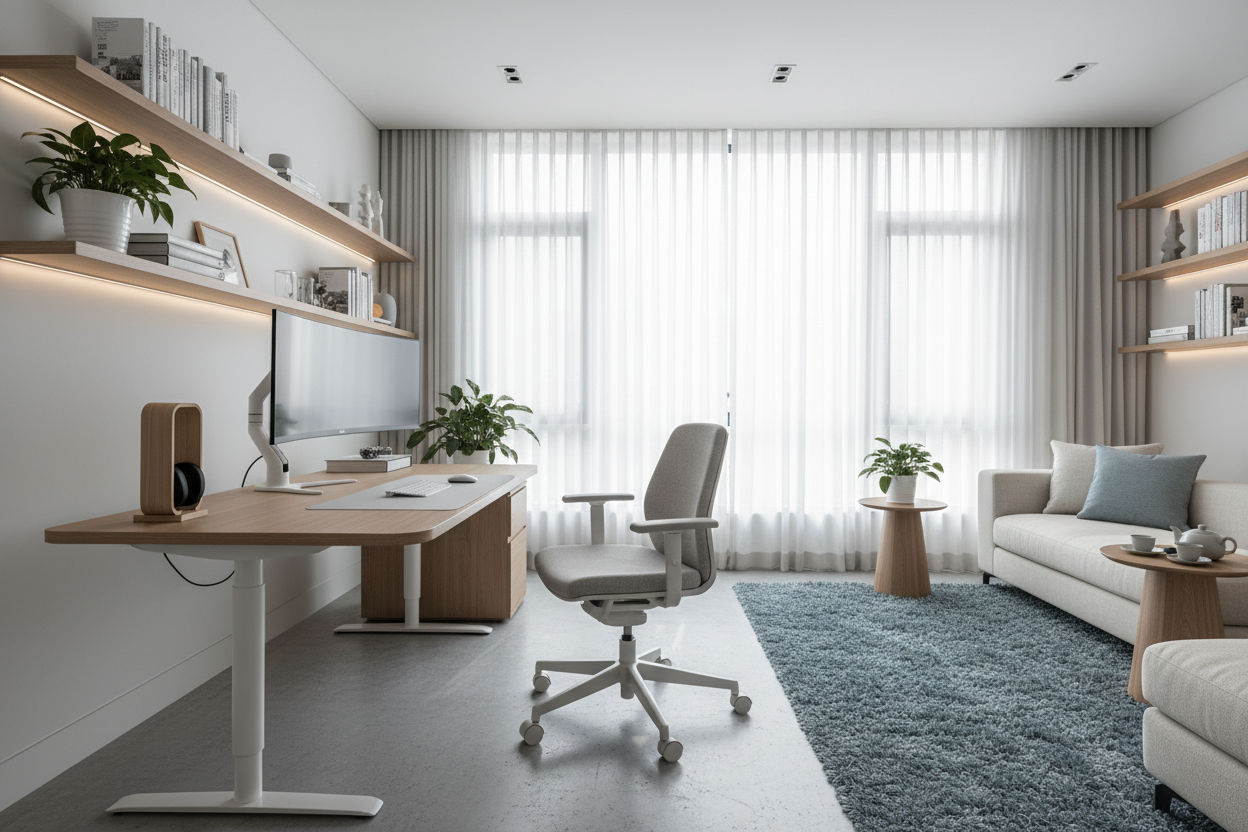
It is not mandatory, but movement is. If a sit-stand mechanism ruins the aesthetic you want (as they can look quite utilitarian), consider a high-quality fixed desk and simply incorporate a routine of standing and stretching every hour. The goal is to avoid static posture, which can be achieved through habit as well as hardware.

Leave a comment
This site is protected by hCaptcha and the hCaptcha Privacy Policy and Terms of Service apply.