










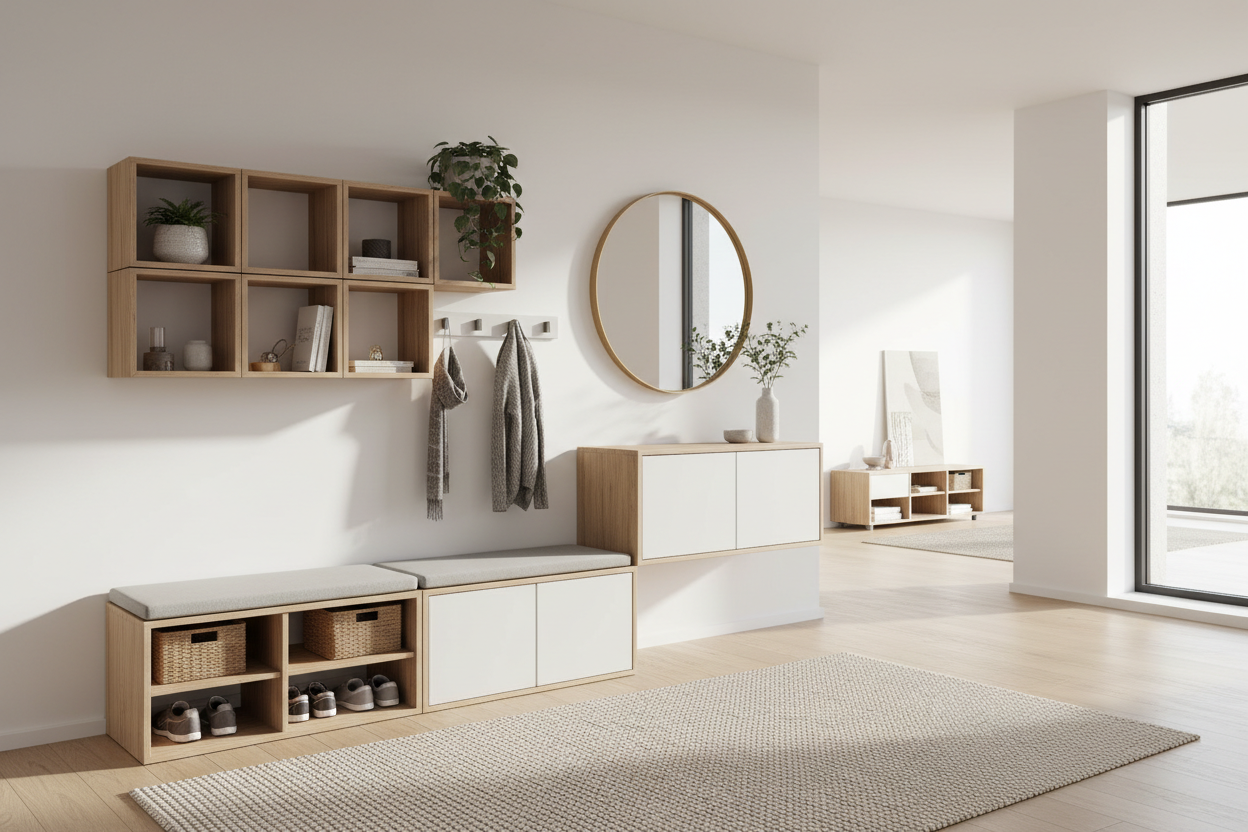
The front door is the highest traffic zone in any home, yet it is often the most neglected regarding design and function. You walk in, drop your keys, kick off your shoes, and suddenly you are navigating an obstacle course just to get to the living room. The solution isn't usually a massive renovation or a custom-built closet; it is modular entryway furniture. These systems consist of individual components—benches, shelves, hooks, and cabinets—that you mix and match to fit your specific wall space and lifestyle needs perfectly.
Unlike static, one-piece hall trees that dominate a room and rarely fit perfectly, modular systems offer a tailored approach. You buy exactly what you need for the space you have, whether that is a sprawling mudroom or a cramped apartment corridor. By utilizing vertical space and flexible layouts, these pieces turn a chaotic drop zone into a streamlined command center.
Why One Size Rarely Fits All
I learned the hard way that buying standard furniture for an entryway is a gamble. A few years ago, I moved into a house with a hallway that was deceptively narrow. I ordered a beautiful, solid wood hall tree online. It looked perfect in the photos. Once assembled, however, it projected so far into the walking path that I had to turn sideways just to scoot past it with groceries. It was a disaster.
That experience pushed me toward modular entryway storage. I ended up returning the bulky unit and replacing it with a system of wall-mounted cleats and shallow shoe cabinets. Because the components were separate, I could stagger them. I placed the coat hooks high and offset the shoe storage to clear the swing of the front door. The difference was night and day. The hallway felt open again, but I actually gained more storage capacity than the single large unit had offered.
The flexibility of Entryway Modular Furniture
The primary appeal of entryway modular furniture lies in its adaptability. Most homes have quirks: a thermostat in an odd spot, a baseboard heater, or a light switch that prevents you from placing a tall cabinet against the wall. A solid piece of furniture demands you work around it. A modular system works around you.
If you have a radiator on the wall, you can mount floating shelves above it. If you have a corner that usually collects dust, you can install a corner unit or wrap shelving around the bend. This flexibility extends to how you use the furniture over time. As seasons change, your entryway needs shift. In the winter, you might need more clearance for heavy coats and wet boots. In the summer, you might want more baskets for sunscreen and baseball caps. Many modular systems allow you to adjust shelf heights or swap out hooks for rails without needing tools.
Key Components of a Modular System
Building your setup usually involves selecting from a few core categories. Understanding these helps you visualize the layout before you buy.
- The Base: This is usually a bench or a low cabinet. It anchors the unit and provides a place to sit while putting on shoes. Look for bases with internal storage or space underneath for baskets.
- The Middle Zone: This area is prime real estate for items you grab daily. Open cubbies or shallow drawers work best here for keys, wallets, and mail.
- The Upper Storage: High shelves are perfect for off-season items. If you have high ceilings, taking modular shelving all the way up draws the eye upward and makes the room feel larger.
- Vertical Connectors: Many systems use vertical rails or wall grids. These allow you to snap accessories on and off, changing the configuration in seconds.
Maximizing Small Spaces with Modular Entryway Storage
When square footage is tight, floor space is your most valuable asset. Traditional furniture sits on the floor, eating up that asset. Modular entryway storage often emphasizes wall-mounted solutions. By getting the furniture off the floor, you create a visual sense of openness. Being able to see the floorboards extend to the wall tricks the eye into thinking the room is wider than it is.
For narrow corridors, look for "shallow depth" modular series. Standard cabinets are often 15 to 20 inches deep, which can choke a hallway. Many modular lines offer components that are only 7 to 10 inches deep. These slim profiles are designed specifically to hold shoes at an angle or provide hook storage without protruding into the walkway.
Choosing the Right Material and Aesthetic
Functionality drives the purchase, but style keeps it in your home. Because these systems are built from parts, you can often mix materials to create a custom look. A popular approach is mixing metal brackets or rails with wood shelves. This industrial look is durable and forgiving of the scuffs and scratches that inevitably happen in a high-traffic area.
For a softer, more integrated look, painted MDF or laminate systems can mimic built-in cabinetry. If you place modular units flush against each other and add trim molding to the top and bottom, you can achieve the look of a custom carpenter-built mudroom for a fraction of the price. This is a great hack for upgrading a builder-grade home without engaging in major construction.
Installation Considerations
While these systems are easier to handle than heavy armoires, installation requires precision. Since many components attach directly to the wall, locating studs is non-negotiable. Loading a shelf with winter coats creates significant downward force. Drywall anchors might hold a picture frame, but they will likely fail under the weight of a modular system laden with gear.
If you are renting and cannot drill many holes, look for tension-pole based modular entryway furniture. These systems use pressure between the floor and ceiling to hold the structure in place, requiring zero screws. They are incredibly sturdy and leave no trace when you move out.
Future-Proofing Your Home
Families grow, hobbies change, and pets arrive. A static piece of furniture that works for a couple might be woefully inadequate for a family of four. The beauty of going modular is scalability. You can start with just a bench and a row of hooks. A year later, you can add overhead cabinets. Two years later, you can expand the system to the adjacent wall.
This "add-as-you-go" capability makes high-quality organization accessible. You do not need to spend thousands of dollars upfront. You can build your entryway ecosystem piece by piece, ensuring that your home organization evolves in step with your life.
Frequently Asked Questions
Can I mix modular components from different brands?
Generally, it is best to stick to one brand for the structural parts (rails and brackets) to ensure safety and fit. However, you can easily mix freestanding elements, like a bench from one brand and wall shelves from another, provided the styles and dimensions complement each other.
How do I measure my space for a modular system?
Measure the width, height, and depth of your available space, paying close attention to obstructions like baseboards, outlets, and light switches. Crucially, measure the swing radius of your front door to ensure no furniture blocks the entry when the door is fully open.
Are modular entryway systems difficult to assemble?
Most systems are designed for DIY installation and are easier to manage than heavy, pre-assembled furniture because you are working with smaller, lighter individual pieces. However, wall-mounted systems do require a drill, a level, and a stud finder to ensure they are safely secured.


Leave a comment
This site is protected by hCaptcha and the hCaptcha Privacy Policy and Terms of Service apply.