










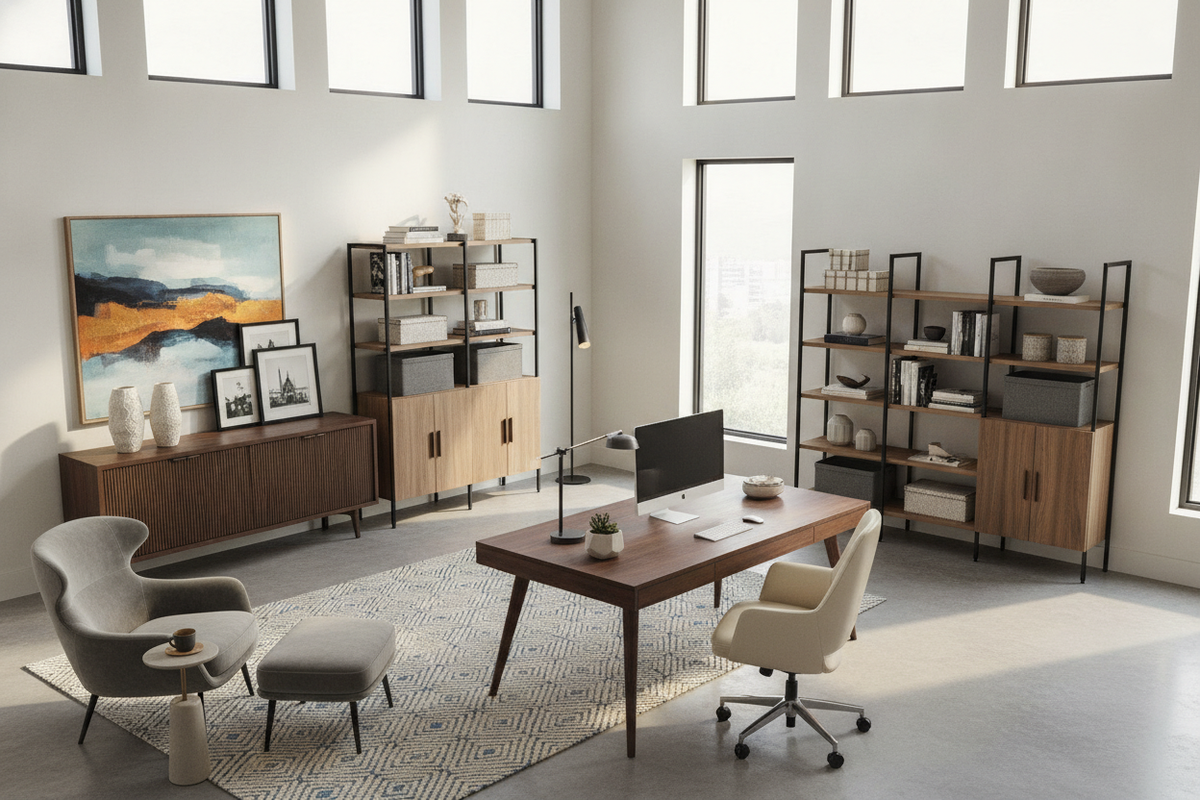
A well-appointed work environment bridges the gap between structured efficiency and personal style. Selecting decorations for an office is not merely an exercise in filling empty corners; it is an architectural approach to setting the mood, supporting focus, and creating visual harmony. When decor elements are chosen with intention, they turn utilitarian desks and bare walls into a balanced retreat tailored for deep focus.
The Functional Framework for Office Decor
Before introducing visual accents, establishing a spatial framework ensures the workspace remains efficient. Clutter often masquerades as design when objects are placed without a clear functional role. By establishing clear focal zones, you allow your decor to inspire rather than distract.
Balancing Aesthetics and Productivity
Visual overwhelm can subtly derail productivity. In an effective workspace layout, every decorative piece respects working reach zones and surface boundaries. Keeping your primary desktop reserved for immediate tasks prevents cognitive friction. If you are refining an entire room layout, reviewing our foundational decorate office space guide provides helpful spatial principles to anchor your planning.
Zoning Your Workspace for Visual Flow
Dividing a room into active task zones and passive display zones keeps decorative elements organized. The active zone includes the desk perimeter, monitor display, and immediate seating area. The passive display zone encompasses perimeter wall shelving, credenza surfaces, and background walls visible during video conferences. This division keeps the immediate work surface clear while framing the room with character.
Vertical Wall Decor and Architectural Shelving
When floor space is at a premium, vertical surfaces provide the ideal canvas for personality. Utilizing wall-mounted displays and floating ledges draws the eye upward, making compact rooms feel more expansive while reserving functional floor space for essential furnishings.
Floating Shelf Curation and Asymmetric Balance
Floating shelves offer an adaptable platform for rotating art, ceramic vessels, and architectural accents. To achieve balanced styling across open shelves:
- Vary visual weight: Alternate heavier items, like stacks of hardbound books, with lighter accents such as delicate stoneware or framed photography.
- Employ asymmetric groupings: Position tall elements on one side of a shelf and balance them with two smaller, low-profile items on the opposite side.
- Incorporate negative space: Leave breathing room between clusters to prevent shelving from looking crowded.
For versatile wall and compact footprint strategies, exploring a curated small space collection can reveal functional organizational pieces designed specifically for tight dimensions.
Framed Art, Acoustic Panels, and Focal Points
Wall art sets the tonal direction of the room. Large-format canvas prints or framed gallery sets provide a polished backdrop. In addition to visual appeal, textured fabric wall hangings or acoustic felt panels help absorb ambient echo, creating a quieter environment for concentration and calls.
Integrating Decorative Storage Cabinets and Credenzas
Closed storage pieces are among the most versatile decorative assets in an office. They serve a dual purpose: concealing daily paperwork, tech cables, and supplies while providing a generous top surface for styling vignette displays.
Styling Credenza and Sideboard Tops
The top of an office credenza serves as a secondary display surface that does not interfere with daily work routines. Applying classic arrangement techniques brings refinement to these surfaces:
- Layered heights: Place a sculptural table lamp on one end and anchor the center with a low wooden catchall tray.
- Natural textures: Use stone bookends, matte ceramic vases, or woven baskets to add tactile depth.
- Rotational displays: Swap smaller accents seasonally to keep the environment feeling fresh without altering the core furniture layout.
For spaces requiring streamlined upright storage, integrating a space design product offers both concealed utility and an elegant structural profile. Meanwhile, creative layouts can benefit from character-rich accents like a themed design product to introduce playful personality into utility corners.
Compact Storage for Tight Footprints
In smaller office footprints, multifunctionality is critical. Narrow sideboards and low-profile drawer units maintain floor circulation while expanding display opportunities. Choosing furniture with clean lines and warm finishes creates a cohesive foundation for whatever accents you place on top.
Desktop Styling: Curating the Primary Work Surface
The desktop demands a disciplined styling approach. Because it is the direct interface for your daily work, accents here should be purposeful, ergonomic, and intentionally limited.
Textured Desk Mats and Material Cohesion
A structured desk pad defines the central working area while protecting furniture surfaces. Selecting materials like top-grain leather, pressed wool felt, or matte vegan leather introduces organic texture against monitor screens and keyboard hardware. Complementary styling methods are explored in our decorate office guide to help align finishes across the workspace.
Minimalist Desktop Accents and Catchall Organization
Desk accessories should marry function with form. Consider swapping standard plastic office supplies for thoughtful materials:
- Solid brass or machined steel pen cups: Provide stable weight and enduring visual warmth.
- Turned wood catchall trays: Keep small everyday essentials corralled within a unified boundary.
- Sculptural paperweights: Serve as tactile art pieces while keeping active project notes in order.
Illumination and Biophilic Styling Strategies
Lighting and living elements are vital to creating an inspiring atmosphere. Together, they soften hard architectural angles and infuse the office with warmth.
Layering Task, Accent, and Ambient Lighting
A single overhead light source often creates harsh shadows and an uninviting mood. Layering multiple lighting types creates depth:
- Ambient illumination: Soft, indirect light from floor fixtures or shaded lamps creates an inviting baseline.
- Task lighting: Adjustable desk lamps with warm-toned bulbs deliver focused light directly over active paperwork.
- Accent backlighting: Concealed LED strips behind monitors or along shelving cast a gentle glow that reduces eye fatigue during evening hours.
Selecting Planters and Low-Maintenance Greenery
Biophilic design brings vitality into the workspace. Foliage like snake plants, ZZ plants, and trailing pothos thrive in typical indoor lighting with minimal upkeep. Pair these plants with ceramic, terracotta, or fluted concrete planters to complement the room's color palette.
Office Decorating Decision Framework
To determine the most suitable decor strategy for your specific layout, consider how space constraints and lighting conditions interact:
- Compact Nook Layouts: Emphasize vertical floating ledges, wall-mounted task lamps, light wood tones, and slimline desk mats to maximize every square inch.
- Dedicated Private Offices: Introduce wide storage credenzas, layered floor lamps, large-format canvas artwork, and robust potted plants to establish a grounded, executive presence.
- Shared Workspace Corners: Focus on acoustic felt wall panels, concealed cord management boxes, neutral desktop organizers, and compact desktop greenery to maintain quiet visual order.
Maintaining a Clutter-Free Decorative System
An inspiring office remains that way through deliberate upkeep. Designating five minutes at the end of each workday to clear stray items preserves the visual balance you have curated. By anchoring your design with functional storage, intentional wall displays, and balanced desktop accents, your office will consistently support both daily focus and personal style.

Leave a comment
This site is protected by hCaptcha and the hCaptcha Privacy Policy and Terms of Service apply.