










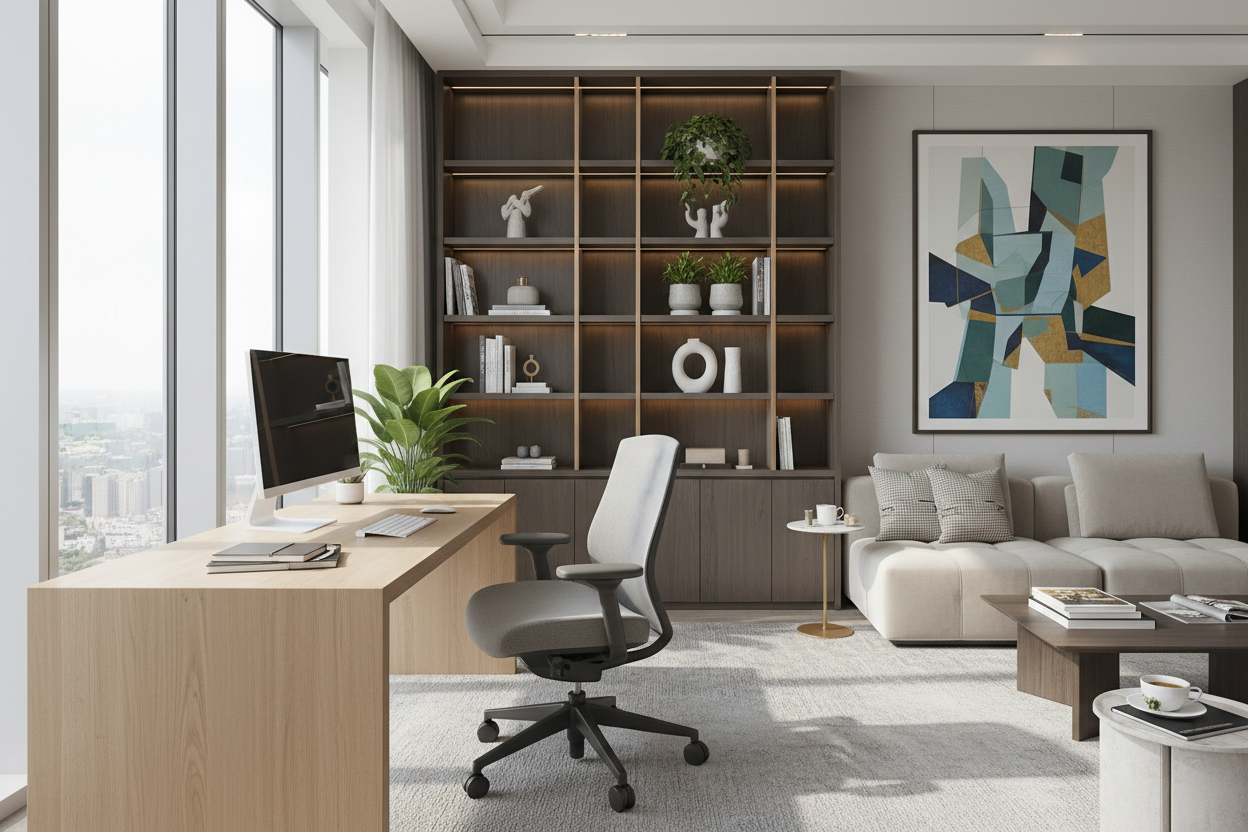
Walking into a sterile, beige box every morning does little to inspire innovation. As a designer, I see many professionals resigned to fluorescent lights and generic furniture, believing that a workspace must be utilitarian to be productive. This is a misconception. To decorate your office space effectively requires balancing ergonomic function with an aesthetic that reflects your professional identity.
Key Features to Consider Before You Start
- Spatial Flow: Ensure clear pathways; never block natural light sources with heavy furniture.
- Lighting Layers: Combine ambient overhead lighting with focused task lighting to reduce eye strain.
- Materiality: Opt for commercial-grade fabrics and durable finishes (like high-pressure laminate or solid wood) that withstand daily wear.
- Ergonomics: Prioritize an adjustable chair and desk height over purely decorative pieces.
- Acoustics: Incorporate soft textures (rugs, acoustic panels) to dampen echo in corporate environments.
Defining the Layout: Scale and Proportion
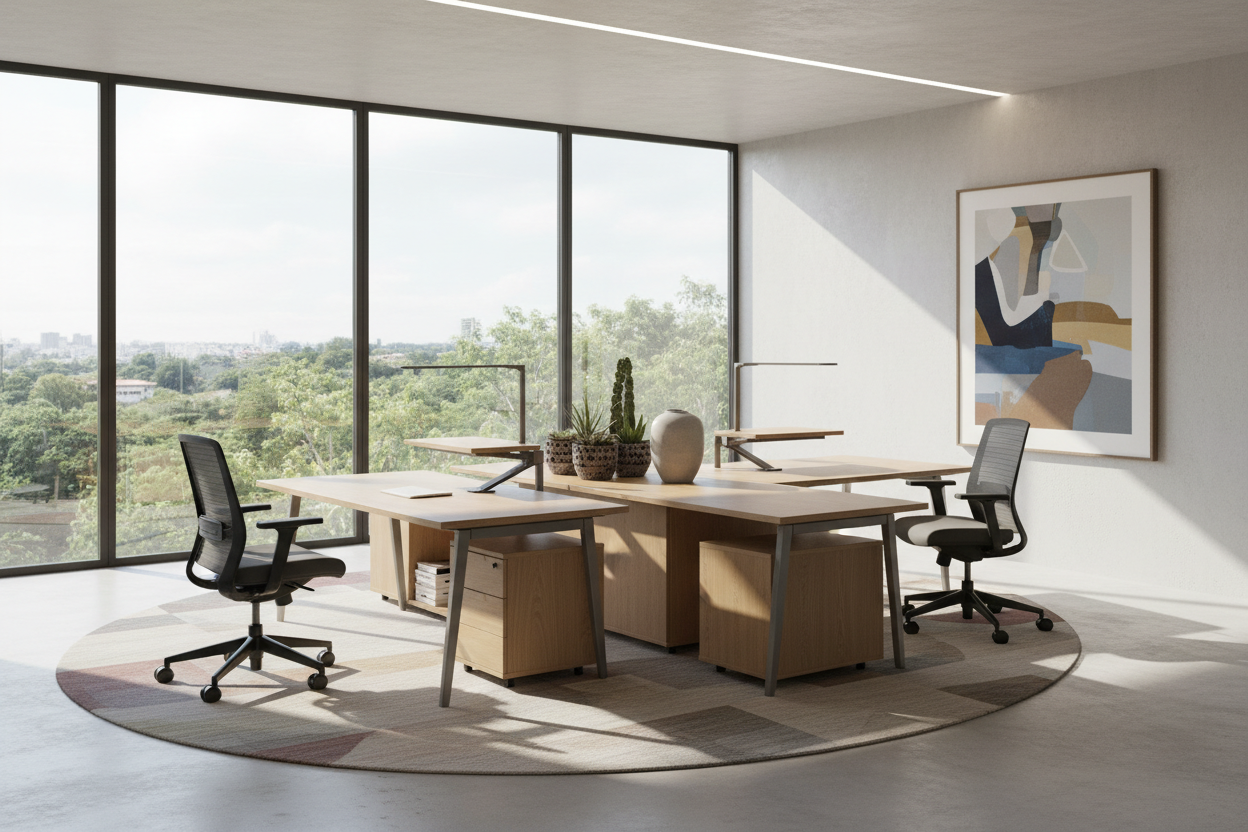
Whether you are figuring out how to decorate a large office or a compact cubicle, the principles of scale remain paramount. In a spacious corporate suite, floating your desk in the center of the room commands authority and allows for a conversation zone with accent chairs. Conversely, if you are looking for advice on how to decorate a small office space at work, you must utilize verticality. Tall, open shelving draws the eye upward, making the footprint feel larger without sacrificing floor space.
Selecting Appropriate Office Decor
Navigating appropriate office decor is often where clients struggle. The goal is to curate, not clutter. When considering how to decorate professional office environments, adhere to the "80/20 Rule." Eighty percent of the decor should be functional and neutral—think sleek organizers, a quality desk blotter, and architectural lighting. The remaining twenty percent is where you inject personality.
Art and Wall Coverings
Artwork serves as a visual anchor. Avoid generic motivational posters. Instead, choose large-scale abstract pieces or framed black-and-white photography. These add sophistication and provide a focal point for the eye to rest during mental breaks. If you are wondering how should i decorate my office at work without damaging walls, use command strips for lightweight frames or lean larger pieces against the wall on a credenza for a relaxed, gallery-style look.
Lighting: The Invisible Design Element
If you ask me how to decorate my office space at work for immediate impact, my answer is always lighting. Standard corporate overheads are often too cool (bluish) and harsh. Introduce a desk lamp with a warm temperature bulb (2700K-3000K). This creates a pool of inviting light that psychologically separates your focus area from the rest of the room. A floor lamp in the corner can also soften the harsh shadows typical in windowless offices.
Textiles and Comfort
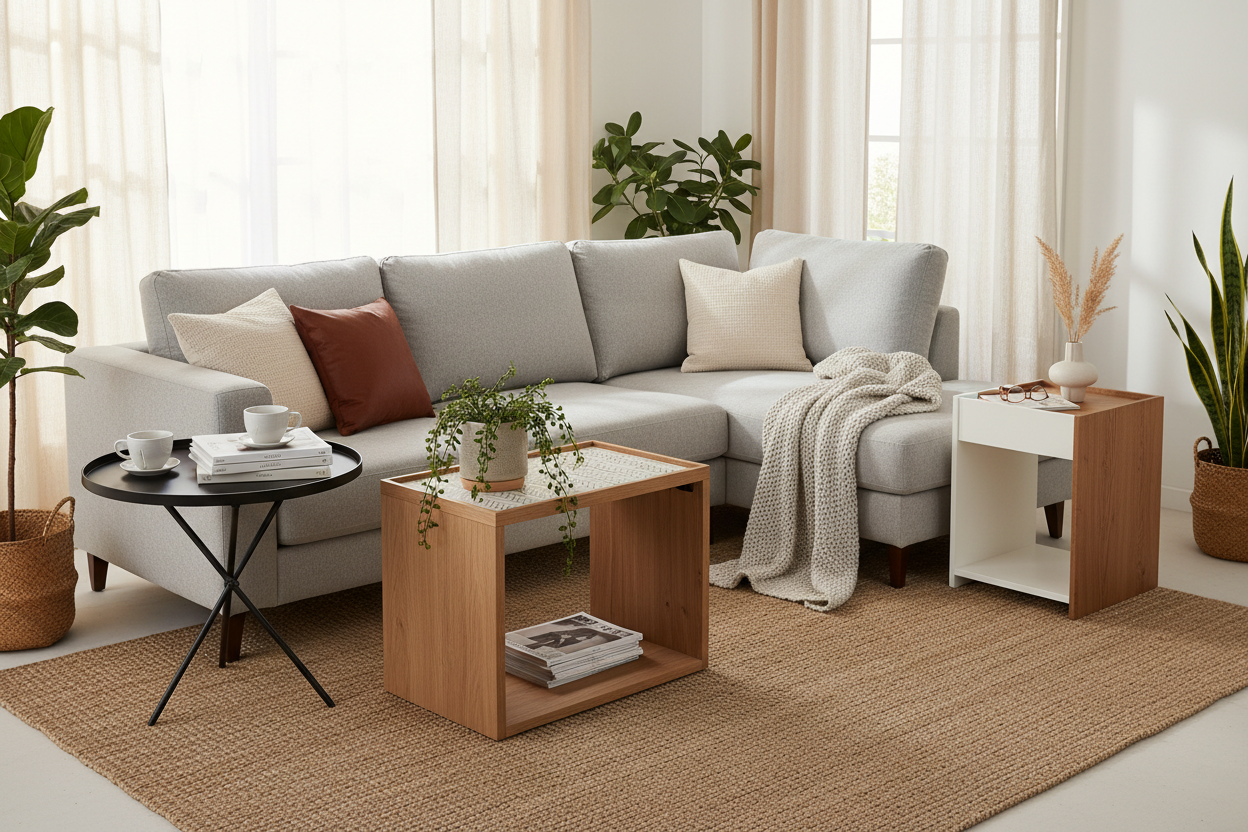
To decorate my office space with a sense of luxury, we look to textiles. A high-quality rug anchors the furniture arrangement and improves acoustics. When determining how to decorate your corporate office space, choose low-pile wool or synthetic blends that allow chair casters to roll smoothly. Additionally, a throw pillow on a guest chair or a lumbar support cushion in a premium fabric can introduce texture and color without overwhelming the professional vibe.
My Personal Take on Decorating Office Spaces
In my fifteen years of design, I have learned that the smallest details often dictate the longevity of a design. I recall a project for a tech executive who insisted on a stunning, tempered glass desk. Visually, it was weightless and modern. Practically, it was a disaster. Within a week, he called me complaining about the cold surface temperature against his wrists and the fact that every single fingerprint and dust mote was visible.
We ended up swapping it for a walnut veneer desk with a leather inlay. The lesson? When you look for tips for decorating your office at work, never sacrifice tactile comfort for visual drama. You have to touch these surfaces for eight hours a day. If the material feels cold, sticky, or fragile, no amount of aesthetic beauty will make you enjoy working there. Always test the "touch" of your furniture before committing.
Conclusion
Transforming your workspace is an investment in your career capital. By focusing on lighting, scale, and high-quality materials, you create an environment that commands respect and fosters focus. Don't settle for the status quo—curate a space that works as hard as you do.
Frequently Asked Questions
How to decorate my new office at work on a tight budget?
Focus on high-impact, low-cost items. A fresh coat of paint (if allowed), a high-quality desk lamp, and a thriving plant can completely change the atmosphere. Prioritize decluttering and cable management, which costs nothing but significantly elevates the look.
How decorate office spaces that have no windows?
Combat the "cave effect" by using multiple light sources (floor, table, and accent lamps) to mimic natural light layers. Use mirrors to reflect light and add depth, and introduce artwork depicting landscapes or nature to provide a psychological connection to the outdoors.
What is the best way to handle storage in a small office?
Utilize vertical space. Install floating shelves or use tall bookcases. Opt for closed storage (cabinets with doors) for paperwork to reduce visual noise, and use open shelving strictly for decorative objects and books to keep the aesthetic airy.

Leave a comment
This site is protected by hCaptcha and the hCaptcha Privacy Policy and Terms of Service apply.