










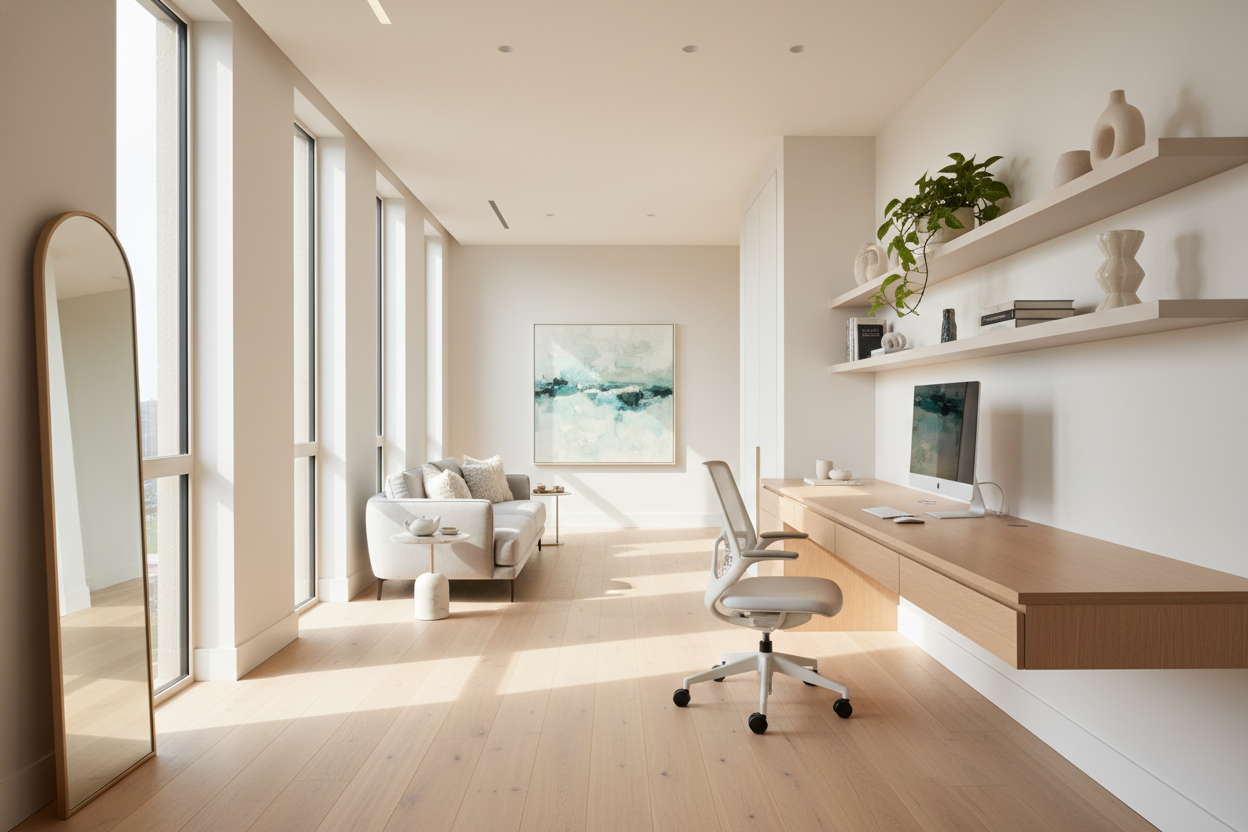
There is a specific kind of panic that sets in when you are handed a room that resembles a bowling alley more than a workspace. The challenge with a long narrow home office is not necessarily a lack of square footage, but rather how that footage is distributed. The "corridor effect" can make a room feel claustrophobic and disrupt your creative flow. However, as an interior designer, I view these elongated spaces as opportunities for hyper-focused, zoned environments. This article will guide you through breaking up the tunnel vision and creating a layout that feels intentional, not accidental.
Key Features for Narrow Layout Success
- Traffic Flow: Maintain a minimum 30-inch clearance path behind the desk chair for comfortable circulation.
- Vertical Utilization: Use floor-to-ceiling shelving to draw the eye up and maximize storage without encroaching on floor space.
- Furniture Profile: Opt for visually lightweight pieces, such as desks with slender metal legs or floating wall-mounted units.
- Lighting Layers: Utilize wall sconces or pendant lights to keep desk surfaces and floor corners free of clutter.
Strategic Space Planning & Layout
The first step in conquering a long narrow office space is determining your anchor point. In standard rooms, we often float the desk in the center, but in a narrow footprint, this creates impassable bottlenecks. You generally have two viable layout options:
The End-Wall Anchor
Placing the desk against the short wall at the far end of the room is the most effective way to shorten the visual depth of the space. This narrow home office layout draws the eye to the end of the room, making the walls feel wider by comparison. It also frees up the length of the room for a secondary zone, such as a reading nook or a storage wall.
The Galley Approach
If you require a long workspace for multiple monitors or drafting, arrange your desk along one of the long walls. The key here is balance. If one wall is heavy with cabinetry and desk space, the opposing wall must remain relatively open—perhaps adorned only with art or shallow floating shelves—to prevent the room from feeling like it is closing in on you.
Choosing the Right Material and Visual Weight
In tight quarters, visual weight is just as important as physical dimensions. A solid oak partner's desk with a closed modesty panel will dominate the room and absorb light, making the space feel smaller. Instead, look for materials that promote airiness.
I frequently recommend desks with glass tops, acrylic elements, or high-quality wood veneers on slender steel frames. These materials allow light to pass through or around the furniture, maintaining a sense of openness. If you prefer the warmth of wood, opt for lighter species like white oak or ash, or a rich walnut with a cantilevered design that keeps the floor visible underneath.
Ergonomics in Restricted Widths
Ergonomics extends beyond the lumbar support of your chair; it encompasses how your body interacts with the room. In a narrow room, the depth of your desk is critical. A standard executive desk is often 30 to 36 inches deep. In a room that is only 7 or 8 feet wide, this consumes nearly half the width.
Look for "console desks" or custom joinery that sits between 20 to 24 inches deep. This creates a comfortable focal distance for laptop work while preserving that crucial circulation path behind you. Ensure your chair has a compact wheelbase; bulky executive chairs can become tripping hazards in a narrow thoroughfare.
Lessons from My Own Projects
I learned the hard way that tape measures don't tell the whole story. Years ago, I designed a long narrow study for a client in a converted sunroom. We selected a gorgeous, mid-century modern desk that fit perfectly on the floor plan—technically.
However, once the desk was installed, we realized we hadn't accounted for the "visual noise" of the chair. When the client sat down and pushed back slightly, the casters hit the rug edge, and the back of the chair visually blocked the path to the garden door. It felt like a barricade. I had to swap that beautiful desk for a custom floating shelf anchored to the wall. It saved us six inches of depth and completely removed the legs from the equation. The lesson? In a narrow room, floor space is gold. If you can hang it on the wall, do it.
Conclusion
Designing a functional workspace within a narrow footprint requires a shift in perspective. It is about prioritizing verticality and circulation over massive furniture pieces. By selecting the right scale and maintaining clear sightlines, you can turn a tight corridor into a sophisticated, highly productive studio.
Frequently Asked Questions
What is the minimum width for a functional home office?
Ideally, a room should be at least 7 feet (approx. 2.1 meters) wide. This allows for a 24-inch deep desk and roughly 4-5 feet of clearance for the chair and walking space behind it.
Should I paint a long narrow office a light color?
Not necessarily. While white expands space, painting a narrow room a dark, moody charcoal or navy can blur the corners and create a "jewel box" effect. This adds depth and drama, especially if the ceiling is kept lighter.
How do I fit two people in a long narrow office?
The best approach is a single long countertop along one wall (the galley layout). This allows two people to sit side-by-side without bumping chairs. Avoid placing desks back-to-back, as you likely won't have enough clearance between chairs.

Leave a comment
This site is protected by hCaptcha and the hCaptcha Privacy Policy and Terms of Service apply.