










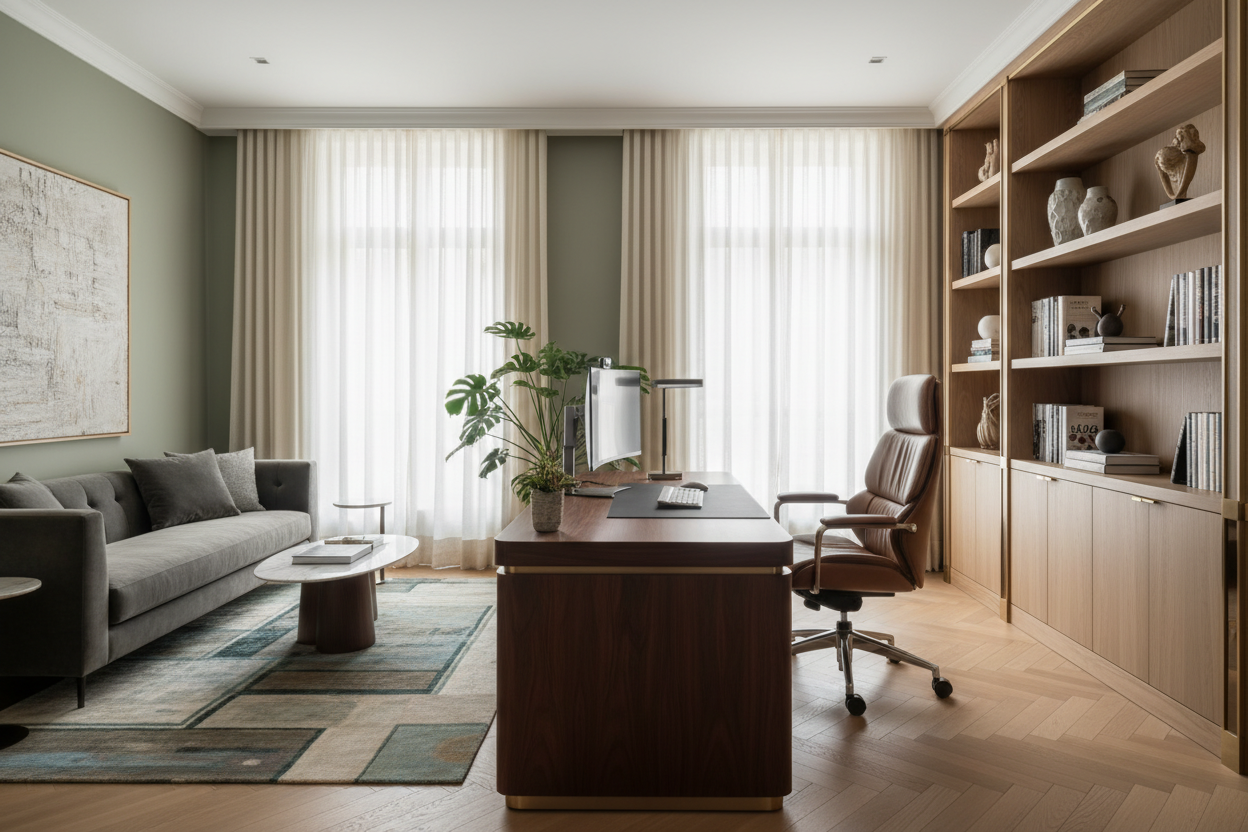
The era of the improvised dining table desk is over. As more professionals secure work from home permanent jobs, the shift from temporary setups to dedicated, high-performance design is essential. We are no longer just looking for a flat surface to place a laptop; we are curating environments that sustain productivity, mental well-being, and professional aesthetics for the long haul. If your career has moved permanently remote, your interior architecture must evolve to support that permanence.
Key Features for a Permanent Office Setup
- Ergonomic Integrity: Prioritize lumbar support and seat depth over pure aesthetics to prevent fatigue during long shifts.
- Material Durability: Opt for solid hardwoods or commercial-grade laminates that resist coffee rings and mouse abrasion.
- Acoustic Control: Incorporate soft textiles (rugs, curtains) to dampen echo during conference calls.
- Lighting Layers: Balance ambient lighting with task lighting to reduce eye strain and look professional on camera.
Invest in Infrastructure, Not Just Decor
When you land one of the coveted permanent wfh jobs, the first instinct is often to buy a desk that matches the living room decor. However, as a specialist, I advise clients to treat furniture as infrastructure. A writing desk with a shallow depth (under 24 inches) looks elegant in a hallway, but it is functionally useless for a multi-monitor setup required by most full-time roles.
Look for desks with cable management integration. Nothing ruins the visual weight of a room faster than a nest of wires. High-end office furniture now conceals power strips within the joinery, maintaining a clean silhouette while keeping you connected.
The Chair: The Anchor of the Room
In the world of work from home jobs permanent roles, the chair is your primary tool. Avoid the "dining chair disguised as an office chair" trap. While mid-century modern bucket seats look chic, they lack the adjustability needed for an 8-hour workday. Look for a synchro-tilt mechanism, which allows the seat and back to move together, supporting your body's natural movement.
Texture matters here. Leather offers a commanding, executive look but can retain heat. High-performance mesh or commercial-grade wool blends often provide better breathability and tactile comfort for daily use.
Spatial Planning for the Camera
With many permanent work from home jobs hiring based on remote interviews and daily Zoom collaboration, your background is your new business card. Position your desk so you are facing natural light, rather than having it behind you, which creates a silhouette effect.
Curate the wall behind you. A bookshelf should be styled with intention—grouping books by size or color and interspersing them with sculptural objects to create 'breathing room.' This visual balance implies organization and professionalism to anyone viewing your feed.
Lessons from My Own Projects
I learned the hard way that "aesthetic" does not always equal "functional" when I designed my own home studio. I fell in love with a vintage teak desk with a thick apron (the drawer section right under the surface). It was stunning, but the apron was so low that I couldn't cross my legs, and the armrests of my ergonomic chair kept banging into it, chipping the wood.
For six months, I sat with poor posture just to accommodate the desk's design. I eventually had to swap it for a modern piece with a slim profile and adjustable height. It taught me that in a permanent workspace, the furniture must adapt to your body, not the other way around. If you have to hunch to make the furniture work, it's a bad investment.
Conclusion
Securing a permanent remote role is a career milestone that deserves a commensurate investment in your environment. By selecting furniture that balances structural integrity with ergonomic science, you create a space that not only looks sophisticated but actively supports your success. Ideally, your home office should be the most comfortable room in your house.
Frequently Asked Questions
What is the ideal desk size for a permanent home office?
For a standard laptop plus monitor setup, aim for a width of at least 48 inches and a depth of 30 inches. This depth allows you to maintain the correct focal distance from your screen, reducing eye strain.
How do I separate work from life in a small space?
If you don't have a separate room, use a rug to zone the floor area. Visually anchoring the desk with a specific rug creates a psychological boundary that separates "work mode" from the rest of the living space.
Is a standing desk worth the investment?
Absolutely. The ability to alternate between sitting and standing changes your energy levels. Look for dual-motor electric models for smooth transitions; manual cranks often become tedious, leading users to stop using the feature.


Leave a comment
This site is protected by hCaptcha and the hCaptcha Privacy Policy and Terms of Service apply.