










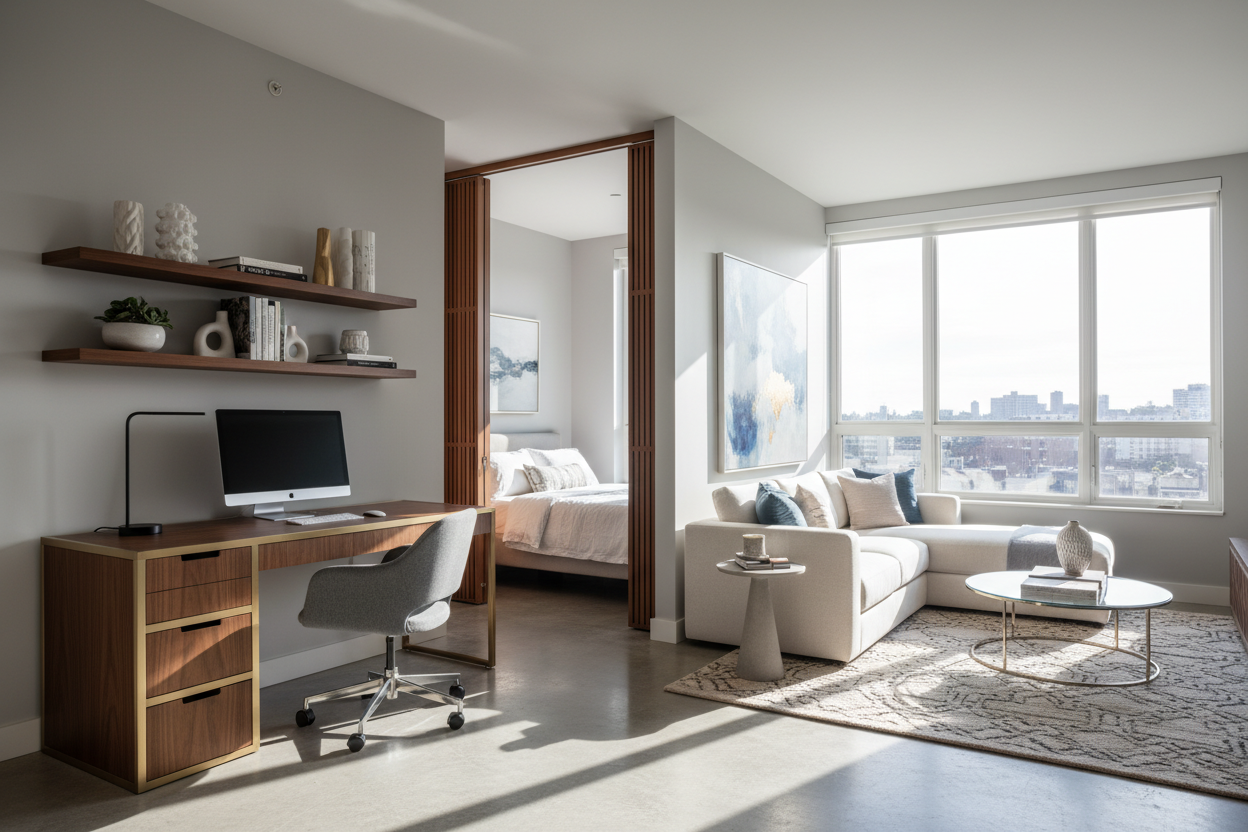
The boundary between professional obligation and personal sanctuary has never been more porous. When square footage is at a premium, carving out a dedicated office space apartment setup requires more than just shoving a desk into a corner. It demands a sophisticated understanding of spatial flow, visual weight, and psychological zoning. If you treat your workspace as an afterthought, your entire home begins to feel like a cubicle. The goal is integration—creating a zone that performs rigorously during business hours but recedes quietly into the background when it’s time to unwind.
Quick Decision Guide: The Essentials
Before investing in new pieces, evaluate your space against these core design pillars. This checklist ensures your new setup enhances your apartment rather than cluttering it.
- Visual Weight: Opt for legs and open silhouettes over solid, boxy desks to maintain a sense of airiness.
- Acoustics: Incorporate soft textiles (rugs, curtains) near the desk to dampen echo and video call reverb.
- Lighting Layering: Ensure you have a mix of ambient light and directional task lighting (3000K-4000K temperature).
- Vertical Utilization: Look for wall-mounted shelving or tall hutches to minimize the floor footprint.
- Material Durability: For daily use, high-pressure laminate or sealed hardwood withstands coffee rings better than raw veneer.
Mastering the Layout: Zoning Without Walls
In an open-plan apartment, the biggest challenge is separation. We need to create a psychological boundary that signals "work mode" without erecting physical barriers that block natural light.
The "Floating" Desk Technique
A common mistake is pushing the desk directly against a blank wall. While space-saving, it’s visually uninspiring. Instead, consider floating your desk perpendicular to a wall or placing it behind a sofa. This anchors the office space in apartment layouts, allowing you to face the room or a window. If you choose this route, the back of the desk must be finished—rough particle board is not an option for furniture that is visible from 360 degrees.
Rug Demarcation
Never underestimate the power of a rug to define a zone. A low-pile vintage runner or a sisal mat under your desk and chair visually groups the furniture, signaling that this area has a distinct function separate from the adjacent living or dining area.
Furniture Selection: Scale and Silhouette
When selecting furniture for smaller footprints, silhouette is everything. A heavy, mahogany executive desk will dominate an apartment, making the room feel claustrophobic.
Materiality and Aesthetics
I often advise clients to look for materials that mimic their living room furniture. If your coffee table is walnut with brass accents, your desk should converse with that language. Glass or acrylic desks are excellent for "disappearing" into a room, but they require impeccable cable management as every wire is visible. For a warmer aesthetic, look for mid-century modern profiles with tapered legs; the gap between the floor and the furniture body allows light to pass through, tricking the eye into seeing more space.
Ergonomics in a Compact Footprint
Style should never compromise health. However, a massive, plastic gaming chair rarely suits a curated apartment aesthetic. Look for task chairs that bridge the gap between dining chair aesthetics and office functionality. Brands are now producing chairs with hidden lumbar support and tilt mechanisms wrapped in high-quality bouclé or leather. Ensure the seat height allows your elbows to rest at a 90-degree angle to the desk surface to prevent shoulder strain.
Lessons from My Own Projects
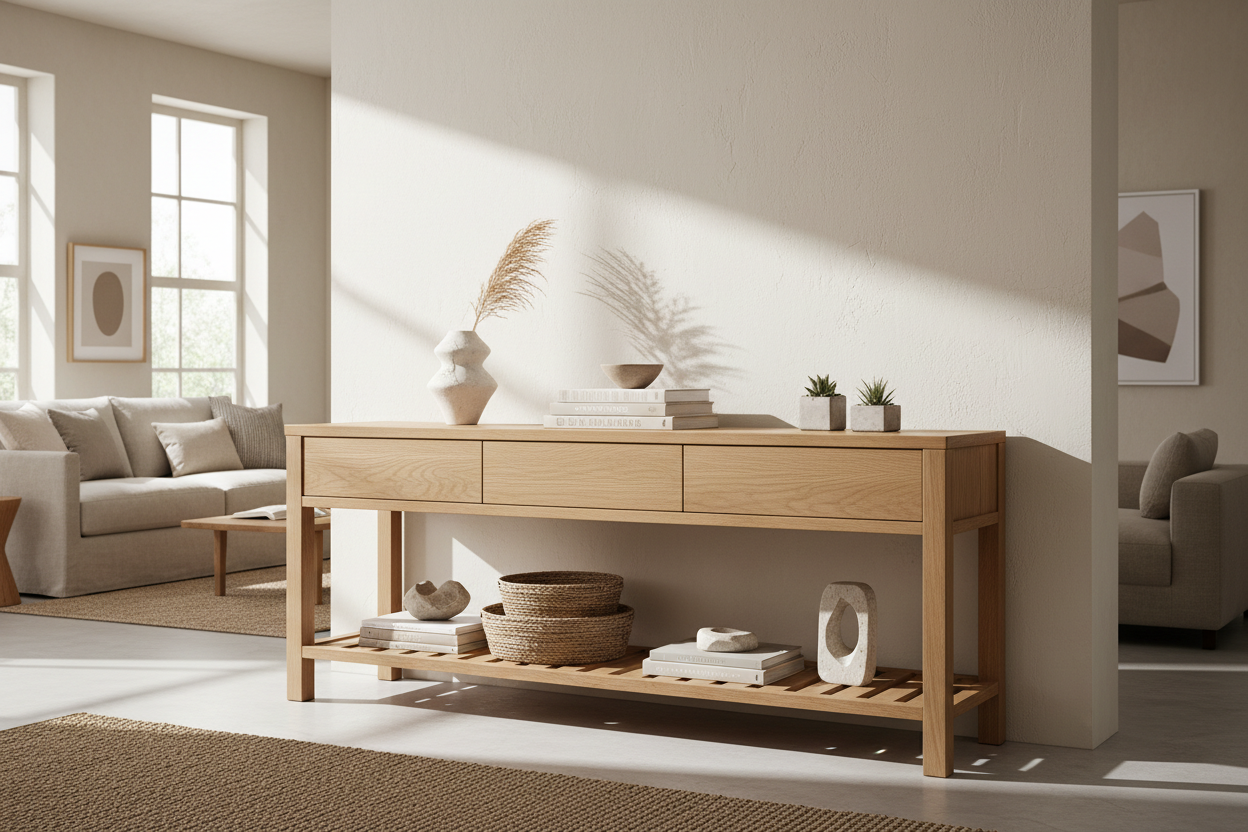
I want to share a specific realization I had while designing a 600-square-foot loft in Brooklyn. We initially installed a gorgeous, shallow console table to serve as a desk to save space—it was only 16 inches deep. It looked stunning in the photos.
However, within a week, the client called me. The issue wasn't the look; it was the focal depth. With a laptop open, there was no room for a coffee cup, let alone a notepad, and their face was uncomfortably close to the screen/wall. I learned the hard way that a functional desk needs a minimum depth of 24 inches to be viable for full-time work. We swapped it for a drop-front secretary desk. It hid the clutter when closed and provided that necessary depth when open. It taught me that in an apartment, transformable furniture often trumps static, "slim" furniture.
Conclusion
Creating a functional workspace within an apartment is an exercise in balance. By prioritizing vertical storage, selecting visually light furniture, and respecting the flow of your room, you can build a station that fosters productivity without sacrificing your home's style. Measure twice, buy once, and prioritize pieces that you enjoy looking at even when the laptop is closed.
Frequently Asked Questions
How do I hide monitors in a multi-purpose living room?
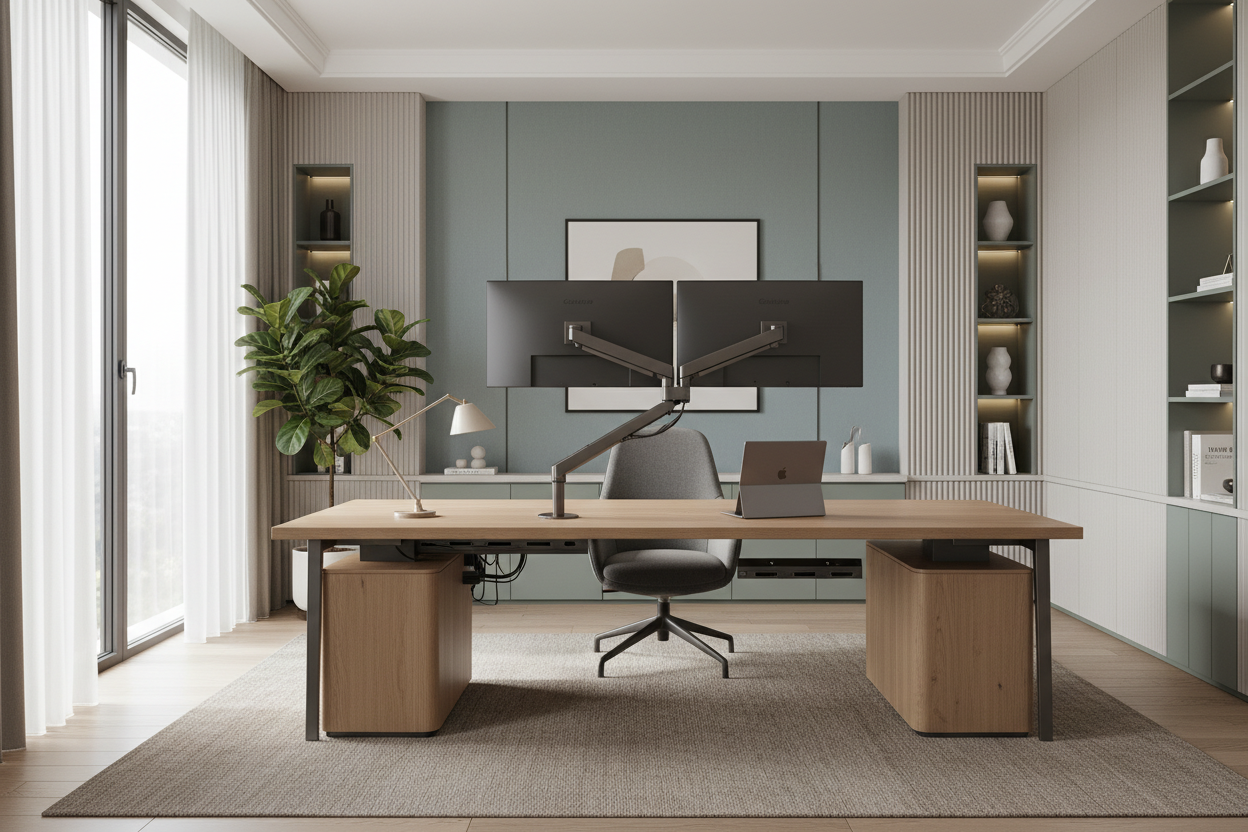
Consider a desk with a monitor lift or a dedicated armoire/secretary desk that closes fully. Alternatively, use a monitor arm to swing the screen flat against the wall and cover it with a piece of art or a fabric slipcover when not in use.
What is the best lighting for a dark apartment corner workspace?
Avoid relying solely on overhead recessed lighting, which casts shadows. Use an adjustable desk lamp with a warm-dim feature. If floor space is tight, install a wall-mounted swing-arm sconce to free up desk surface area.
Can I use a dining chair as a desk chair?
For short bursts (1-2 hours), yes. For full workdays, no. A dining chair lacks the lumbar support and adjustability required for long-term spinal health. If you must use one, add a dedicated lumbar pillow and a seat cushion.

Leave a comment
This site is protected by hCaptcha and the hCaptcha Privacy Policy and Terms of Service apply.