










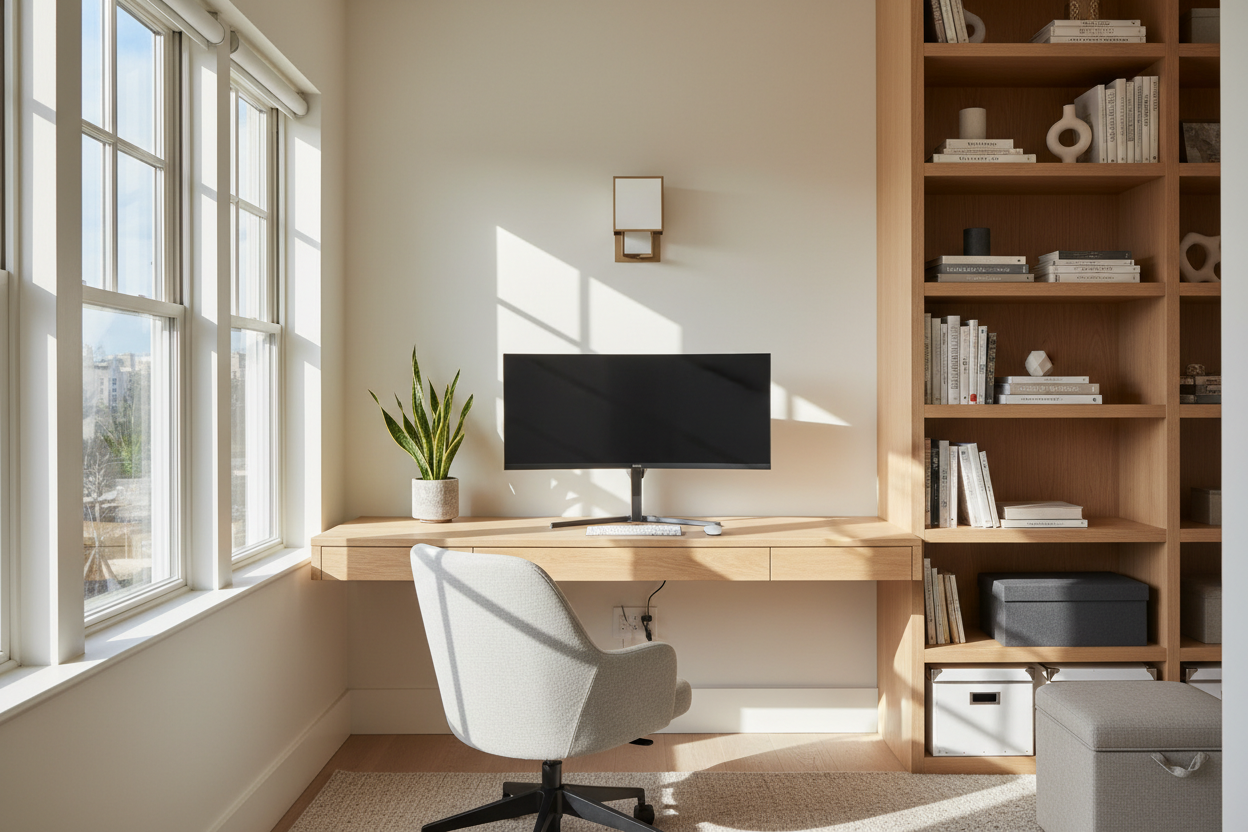
You have likely saved every inspiring small office pic on Pinterest, yet your actual workspace feels more like a cramped storage unit than a productive sanctuary. This is the most common dilemma I encounter with clients: the disconnect between a curated image and the reality of square footage. Translating a two-dimensional photo into a three-dimensional, functional room requires more than just buying the furniture you see on screen; it requires an understanding of scale, negative space, and light.
Key Elements of a Photogenic Workspace
Before you purchase a single item based on images of small offices you admire, evaluate the space against these critical design pillars to ensure the layout actually works:
- Scale & Proportion: Ensure furniture doesn't block traffic flow; aim for a minimum of 36 inches of clearance behind your chair.
- Vertical Utilization: Look for floor-to-ceiling joinery or floating shelves to draw the eye upward and save floor space.
- Light Temperature: Mimic the warmth of small office photos by using 3000K LED bulbs rather than harsh, cool daylight bulbs.
- Material Continuity: Use materials that match the adjacent room to create a seamless visual flow, making the office feel larger.
- Hidden Ergonomics: Prioritize chairs that offer lumbar support without the visual bulk of traditional executive seating.
Deconstructing the Visuals: Why It Works
When you look at pictures of small offices that feel luxurious, you are usually responding to visual balance. In a compact footprint, every inch counts. The most successful designs avoid visual clutter by utilizing closed storage for paperwork and open shelving for curated decor.
The Floating Desk Strategy
One recurring theme in high-end small office images is the floating desk. By mounting the work surface directly to the wall and eliminating legs, you expose more floor area. This trick of the eye makes the room feel significantly wider. However, ensure your wall studs can support the cantilevered weight, especially if you plan to mount heavy monitors.
Material Selection: Matte vs. Gloss
In tight quarters, glare can be distracting. While a glossy lacquer finish might look stunning in a showroom, I often advise clients to opt for matte or satin wood finishes in small rooms. These absorb light rather than reflecting it, creating the soft, ambient atmosphere seen in professional small office pics. Walnut and white oak are excellent choices for adding warmth without dominating the visual field.
Lighting: The Invisible Architecture
Most small office pictures rely heavily on natural light, but your reality might be a windowless alcove. To compensate, layer your lighting. Start with recessed cans for general illumination, add a focused task lamp with a slim silhouette, and consider LED strip lighting under shelves. This layering adds depth and prevents the room from feeling like a sterile cubicle.
My Personal Take on Small Office Pic Trends
I need to share a hard truth about the small office photos you see online: they lie about cables. I once designed a custom nook for a client based on a minimalist image she loved. We installed a beautiful, slim-profile desk. However, once she plugged in her dual monitors, docking station, and printer, the "clean lines" were destroyed by a nest of black wires.
The lesson I learned—and now apply to every project—is to design for the worst-case scenario. Now, I insist on furniture with integrated cable management channels or modesty panels, even if the desk is pushed against a wall. We ended up having to retrofit a false back to her desk to hide the surge protector. Real luxury is not just how it looks in a photo, but how it functions when you are on a deadline.
Conclusion
Creating a workspace that rivals the best small office pictures is about discipline. It requires editing your belongings, investing in the right scale of furniture, and managing the unglamorous utility of tech. Don't just copy a look; engineer a space that supports your workflow while soothing your eyes.
Frequently Asked Questions
What is the ideal desk depth for a small office?
To comfortably accommodate a laptop and a notebook, aim for a depth of at least 20 to 24 inches. Anything shallower will feel like a shelf, though you may see narrower options in stylized small office pics.
How do I make a windowless small office feel bright?
Use a large mirror on the wall opposite your main light source to bounce illumination around the room. Additionally, painting the walls a high-LRV (Light Reflectance Value) off-white can mimic the airy feel of bright small office images.
Can I use a dining chair instead of an office chair?
Visually, yes, it often looks better. However, for work sessions longer than two hours, a dining chair lacks the necessary ergonomic adjustments. Look for "crossover" chairs that feature upholstered aesthetics with hidden swivel or tilt mechanisms.

Leave a comment
This site is protected by hCaptcha and the hCaptcha Privacy Policy and Terms of Service apply.