










We have all been there: trying to balance a laptop on a dining table or hunching over a coffee table, convincing ourselves it works. It doesn't. To truly elevate your productivity and interior aesthetic, you need a dedicated desk desk. This isn't just about a flat surface; it is about anchoring your workspace with a piece of furniture that respects both your biomechanics and your home's design language. Before you commit to a purchase, let’s navigate the nuances of selecting the perfect workstation.
Key Features to Look For
- Material Integrity: Prioritize solid wood or high-grade pressure laminate over hollow-core particle board for longevity.
- Ergonomic Height: The standard is 29-30 inches, but ensure leg clearance accounts for your chair's armrests.
- Surface Area: Ensure enough depth (minimum 24 inches) for a monitor to sit at arm's length to reduce eye strain.
- Cable Management: Look for integrated grommets or hidden channels to maintain visual minimalism.
Choosing the Right Material for Longevity
As a designer, I constantly see homeowners underestimate the tactile experience of office desks home environments require. Unlike corporate settings where generic laminates rule, desks for home should offer warmth and texture. Solid wood, such as walnut or white oak, provides a "living" finish that develops a patina over time.
However, if you are looking at a home office workstation desk that will endure heavy daily use—coffee spills, sketching, or dual-monitor setups—consider a high-quality veneer or a matte-finish engineered wood. Avoid cheap foils often found at budget furniture stores office desk sections; they tend to peel at the edges within a year, ruining the aesthetic.
Space Planning and Layout
The placement of your in home desk is just as critical as the piece itself. The most common error I correct is the "wall-facing" orientation. Staring at a blank wall kills creativity. Instead, position your desk in the "command position"—facing the door, or perpendicular to a window to maximize natural light without creating screen glare.
Defining the Zone
For open-concept living, visual separation is key. A rug under the desk anchors the space, signaling that this area is for work, not leisure. If you are browsing sites like, look for pieces with finished backs. This allows you to float the desk in the center of the room, rather than shoving it in a corner.
Functionality: The "Desk with Desk" Concept
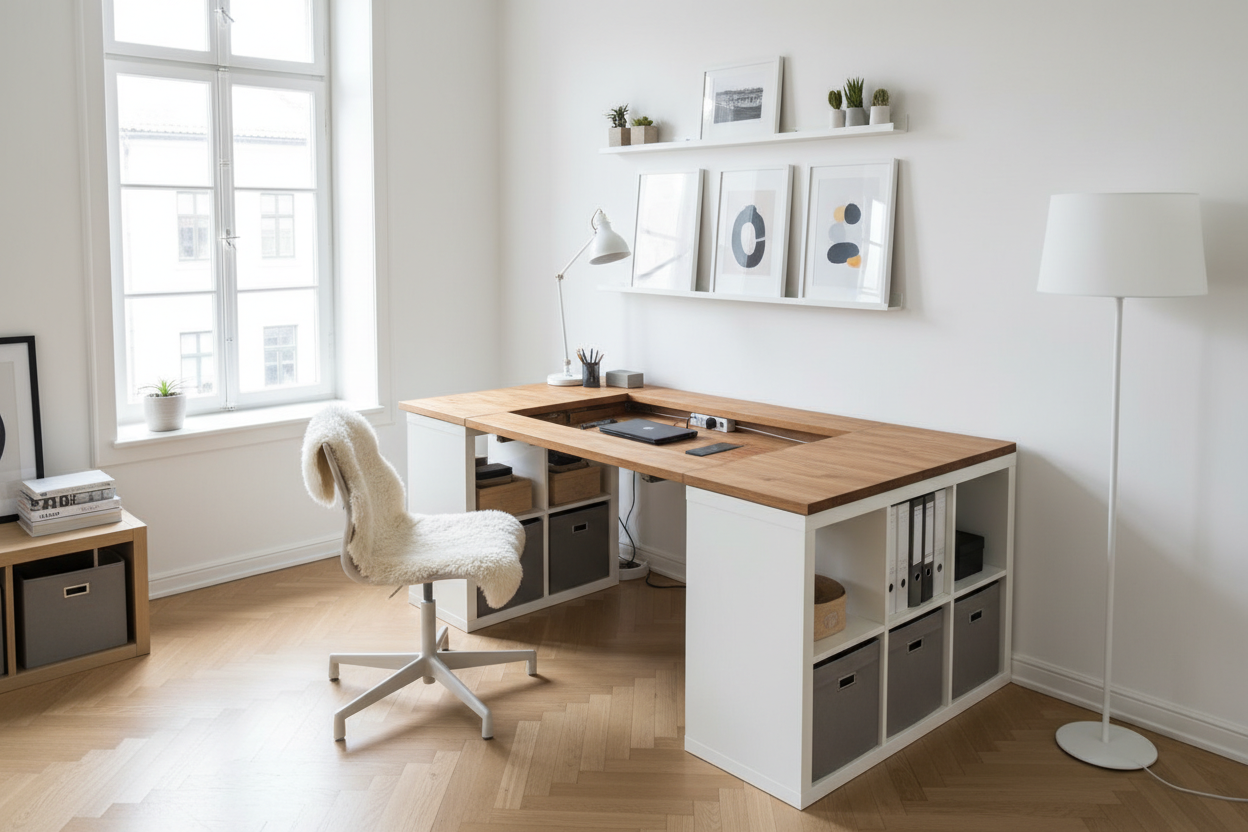
When we talk about a desk for home use, storage is usually the pain point. A minimal writing desk looks beautiful but fails if you have a printer and files. I often recommend an L-shaped configuration or a "desk with desk" return—a lower, secondary surface that slides underneath or sits adjacent to the main unit. This keeps your primary workspace clutter-free while keeping essentials within reach.
At home desks need to hide the chaos. If the desk lacks drawers, pair it with a mobile pedestal that matches the desk's silhouette. This maintains the clean lines essential for a calming work environment.
Lessons from My Own Projects
I want to share a specific mistake from my early designing days involving a reclaimed wood desk. It looked stunning in the showroom—rustic, textured, and full of character. I installed it in a client's high-traffic home office. Within a week, I got a call.
The issue wasn't the look; it was the usability. The rough-hewn texture, while beautiful, made writing on a single sheet of paper impossible without a blotter. Worse, the uneven edge was snagging the client’s silk blouses and wool sweaters every time she leaned in to type. It was a functional nightmare. Now, whenever I specify a desk, I run my hand along the front edge. If it isn't perfectly smooth or slightly beveled (a "waterfall" edge is ideal), I won't buy it. That subtle comfort on your forearms makes the difference between a 4-hour workday and an 8-hour one.
Create Your Ideal Workspace
Investing in the right furniture transforms a spare corner into a sanctuary of focus. By prioritizing material quality, proper placement, and ergonomic design, your new desk will serve as the foundation for your best work. Don't settle for temporary solutions; build a space that inspires you.
Frequently Asked Questions
How deep should a desk be for a computer setup?
For a laptop, 20-24 inches is sufficient. However, if you use an external monitor, aim for a depth of 24-30 inches. This ensures the screen sits at a proper focal distance, reducing eye strain during long sessions.
What is the difference between a writing desk and a computer desk?
A writing desk typically features a simple, flat surface with minimal storage and a slender silhouette, focusing on aesthetics. A computer desk often includes cable management grommets, keyboard trays, and reinforced structures to support heavy hardware.
How do I protect a wood desk from scratches?
Use a high-quality leather or felt desk pad. Not only does this protect the finish from laptop heat and scratches, but it also improves mouse tracking and provides a softer surface for your wrists.


Leave a comment
This site is protected by hCaptcha and the hCaptcha Privacy Policy and Terms of Service apply.