










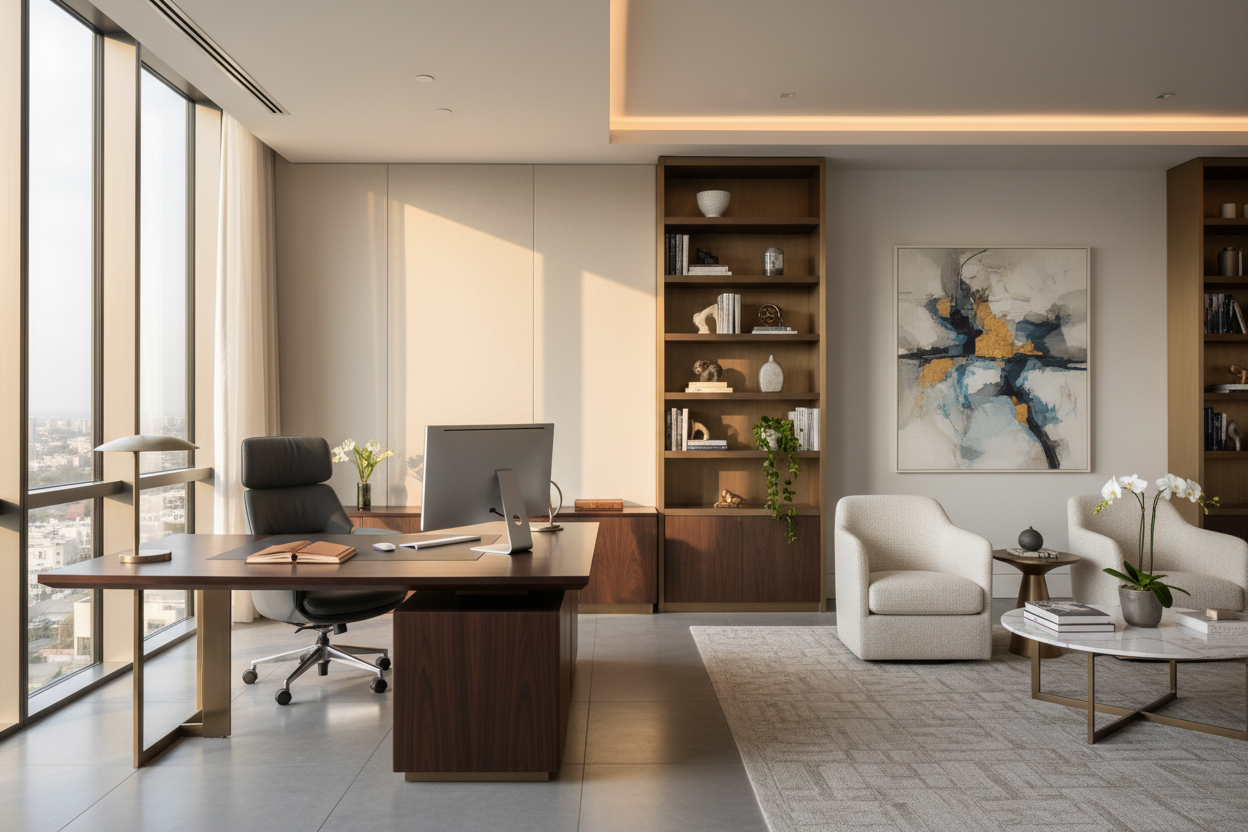
We have all experienced the fatigue that comes from working in a sterile, uninspired environment. Whether it is a corporate cubicle or a makeshift corner of the dining table, a lack of intentional design drains mental energy faster than the work itself. As an interior designer, I tell my clients that inspirational offices are not just about aesthetics; they are tools for cognitive performance. This guide will walk you through curating a workspace that balances professional functionality with the comfort and style of a high-end residential library.
Key Elements of High-Performance Workspace Designs
- Ergonomic Foundation: Prioritize an adjustable chair with lumbar support and a desk height that allows your elbows to rest at a 90-degree angle.
- Lighting Layers: Combine ambient overhead lighting with focused task lighting (warm LEDs, 3000K-4000K) to reduce eye strain.
- Material Tactility: Incorporate natural materials like solid wood, leather, or wool to add warmth and reduce acoustic reverberation.
- Biophilic Connection: Integrate greenery or position the desk to face a view; natural elements lower cortisol levels.
- Personal Curation: Dedicate shelving for art or artifacts that spark creativity, distinct from work-related filing.
Structuring the Layout for Flow and Focus
The most common error I see in home workspace designs is pushing the desk directly against a blank wall. While space constraints sometimes dictate this, floating the desk in the room—or at least perpendicular to a window—changes the energy of the space completely. This "command position" offers a view of the room's entry, subconsciously increasing a sense of security and authority.
Consider the visual weight of your furniture. If the room is small, a heavy mahogany executive desk will dominate the space and make it feel claustrophobic. Instead, opt for a writing table with legs rather than a solid base to maintain sightlines across the floor, making the room feel expansive.
Materiality: The Tactile Experience
Inspiring offices engage the senses beyond just sight. When selecting a desk, consider the surface temperature and texture. A glass desk looks sleek and modern, but it runs cold against the wrists and amplifies the sound of items being set down. Conversely, a solid walnut or oak desk offers a warm, forgiving surface that develops a patina over time.
For seating, move away from the standard black mesh if possible. High-performance fabrics or semi-aniline leathers offer the same durability but introduce a level of sophistication that bridges the gap between commercial utility and residential comfort.
Lighting: The Invisible Mood Setter
Bad lighting is the silent killer of productivity. Avoid relying solely on recessed can lights, which cast harsh shadows on your work surface. A curated lighting plan should include a dedicated task lamp with an adjustable arm. Look for fixtures with a high Color Rendering Index (CRI of 90+), which ensures that colors on your mood boards or documents look true to life. This attention to detail transforms a utility room into a studio.
My Personal Take on Inspirational Offices
Let me share a lesson I learned the hard way early in my career. I designed a stunning home office for a client featuring a vintage mid-century modern rosewood desk. It was visually breathtaking—a true sculpture in the room. However, I ignored a crucial detail: the desk apron (the drawer section underneath) was too deep.
Every time the client crossed their legs, their knees hit the wood. Furthermore, the vintage height was 30 inches—about an inch and a half too high for modern typing ergonomics. We had to retrofit the legs and remove the center drawer to make it usable. It taught me that no matter how "inspiring" a piece looks in a portfolio, if it physically irritates you during an eight-hour shift, the inspiration vanishes. Always measure the clearance between your chair armrests and the desk underside before buying.
Conclusion
Creating a workspace that resonates requires looking past the standard office supply catalog. By layering proper lighting, selecting materials that age gracefully, and prioritizing ergonomic flow, you build an environment that respects your time and your craft. Treat your office not as a utility closet, but as a sanctuary for your best work.
Frequently Asked Questions
How do I create an inspirational office in a small bedroom corner?
Focus on verticality. Use wall-mounted shelving above the desk to draw the eye up and keep the surface clutter-free. Choose a chair with a low back or a transparent material (like acrylic or light mesh) to minimize visual bulk in the room.
What is the best color palette for inspiring offices?
This depends on your work style. Deep blues and greens (like Hale Navy or Forest Green) promote deep focus and concentration. Softer neutrals and terracottas are better for high-energy creative work. Avoid sterile bright whites; opt for warm whites to reduce glare.
Is a standing desk necessary for a modern workspace design?
While not strictly necessary for style, it is highly recommended for health. If the industrial look of a standing desk clashes with your decor, look for models with solid wood tops or use a "converter" that can be tucked away when not in use.

Leave a comment
This site is protected by hCaptcha and the hCaptcha Privacy Policy and Terms of Service apply.