










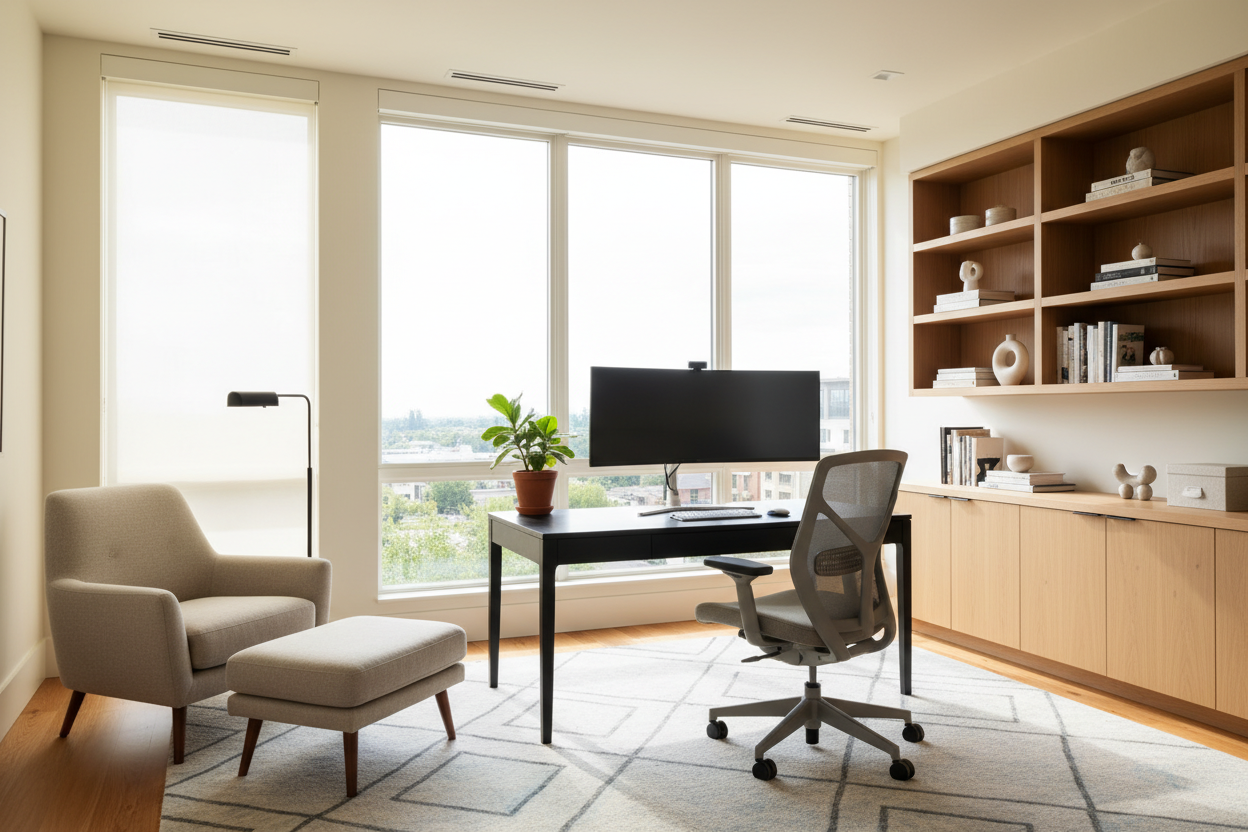
The boundary between professional obligation and personal sanctuary has never been more porous. When you are tasked with bringing the corporate environment into your residence, the challenge isn't just about finding a place to put a laptop; it is about curating an environment that fosters deep work without disrupting the aesthetic flow of your living quarters. Whether you are navigating a company home work policy or setting up a dedicated studio for a new role, the design choices you make will directly influence your cognitive load and physical well-being.
Quick Decision Guide: The Essentials
If you are rushing to set up your space before a deadline, prioritize these four elements to ensure functionality meets style:
- Ergonomic Integrity: Prioritize a chair with lumbar support and a seat depth that matches your femur length over purely sculptural pieces.
- Lighting Layers: Combine task lighting (for reading) with ambient lighting (to reduce screen glare) to prevent eye strain.
- Acoustic Control: Incorporate soft textiles like rugs or upholstered panels to dampen echo during calls.
- Surface Durability: Choose desk materials like solid hardwood or high-pressure laminate that resist heat from electronics and coffee rings.
Zoning Your Professional Enclave
When establishing a home job company setup, spatial planning is paramount. In open-concept homes, visual separation is necessary to psychologically switch between "work mode" and "rest mode."
The Command Position
Ideally, position your desk so you have a view of the door but are not directly in line with it. In design psychology, this is known as the "command position." It reduces subconscious anxiety and allows you to manage visual interruptions. If your space is limited, avoid facing a blank wall directly; floating the desk in the room, even by a few inches, can create a sense of command rather than confinement.
Materiality and Tactile Experience
The texture of your furniture plays a subtle but massive role in how a room feels. For a new home job that requires long hours, avoid glass desktops. While they look sleek and modern, they are cold to the touch and cause acoustic reverberation. Instead, opt for walnut or oak veneers which offer warmth and a tactile grounding effect.
Visual Balance and Storage
A common error I see is the accumulation of "visual noise." Open shelving is beautiful for styling, but for a heavy workflow, closed cabinetry is superior. It allows you to hide the clutter of cables, printers, and paperwork, maintaining the room's silhouette as a designed space rather than a chaotic utility room.
Lighting: The Invisible Architecture
Bad lighting kills productivity. A single overhead fixture creates harsh shadows that are unflattering on video calls and straining on the eyes. You want to aim for diffuse, layered light. A high-quality articulated desk lamp with adjustable color temperature is non-negotiable. Aim for 4000K (cool white) during high-focus morning hours, and switch to 2700K (warm white) as the evening approaches to aid your circadian rhythm.
My Personal Take on company home work Design
I learned a hard lesson about finishes during a project for a client who was a high-frequency trader. We selected a stunning, matte-black laminate desk that looked incredible in the showroom. It was the centerpiece of the room.
However, two weeks after installation, I visited for a follow-up. The surface was a disaster of oily fingerprints and dust that seemed to magnetically cling to the matte finish. No matter how much he cleaned it, it looked messy by noon. It taught me that for a high-traffic surface, a semi-gloss wood grain or a textured linoleum top is infinitely more forgiving than a flat, solid color. Now, when I design for a client's daily workflow, I always test the "fingerprint factor" before recommending a surface material. It is these unpolished, practical details that determine if you will love a piece of furniture six months down the line.
Conclusion
Transforming a corner of your house into a professional hub doesn't mean sacrificing style for utility. By selecting materials that age well, prioritizing light, and respecting ergonomics, you create a space that respects both your career ambition and your home's aesthetic.
Frequently Asked Questions
1. How do I fit a workspace into a small apartment?
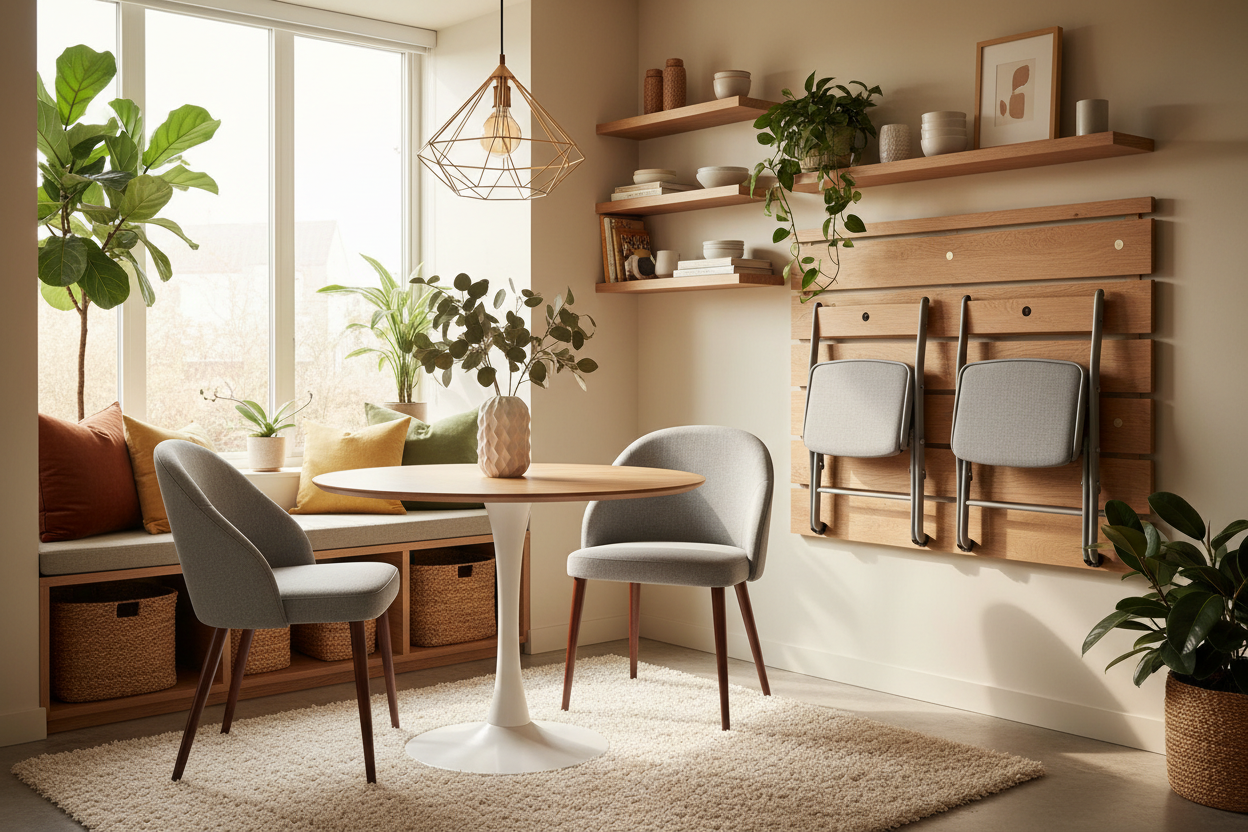
Look for "secretary desks" or wall-mounted drop-leaf tables. These utilize vertical space and can be closed up to hide work clutter when the day is done, reclaiming your floor space.
2. What is the best background for video calls?
Avoid a window directly behind you, as it silhouettes your face. A bookshelf with curated decor or a wall with a matte paint finish in a soothing tone (like sage green or navy) provides a professional, distraction-free backdrop.
3. Is an ergonomic chair really worth the investment?
Absolutely. A dining chair is designed for 45-minute meals, not 8-hour shifts. Investing in a chair with adjustable armrests and tilt tension prevents long-term spinal issues and fatigue.

Leave a comment
This site is protected by hCaptcha and the hCaptcha Privacy Policy and Terms of Service apply.