










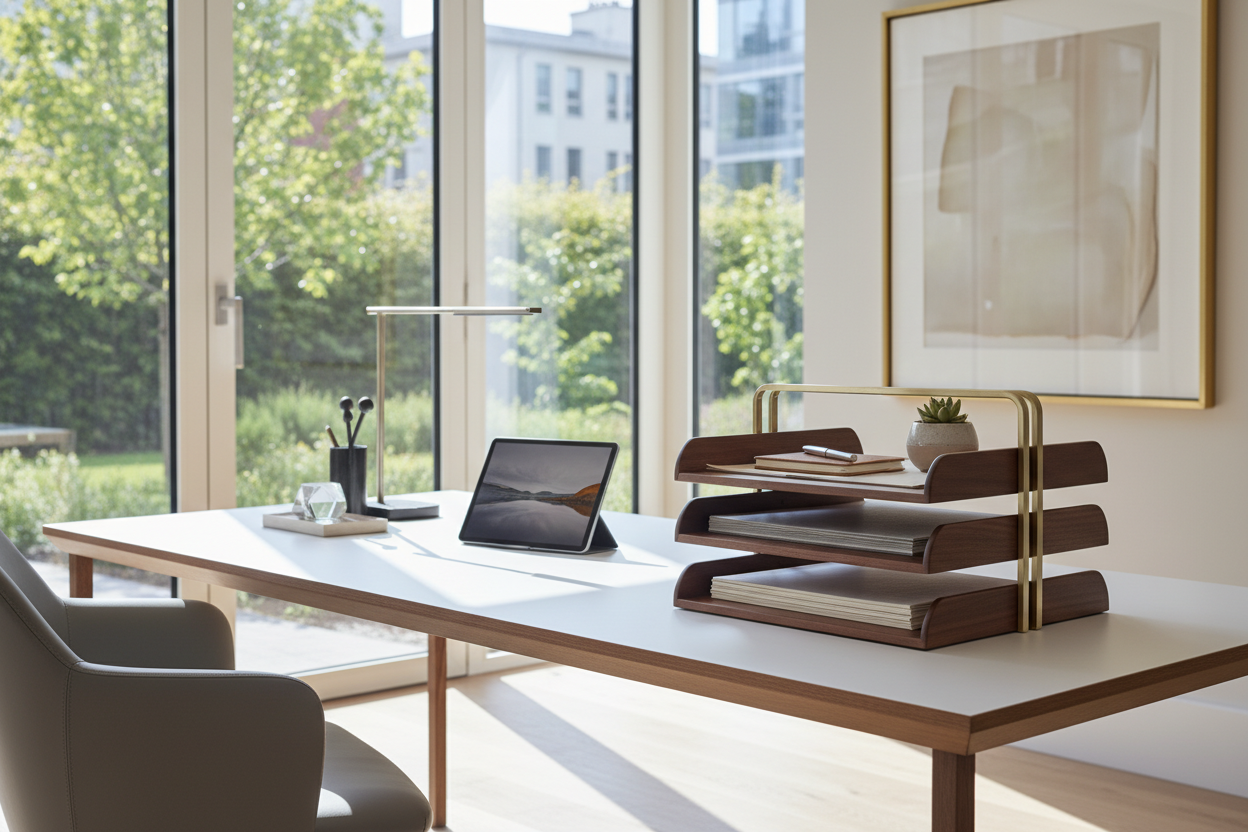
The reality of a home office is that the digital age hasn't completely eliminated physical mail, printed contracts, and fabric swatches. When a beautiful oak writing desk turns into a chaotic dumping ground, the right desk paper rack becomes an absolute necessity.
As a designer, I see clients spend thousands on custom built-ins and ergonomic chairs, only to ruin the aesthetic with a cheap plastic tray from a big-box store. Today, we are looking at how to choose an organizer that complements your room's aesthetic, manages your workflow, and maintains the residential warmth of your home.
Quick Decision Guide
- Prioritize materials like solid walnut, leather, or powder-coated steel over acrylic or plastic to maintain a high-end residential feel.
- Measure your desk depth carefully; ensure the organizer leaves at least 15 to 18 inches of clear workspace for your keyboard and forearms.
- Utilize tiered office paper organizer shelves to maximize vertical storage without adding unnecessary visual weight to the room.
- Match the rack's finish to your room's secondary accents, such as cabinet hardware, lighting fixtures, or chair legs.
Material & Build Quality
Escaping the Corporate Cubicle Look
The quickest way to downgrade a beautifully styled home office is by introducing flimsy, commercial-grade plastics. When selecting a tabletop paper organizer, treat it as a piece of micro-furniture. Solid woods like walnut, ash, or white oak introduce warmth and organic texture, bridging the gap between work and home life.
If your space leans industrial or modern minimalist, powder-coated steel is incredibly durable and offers a slim silhouette. Metal trays won't warp under the weight of heavy catalogs or thick paper stacks, making them a practical choice for heavy-duty use.
Space Planning & Layout
Finding the Right Visual Weight
Standard North American home office desks typically range from 48 to 60 inches wide. If you are working with a compact 48-inch desk, a massive wooden organizer will visually overpower the surface. In smaller rooms, opt for a wire or mesh paper rack for desk use; the negative space allows light to pass through, making the surface feel less cramped.
Placement matters just as much as size. Position your paper shelves for desk organization on your non-dominant side. This keeps your primary reach zone clear for writing and mousing, while keeping reference documents just an arm's length away.
Designer's Honest Take
A few years ago, I designed a stunning, light-filled office in a Vancouver high-rise. I sourced a gorgeous, crystal-clear acrylic paper tray to maintain the airy, modern vibe. It looked brilliant on installation day.
I learned the hard way that acrylic is a nightmare for a high-traffic desk. Within a month, the client called to tell me the tray highlighted every single fingerprint, speck of dust, and micro-scratch from sliding staples across the surface. We ended up swapping it for a matte brass and walnut rack. The honest downside to wood and solid metal, however, is that they lack transparency. You have to be diligent about labeling the edges of your folders, or you will quickly lose track of what is sitting on the bottom shelf.
Frequently Asked Questions
What size desk paper rack do I need?
Always check the interior dimensions. If you only handle standard mail and printer paper, a letter-sized tray (around 10 by 12 inches) is sufficient. If you review legal documents or large design proofs, you will need a legal-sized organizer to prevent the edges of your papers from curling.
How do I style a paper rack without it looking messy?
The trick is intentional negative space. Do not stuff every tier to the brim. Dedicate the top tier of your office paper organizer shelves to a small decorative object, like a structural paperweight, a small trailing pothos plant, or a beautiful ceramic mug for pens.
Are metal or wood organizers better for small spaces?
Metal is generally better for tight quarters because of its slim profile. A metal paper rack takes up less physical volume than thick wooden joints, leaving you with a fraction more usable desk space.

Leave a comment
This site is protected by hCaptcha and the hCaptcha Privacy Policy and Terms of Service apply.